
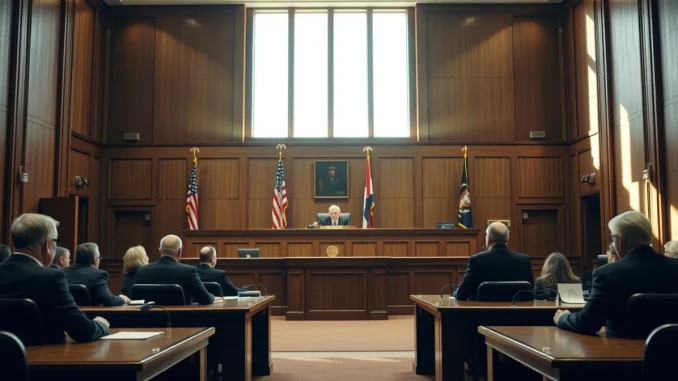
Nine California jurors are now deliberating the future of OpenAI, the world’s leading artificial intelligence lab, in a trial that has drawn intense scrutiny from the tech industry, investors, and regulators. While the courtroom testimony has covered everything from the founders’ 2018 breakup to Sam Altman’s dramatic firing and rehiring in 2023, the jury’s task is far narrower. They must answer a set of specific legal questions that will determine whether Elon Musk’s claims against OpenAI, its cofounders, and Microsoft hold up under the law.
The core legal questions before the jury
The case revolves around three main allegations Musk has brought against OpenAI, Sam Altman, Greg Brockman, and Microsoft. Each carries distinct legal standards and potential consequences.
Also read: Ford rehires 350 veteran engineers after AI quality systems fall short
Breach of charitable trust
Musk’s attorneys argue that OpenAI and its founders violated a specific agreement to use his donations exclusively for charitable purposes tied to AI safety. They claim that a $10 billion investment from Microsoft in 2023 into OpenAI’s for-profit affiliate was the turning point that transformed Musk’s concern into conviction. The plaintiffs say this deal enriched investors at the expense of the non-profit’s mission.
OpenAI’s defense has been consistent: no witness, including Musk’s own financial adviser Jared Birchall and his chief of staff Sam Teller, could identify specific restrictions placed on Musk’s donations. A forensic accountant testified that all of Musk’s contributions were spent by 2020, well before the key legal deadlines. OpenAI also points to the nearly $200 billion in equity value its for-profit arm has generated to support the non-profit foundation, arguing that providing ChatGPT for free fulfills the charitable mission of sharing AI’s benefits with the world.
Unjust enrichment
The plaintiffs point to multibillion-dollar valuations of stakes held by OpenAI founders like Greg Brockman and Ilya Sutskever, as well as Microsoft, as evidence that Musk’s donations were used for personal gain rather than charitable purposes. They argue the for-profit arm operated with a commercial focus while the foundation remained dormant, lacking full-time employees and control over the for-profit entity.
OpenAI counters that all donations were used by the foundation by 2020, and that equity distributions occurred only after Musk left the organization in 2018. The company maintains that compensating researchers with stock was essential to developing artificial general intelligence (AGI), and that the non-profit board continues to exercise control, especially after governance reforms following Altman’s 2023 firing and rehiring.
Aiding and abetting breach of charitable trust
This claim targets Microsoft directly. Musk’s team focuses on the events surrounding Altman’s firing in November 2023, when Microsoft CEO Satya Nadella was personally involved in bringing Altman back and shaping a new board. The plaintiffs highlight a clause in Microsoft’s agreement that gave the tech giant veto rights over major corporate decisions at OpenAI.
Microsoft’s witnesses insist the company had no knowledge of specific conditions on Musk’s donations, despite extensive due diligence. They also note that Microsoft never exercised its veto power and that its investments and computing resources were critical to OpenAI’s breakthroughs.
OpenAI’s three key defenses
Beyond contesting the facts, OpenAI has raised three legal arguments that could independently sink Musk’s case.
Statute of limitations
OpenAI argues that any harms Musk suffered occurred before specific legal deadlines: August 5, 2021, for breach of charitable trust; August 5, 2022, for unjust enrichment; and November 14, 2021, for aiding and abetting. If the jury agrees, Musk’s claims become moot regardless of the underlying facts. The defense points to blog posts, tweets, and other communications from years before the lawsuit that show Musk was aware of OpenAI’s direction. Shivon Zilis, Musk’s adviser and the mother of three of his children, even voted to approve certain transactions as a member of the OpenAI board.
Unreasonable delay
OpenAI’s attorneys contend that Musk filed his lawsuit in 2024 only after realizing he was wrong about OpenAI’s potential, following the explosive success of ChatGPT. They argue that the organization has operated under its current structure since its first Microsoft investment in 2018, and that forcing a restructuring eight years later is unreasonable.
Unclean hands
Perhaps the most personal defense, OpenAI claims that Musk’s own conduct undermines his case. Evidence shows that while still chair of OpenAI, Musk was planning competing AI efforts at Tesla and hiring OpenAI employees. He allegedly withheld donations in 2017 to gain control of a planned for-profit affiliate. Zilis did not disclose her personal relationship with Musk to other board members for years. As OpenAI’s lead attorney Bill Savitt told the jury: “Mr. Musk abandoned OpenAI for dead in 2018.”
What happens if Musk wins?
If the jury finds in Musk’s favor, the consequences are not immediately clear. The judge has scheduled additional hearings for next week, where both sides will debate the appropriate remedies. A verdict for the plaintiffs could potentially force OpenAI to unwind its for-profit structure, though the specifics remain uncertain. A negative verdict for Musk, however, would render those hearings moot.
Why this matters
This case is not just a personal dispute between two of the most powerful figures in technology. It raises fundamental questions about the governance of AI development, the role of non-profit structures in high-stakes commercial ventures, and the legal obligations of founders who accept charitable donations. The outcome could set a precedent for how AI labs balance mission-driven goals with the immense financial pressures of the industry. For investors, regulators, and the broader public, the jury’s decision will shape the sector of AI governance for years to come.
Conclusion
The jury in the Elon Musk vs. Sam Altman trial faces a narrow but consequential set of questions about charitable trust, unjust enrichment, and corporate accountability. While the courtroom drama has captured headlines, the legal arguments hinge on specific facts about when donations were spent, what restrictions existed, and whether delay or misconduct by Musk himself invalidates his claims. Whatever the verdict, the case has already exposed the tensions at the heart of the AI industry’s rapid commercialization.
FAQs
Q1: What is the main legal claim in Musk’s lawsuit against OpenAI?
A1: The primary claim is breach of charitable trust — that OpenAI and its cofounders violated a specific agreement to use Musk’s donations exclusively for charitable AI safety purposes, not for commercial enrichment.
Q2: Could a Musk victory force OpenAI to stop operating as a for-profit company?
A2: Potentially, yes. If the jury finds in Musk’s favor, the judge will hold additional hearings to determine remedies, which could include unwinding OpenAI’s for-profit structure. However, the exact consequences remain uncertain and will be debated in court.
Q3: Why is Microsoft involved in this case?
A3: Microsoft is named as a defendant on the claim of aiding and abetting breach of charitable trust. Musk’s team argues that Microsoft knew about restrictions on his donations and played a significant role in pushing OpenAI away from its charitable mission, especially during the 2023 leadership crisis.



Be the first to comment