
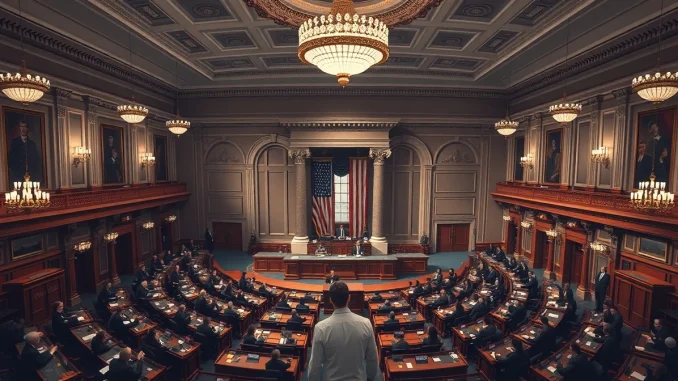
The United States Senate voted largely along party lines on Wednesday to confirm Kevin Warsh as the next chair of the Federal Reserve, placing a crypto-friendly former governor at the helm of the nation’s central bank. The 54-45 vote, with Democratic Senator John Fetterman crossing party lines to join Republicans, approved President Donald Trump’s nominee to succeed Jerome Powell.
Confirmation process and timeline
Warsh’s path to the Fed’s top job began with his approval as a governor on Tuesday in a 51-45 vote, also with Fetterman’s support. He now holds a 14-year term as a Fed governor and a four-year term as chair. Warsh previously served as a Fed governor under Presidents George W. Bush and Barack Obama from 2006 to 2011.
Also read: EU watchdog EBA unveils tough crypto penalty framework as MiCA enforcement begins
Powell’s term as chair ends Friday, though he will remain a Fed governor until 2028. The leadership change comes amid ongoing tensions between the White House and the central bank, with Trump having repeatedly threatened to fire Powell.
Market and policy implications
The shakeup in Fed leadership has the potential to move markets, as investors weigh the possibility of changing interest rate policies and concerns about the central bank’s independence from the White House. During his confirmation hearing before the Senate Banking Committee, many Democrats questioned whether Warsh could maintain independence from the president’s policy agenda.
Also read: EU Watchdog EBA Details Framework for Crypto Fines as MiCA Enforcement Intensifies
Warsh has previously described Bitcoin (BTC) as a “transformative” technology and “an important asset that can help inform policymakers,” according to a 2025 interview. His personal financial disclosures, released during the confirmation process, also revealed holdings in crypto and artificial intelligence-related investments.
Digital asset legislation advances
The confirmation vote coincided with a busy week for crypto policy on Capitol Hill. On Monday, the Senate Banking Committee released the text of its version of the Digital Asset Market Clarity Act (CLARITY), which includes a compromise provision on stablecoin yield — a long-standing sticking point for the crypto and banking industries. The committee is scheduled to hold a markup on the bill Thursday, potentially setting it up for a full Senate vote.
Conclusion
Kevin Warsh’s confirmation as Federal Reserve chair marks a significant shift in the central bank’s leadership at a time of heightened scrutiny over monetary policy, regulatory independence, and the growing intersection of digital assets with traditional finance. The outcome of the CLARITY bill markup later this week will offer further signals on the direction of U.S. crypto regulation under the new administration.
FAQs
Q1: When does Kevin Warsh officially become Federal Reserve chair?
His four-year term as chair begins immediately after confirmation, replacing Jerome Powell whose term ends Friday. Warsh also holds a 14-year term as a Fed governor.
Q2: How did the Senate vote on Warsh’s confirmation?
The vote was 54-45, largely along party lines, with Democratic Senator John Fetterman joining all Republicans in support.
Q3: What is the Digital Asset Market Clarity Act (CLARITY)?
It is a Senate bill aimed at establishing a regulatory framework for digital assets, including a compromise on stablecoin yield. The Senate Banking Committee is scheduled to mark up the bill on Thursday.





Be the first to comment