
Founders building in the healthcare space can’t just build fast and break things. Timelines stretch longer, stakes are higher, and success depends on working through systems that reward rigor over speed. That’s the reality Robhy Bustami, co-founder and CEO of BioticsAI, has been living for years.
From prototype to FDA clearance
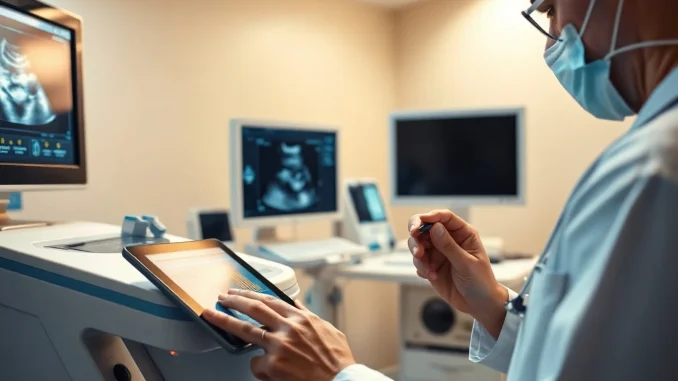
BioticsAI is developing an AI copilot for ultrasound that helps detect fetal abnormalities — an area where misdiagnosis rates remain surprisingly high. The company started scrappy, building an early functioning version of its product for under $100,000, an almost unheard-of milestone in the medical device world. That prototype helped them win TechCrunch Startup Battlefield in 2023, bringing early visibility and credibility.
Also read: OpenAI Limits GPT-5.6 Rollout After U.S. Government Request, Calls Restrictions a 'Short-Term Step'
In January, the company gained FDA approval, a important moment that allows it to begin launching in hospitals and scaling the business at a new pace. Bustami joined Isabelle Johannessen on the Build Mode podcast to discuss how the company navigated a highly regulated space and kept the team motivated through years of red tape.
Integrating regulation from day one
From the outset, BioticsAI approached product development with FDA approval in mind. Instead of building first and figuring out regulation later, the team integrated clinical validation, regulatory strategy, and product development into a single process. That meant working closely with clinicians, collecting large-scale datasets, and running structured clinical studies before ever reaching the submission stage.
Also read: OpenAI, Google, and SpaceX are all building their own AI chips — here's why that matters
The FDA process is often viewed as a black box, but Bustami emphasizes that founders don’t have to handle it blindly. Early engagement with regulators through pre-submission meetings helped the team align on study design and expectations. Still, risk never fully disappears. For many investors, the biggest question remains: What if the FDA says no?
Keeping the team motivated through uncertainty
Internally, those long timelines create a different kind of challenge: keeping a team motivated when the biggest milestone is years away. At BioticsAI, that meant building a culture of alignment across engineers, clinicians, and researchers — ensuring everyone got to see the wins that were happening along the way.
“Making sure everyone is completely aligned, even if it’s outside of their technical scope,” Bustami said, “constantly seeing wins on the R&D side,” from clinical studies to new healthcare partnerships.
What’s next for BioticsAI
Now, with FDA clearance secured, BioticsAI is entering a new phase: deployment. The company is beginning to roll out its technology in hospitals, with plans to expand beyond obstetrics into broader areas of reproductive health. For founders willing to take the long path in healthcare, Bustami argues the reward isn’t just a successful company — it’s the chance to build something that genuinely changes how care is delivered.
Conclusion
Building in healthcare requires patience, discipline, and a willingness to operate in uncertainty. BioticsAI’s journey from a $100,000 prototype to FDA approval illustrates the unique challenges healthtech startups face — and the strategies that can help them succeed. For founders and investors alike, the story offers a realistic look at what it takes to bring AI into clinical practice.
FAQs
Q1: What does BioticsAI’s AI copilot do?
It assists clinicians during ultrasound exams by detecting fetal abnormalities, helping reduce misdiagnosis rates that remain common in obstetrics.
Q2: How did BioticsAI fund its early development?
The company built an initial prototype for under $100,000 and gained visibility and credibility by winning TechCrunch Startup Battlefield in 2023, which helped attract further investment.
Q3: What advice does Bustami give to healthtech founders?
Engage regulators early through pre-submission meetings, integrate regulatory strategy into product development from day one, and keep the team motivated by celebrating incremental wins even when the final milestone is years away.



Be the first to comment