
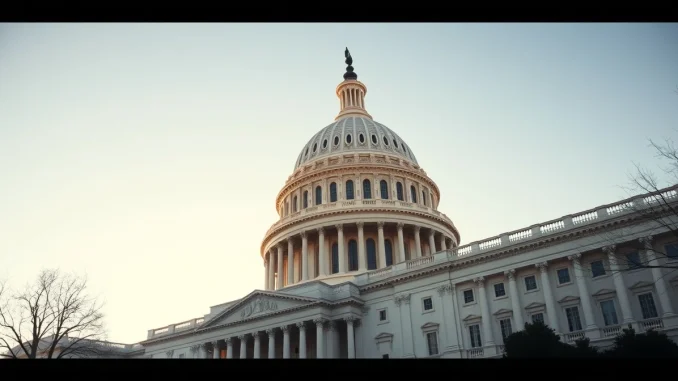
The United States Senate voted 51 to 45 on Tuesday to confirm Kevin Warsh as a member of the Federal Reserve Board of Governors, moving the central bank closer to a leadership transition that could reshape monetary policy and regulatory oversight of digital assets. Lawmakers immediately followed the vote by approving a motion to invoke cloture on Warsh’s nomination to serve as Fed chair, setting the stage for a final confirmation vote later this week.
Partisan divide and a key Democratic defection
The confirmation vote largely followed party lines, with all but one Republican senator supporting President Donald Trump’s nominee. Democratic Senator John Fetterman of Pennsylvania broke with his party to vote in favor of Warsh’s confirmation, providing the sole bipartisan element in an otherwise polarized outcome. Many Democrats voiced concerns during the confirmation process about preserving the Federal Reserve’s independence from White House influence, a theme that dominated Warsh’s Senate Banking Committee hearing.
Warsh previously served as a Fed governor under Presidents George W. Bush and Barack Obama from 2006 to 2011. His new term as a governor extends 14 years, though his nomination for a four-year term as chair remains pending. Current Chair Jerome Powell’s term as chair expires on Friday, though his term as a governor continues until 2028. Trump has repeatedly threatened to fire Powell, creating uncertainty around the central bank’s leadership.
Implications for monetary policy and crypto regulation
The shakeup at the Federal Reserve comes at a sensitive time for financial markets. Investors are watching closely for any signals about changes to interest rate policy, particularly as inflation and economic growth remain under scrutiny. Warsh’s confirmation also carries significance for the cryptocurrency industry. In a 2025 interview, Warsh described Bitcoin (BTC) as a “transformative” technology and “an important asset that can help inform policymakers.” His disclosure during the confirmation process included holdings in crypto and artificial intelligence-related assets, signaling a potentially more engaged approach to digital asset regulation.
Also read: Spain’s CNMV Chair Rules Out MiCA Deadline Extension for Crypto Firms, Impacting Binance
Warsh’s potential leadership arrives as Congress advances legislation that could reshape the crypto environment. On Thursday, the Senate Banking Committee is scheduled to hold a markup on the Digital Asset Market Clarity Act (CLARITY), a market structure bill that includes a compromise provision on stablecoin yield. The bill’s advancement follows the release of its full text on Monday and could lead to a full Senate vote if it clears the committee.
Why this matters for readers
The combination of a new Fed chair nominee and a pending crypto market structure bill represents a important moment for both traditional finance and digital assets. Warsh’s views on Bitcoin and blockchain technology suggest the Federal Reserve under his leadership may take a more proactive stance on crypto regulation, potentially affecting everything from stablecoin oversight to digital dollar discussions. For investors, the leadership transition introduces uncertainty around interest rate decisions, while the CLARITY bill could establish the first comprehensive federal framework for digital asset markets.
Conclusion
The Senate’s confirmation of Kevin Warsh as a Federal Reserve governor marks a significant step toward a leadership change at the central bank. With a chair vote expected this week and a major crypto market structure bill advancing simultaneously, the coming days could define the regulatory and monetary policy direction for years to come. The outcome will test whether the Fed can maintain its independence while addressing emerging financial technologies and political pressures.
FAQs
Q1: What is Kevin Warsh’s background with the Federal Reserve?
Kevin Warsh previously served as a Federal Reserve governor from 2006 to 2011 under Presidents George W. Bush and Barack Obama. He was confirmed for a new 14-year term as a governor on May 12, 2026, and is expected to be voted on for a four-year term as Fed chair this week.
Q2: How might Warsh’s confirmation affect cryptocurrency regulation?
Warsh has publicly described Bitcoin as a “transformative” technology and disclosed crypto and AI holdings during his confirmation process. His leadership could coincide with the Senate Banking Committee’s markup of the CLARITY Act, a market structure bill that would establish new federal oversight for digital assets.
Q3: What happens to Jerome Powell after his term as Fed chair ends?
Jerome Powell’s term as Fed chair expires on Friday, but his term as a Federal Reserve governor continues until 2028. President Trump has repeatedly threatened to fire Powell, though the legal grounds for removing a Fed governor remain unclear and could face legal challenges.



Be the first to comment