
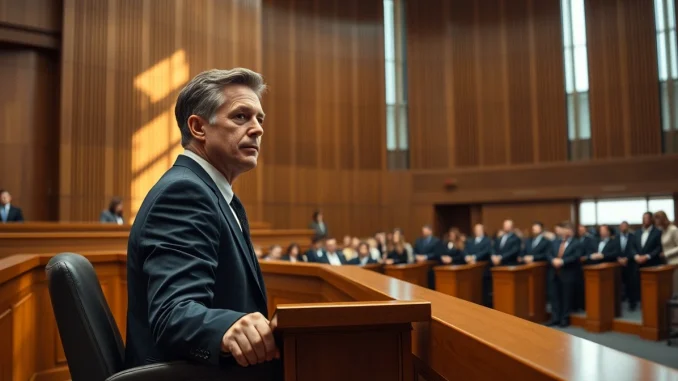
OpenAI CEO Sam Altman took the witness stand this morning to defend himself against a lawsuit filed by former cofounder Elon Musk, offering a rare inside look at the tensions that shaped one of the most valuable companies in the world. The central question in the case: whether OpenAI abandoned its original non-profit mission and commitment to safety as it evolved into a commercial powerhouse.
Altman’s account of Musk’s control plans
Altman testified that during a key debate in 2017 about how to fund OpenAI’s AI models, Musk suggested that if he died while controlling a hypothetical for-profit entity, the company should pass to his children. Altman described this as a “particularly hair-raising moment” that deepened his concerns about Musk’s approach to governance and safety.
Also read: OpenAI Limits GPT-5.6 Rollout After U.S. Government Request, Calls Restrictions a 'Short-Term Step'
“I don’t think Mr. Musk understood how to run a good research lab,” Altman said, adding that Musk had demotivated key researchers and at one point demanded a stack-ranking of staff to “take a chainsaw through a bunch” of them. That, Altman said, “did huge damage for a long time to the culture of the organization.”
The non-profit foundation at the heart of the dispute
Musk’s attorneys have argued that OpenAI’s non-profit foundation, now holding assets around $200 billion, had no full-time employees until earlier this year. OpenAI board chair Bret Taylor testified that the delay was due to the complexity of converting equity into cash, a process completed during the company’s 2025 restructuring.
Also read: OpenAI, Google, and SpaceX are all building their own AI chips — here's why that matters
Altman rejected Musk’s characterization that the founders “stole a charity” by launching a for-profit subsidiary. “We created one of the largest charities in the world,” Altman said. “This foundation is doing incredible work and will do much more.”
Why this matters for the AI industry
The trial is being closely watched because it could set legal precedents for how AI companies balance safety commitments with commercial growth. Musk’s lawsuit challenges OpenAI’s shift from a non-profit research lab to a capped-profit entity that has raised billions from Microsoft and other investors. A ruling against OpenAI could force changes to its corporate structure or governance practices.
The case also highlights ongoing debates about centralized control of advanced AI. Altman testified that OpenAI was founded on the principle that no single person should control powerful AI systems, which is why Musk’s focus on personal control during the 2017 discussions gave him pause.
Conclusion
Altman’s testimony paints a picture of a founding team divided over governance, safety, and funding long before OpenAI became a household name. The trial continues, with potential implications for the future of AI development, corporate accountability, and the role of non-profit oversight in high-tech industries.
FAQs
Q1: What is the main legal issue in Musk’s lawsuit against OpenAI?
The lawsuit challenges OpenAI’s transition from a non-profit to a for-profit structure, arguing that the company abandoned its original safety mission and misused charitable assets.
Q2: Why did Altman find Musk’s 2017 proposal concerning?
Altman testified that Musk suggested OpenAI should pass to his children if he died while controlling the for-profit entity, which contradicted the company’s principle of preventing any single individual from controlling advanced AI.
Q3: How has OpenAI’s non-profit foundation evolved?
The foundation now holds approximately $200 billion in assets but had no full-time employees until 2025, which board chair Bret Taylor attributed to the complexity of converting equity into cash during the company’s restructuring.






Be the first to comment