
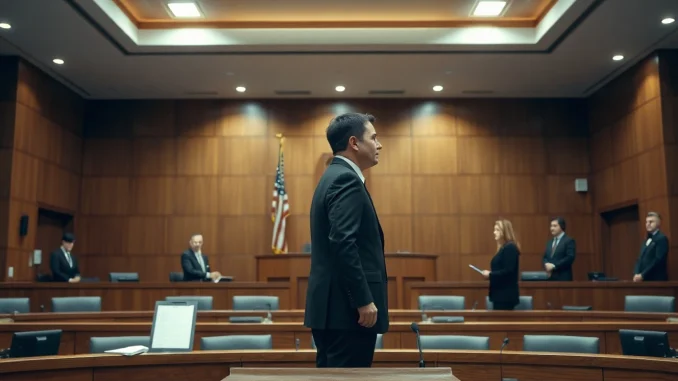
Elon Musk acknowledged under oath Thursday that his artificial intelligence company, xAI, used distillation techniques on OpenAI’s models to train its Grok chatbot, confirming a practice many in the tech industry had long suspected. The admission came during a federal trial in California, where Musk is suing OpenAI, CEO Sam Altman, and co-founder Greg Brockman, alleging they abandoned the company’s original nonprofit mission by shifting to a for-profit structure.
What distillation means for the AI industry
Distillation is a technique where developers systematically query a larger, more capable AI model — often through public APIs or chatbots — to extract its knowledge and then train a smaller, cheaper model that performs nearly as well. While not necessarily illegal, the practice often violates the terms of service set by companies like OpenAI, Anthropic, and Google. These companies have invested billions in compute infrastructure to build their frontier models, and distillation threatens to erode that competitive advantage.
Also read: OpenAI Limits GPT-5.6 Rollout After U.S. Government Request, Calls Restrictions a 'Short-Term Step'
When asked directly whether xAI had used distillation on OpenAI models, Musk responded, “Partly,” and characterized the technique as a general practice among AI companies. His testimony confirms what many engineers and researchers had privately assumed: that even leading American labs use each other’s models to accelerate their own development.
Irony and legal gray areas
The revelation carries a notable irony. Frontier AI labs like OpenAI have themselves faced intense scrutiny over their training data practices, which have involved scraping vast amounts of copyrighted material from the internet without explicit permission. Critics argue that if distillation violates terms of service, it pales in comparison to the copyright concerns surrounding the original model training.
Also read: OpenAI, Google, and SpaceX are all building their own AI chips — here's why that matters
OpenAI, Anthropic, and Google have reportedly formed a working group through the Frontier Model Forum to share information on detecting and preventing distillation attempts, particularly from Chinese firms. These efforts involve monitoring for suspicious patterns of mass queries that could indicate systematic extraction. OpenAI did not respond to a request for comment on Musk’s testimony.
Where xAI stands in the AI race
Later in his testimony, Musk was asked about a claim he made last summer that xAI would soon be far beyond any company except Google. He revised that assessment, ranking Anthropic as the current leader, followed by OpenAI, Google, and Chinese open-source models. He described xAI as a much smaller operation with only a few hundred employees, acknowledging the gap between his company and the frontrunners.
The case highlights the tension between collaboration and competition in the AI sector. Distillation, while potentially violating corporate policies, also accelerates innovation by allowing smaller players to build on the work of larger ones. The legal and ethical boundaries of the practice remain unclear, and Musk’s testimony may influence how courts and regulators view these techniques in the future.
Conclusion
Elon Musk’s admission that xAI used distillation on OpenAI models provides rare public confirmation of a widespread but often opaque industry practice. As the trial continues, the testimony could shape not only the outcome of Musk’s lawsuit but also broader conversations about fair competition, intellectual property, and the rules governing AI development.
FAQs
Q1: What is AI distillation?
A: Distillation is a technique where a developer systematically queries a larger, more capable AI model to extract its knowledge, then uses that data to train a smaller, cheaper model with similar performance. It is often used to create competitive alternatives without the same infrastructure costs.
Q2: Is distillation illegal?
A: Distillation is not explicitly illegal under current law, but it often violates the terms of service of companies that provide access to their models through APIs or public chatbots. Legal challenges may arise under contract law or intellectual property claims.
Q3: Why does this matter for the AI industry?
A: Distillation undermines the competitive advantage that frontier labs have built by investing heavily in compute infrastructure. If smaller companies can replicate top-tier performance cheaply, it could reshape the economics of AI development and accelerate the pace of innovation, while also raising questions about fair use and intellectual property.





Be the first to comment