
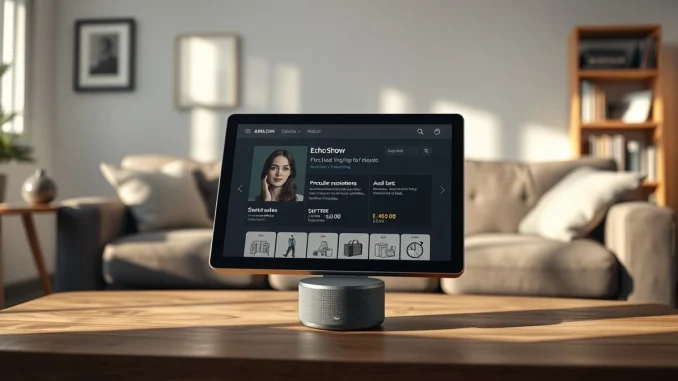
Amazon is once again reshaping how consumers interact with its marketplace. On Wednesday, the company introduced Alexa for Shopping, a new AI-powered shopping assistant built on Alexa+, marking a significant shift from its earlier generative AI experiment, Rufus. The assistant is now rolling out to U.S. customers across mobile devices, desktop browsers, and Echo Show smart displays.
What Alexa for Shopping brings to the table
Unlike Rufus, which focused primarily on product discovery and comparison, Alexa for Shopping aims to deliver a more personalized, proactive shopping experience. The assistant can answer questions ranging from broad product advice — like “What’s a good skincare routine for men?” — to practical account queries such as “When did I last order AA batteries?” Users can interact via voice or by typing directly into the main search bar or a dedicated chat window.
Also read: OpenAI Limits GPT-5.6 Rollout After U.S. Government Request, Calls Restrictions a 'Short-Term Step'
According to Amazon, the assistant learns from individual shopping habits, preferences, and purchase history, tailoring recommendations and even creating custom shopping guides. Over time, the system is designed to become more attuned to each user’s needs.
Beyond recommendations: price tracking, recurring orders, and multi-store shopping
Alexa for Shopping extends well beyond simple Q&A. The assistant can compare products across multiple criteria, track price drops, and schedule automatic recurring orders for household essentials like pet food or paper towels. Users can also set conditional actions, such as: “Add this sunscreen to my cart if the price drops to $10.”
Also read: OpenAI, Google, and SpaceX are all building their own AI chips — here's why that matters
Perhaps the most ambitious feature is the assistant’s ability to shop outside Amazon’s own marketplace. Using a feature called “Buy for Me,” Alexa for Shopping can deal with other online retailers and complete purchases on the user’s behalf. While convenient, this capability raises questions about data privacy and the growing autonomy granted to AI agents in financial transactions.
Why this matters for shoppers and the industry
The launch signals Amazon’s deepening commitment to embedding AI into the core shopping experience. It also reflects a broader industry trend: retailers are racing to deploy conversational, context-aware assistants that reduce friction and encourage repeat purchases. For consumers, the trade-off is between convenience and control — handing over more decision-making to an algorithm may save time, but it also requires trust in how personal data is used and stored.
The move comes shortly after Amazon introduced Amazon Now, a 30-minute delivery service now available in dozens of U.S. cities, and a separate AI feature that generates real-time conversational audio responses to customer product questions. Together, these updates paint a picture of a company betting heavily on speed, personalization, and automation.
Conclusion
Amazon’s transition from Rufus to Alexa for Shopping marks a notable step forward in the integration of generative AI into everyday commerce. By combining voice and text interfaces with deep personalization and multi-retailer purchasing, the company is pushing the boundaries of what an AI shopping assistant can do. However, as these tools become more autonomous, both regulators and consumers will be watching closely to see how Amazon balances innovation with privacy and security.
FAQs
Q1: How is Alexa for Shopping different from Rufus?
Rufus focused on helping customers discover and compare products. Alexa for Shopping offers more personalized recommendations, automates purchases, and can shop across multiple online retailers using the “Buy for Me” feature.
Q2: Is Alexa for Shopping available now?
Yes, it is currently rolling out to U.S. customers and can be accessed via the Amazon mobile app, desktop site, and Echo Show devices.
Q3: Can Alexa for Shopping track prices and set alerts?
Yes. Users can ask the assistant to monitor prices and automatically add an item to the cart when it drops to a specified price.






Be the first to comment