
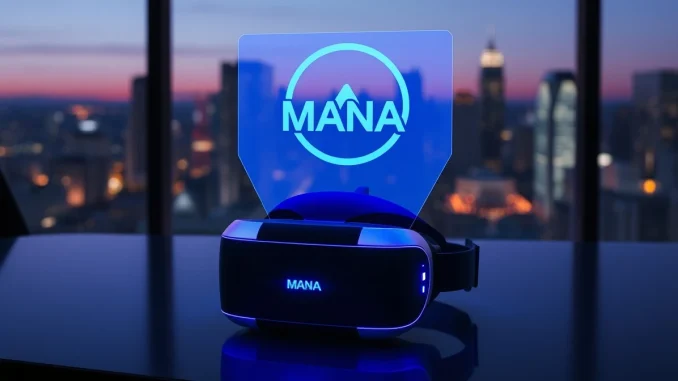
Decentraland (MANA) remains one of the most recognized tokens in the metaverse sector, but its price trajectory through 2026 and beyond faces significant headwinds. As of early 2026, MANA trades well below its all-time high of $5.85, and the question of whether it can reclaim the $1 mark has become a central topic among holders and analysts alike. This article examines the key factors that could influence MANA’s price through 2030, including tokenomics, platform adoption, and broader market conditions.
Current Market Position and Tokenomics
MANA is the native utility token of Decentraland, a blockchain-based virtual world where users can buy, develop, and monetize virtual land and experiences. The token is used for all transactions within the platform, including land purchases, wearables, and event ticketing. As of early 2026, MANA has a circulating supply of approximately 1.9 billion tokens out of a maximum supply of 2.2 billion. The token’s inflation rate is relatively low, with new tokens released primarily through staking rewards and DAO grants. However, the broader cryptocurrency market’s correlation with Bitcoin and macroeconomic factors such as interest rates and regulatory clarity continue to heavily influence MANA’s price movements.
Also read: Arbitrum (ARB) Price Outlook 2026-2030: Can the Layer-2 Token Reach $6?
Key Drivers for MANA Price in 2026–2027
Several developments could impact MANA’s price in the near term. The platform’s ability to retain and grow its user base is critical. Decentraland has faced competition from newer, more technically advanced metaverse platforms, and its daily active user numbers have remained modest compared to peak 2021 levels. Additionally, the broader adoption of virtual real estate and digital asset ownership will depend on mainstream consumer interest, which has cooled since the initial metaverse hype cycle.
Regulatory Environment and Institutional Interest
Regulatory clarity around cryptocurrencies and virtual assets is another major variable. In jurisdictions like the United States and the European Union, ongoing legal frameworks for digital assets could either legitimize platforms like Decentraland or impose restrictions that dampen growth. Institutional interest in metaverse tokens has also waned since 2022, though some venture capital firms continue to fund infrastructure projects that could indirectly benefit MANA.
Also read: Aave (AAVE) Price Outlook 2026–2030: Can the DeFi Token Reach $500?
Can MANA Reach $1? A Realistic Assessment
For MANA to reach $1, its market capitalization would need to rise from roughly $600 million to approximately $2.2 billion at current circulating supply levels — an increase of more than 260%. While not impossible, such a move would require a sustained bullish cycle in the broader crypto market, combined with a significant uptick in Decentraland’s user engagement and revenue generation. Historical price data shows that MANA has reached $1 multiple times during bull markets, but each rally was followed by sharp corrections. Without fundamental improvements in platform utility and adoption, a return to $1 remains speculative.
Long-Term Outlook: 2028–2030
Looking further ahead, MANA’s value will likely depend on Decentraland’s evolution as a platform. The team behind Decentraland continues to develop new features, including improved graphics, cross-platform interoperability, and partnerships with brands and artists. If these efforts lead to sustained user growth and transaction volume, MANA could see gradual price appreciation. However, the token’s supply cap means that scarcity alone is not a guaranteed price driver — demand must keep pace. In a best-case scenario with strong adoption and a favorable macro environment, analysts project MANA could trade between $0.80 and $1.50 by 2030. In a more conservative scenario, the token may remain in the $0.30 to $0.60 range.
Conclusion
Decentraland’s MANA token faces a challenging path to $1. While the platform has first-mover advantage in the metaverse space, its growth has stagnated relative to competitors, and the broader crypto market remains volatile. Investors should weigh the token’s utility, supply dynamics, and the platform’s ability to attract and retain users before making any price predictions. As with all cryptocurrency investments, uncertainty remains high, and long-term forecasts should be treated with caution.
FAQs
Q1: What is the current price of Decentraland (MANA) in 2026?
As of early 2026, MANA is trading around $0.30–$0.40, though prices fluctuate with market conditions. Always check a live price feed for the most current data.
Q2: What factors could push MANA above $1?
A sustained cryptocurrency bull market, significant growth in Decentraland’s user base and transaction volume, and positive regulatory developments could help MANA reach $1. However, these factors are not guaranteed.
Q3: Is MANA a good long-term investment?
MANA carries high risk like most cryptocurrencies. Its long-term value depends on Decentraland’s ability to maintain relevance and attract users in a competitive metaverse environment. Diversification and thorough research are recommended before investing.



Be the first to comment