
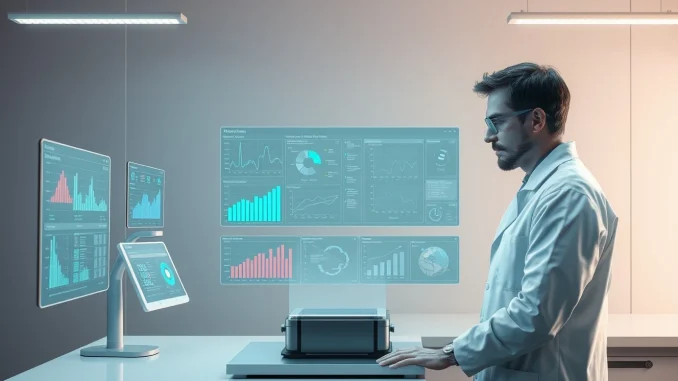
Altara, a San Francisco-based startup, has secured $7 million in seed funding to bridge the data gap that slows down physical sciences. The company’s AI platform unifies fragmented technical data from batteries, semiconductors, and medical devices.
Altara secures $7M to tackle data fragmentation
The funding round was led by Greylock, with participation from Neo, BoxGroup, Liquid 2 Ventures, and Jeff Dean. Altara was founded in 2025 by Eva Tuecke and Catherine Yeo. Tuecke previously conducted particle physics research at Fermilab and worked at SpaceX. Yeo is a former AI engineer at Warp. The two met while studying computer science at Harvard University.
Also read: OpenAI Limits GPT-5.6 Rollout After U.S. Government Request, Calls Restrictions a 'Short-Term Step'
Altara’s AI platform addresses a common problem. Companies developing physical products generate vast amounts of data. This data often ends up scattered across spreadsheets and legacy systems. Engineers struggle to use it to improve products or understand failures.
The challenge of data fragmentation in R&D
Yeo described the problem. “Imagine if you’re a company building next-generation batteries, and a battery fails during cell testing in the R&D process,” she said. “A team of engineers has to manually check many different data sources. These include sensor logs, temperature data, and moisture data. They cross-check historical failure reports.”
Also read: OpenAI, Google, and SpaceX are all building their own AI chips — here's why that matters
This process can take weeks or months. Yeo called it a “scavenger hunt” across multiple data sources. Altara’s AI dramatically slashes this time. It condenses weeks of manual data triaging into minutes.
AI as the hardware equivalent of site reliability engineering
Corinne Riley, a partner at Greylock, compared Altara’s work to site reliability engineers (SREs) in software. If a system fails, an SRE examines the observability stack. They find what caused the outage. Altara aims to do the same for hardware.
For example, Greylock-backed Resolve uses AI to diagnose software failures. Resolve is valued at $1.5 billion. Altara’s vision is to act as the hardware equivalent. It determines exactly what went wrong when a battery or semiconductor wafer map fails.
A different approach from other startups
Altara is not the only startup using AI to accelerate physical sciences. Startups like Periodic Labs and Radical AI are also tackling scientific research. But Altara takes a different, less capital-intensive approach. Rather than replacing decades-old research and manufacturing firms, Altara provides an intelligence layer that plugs into existing data.
Riley views AI for physical science as the “next big frontier.” She predicts an explosion of development in the sector. This suggests that investors see significant potential in bridging the data gap.
Impact on batteries, semiconductors, and medical devices
The data gap affects many industries. In battery development, engineers need to analyze cell testing data. In semiconductors, wafer map failures require extensive investigation. Medical device companies face similar challenges. Altara’s platform aims to streamline these processes.
Industry watchers note that this could reduce product development cycles. Faster failure analysis means quicker improvements. This could lead to better products reaching the market sooner.
Real-world applications and potential
Altara’s AI platform can be applied to various physical sciences. The company targets industries where data fragmentation is a major bottleneck. By unifying data, engineers can focus on innovation rather than data hunting.
The implication is that Altara could become a key tool for R&D teams. Its approach is less disruptive than replacing existing systems. This makes it easier for companies to adopt.
Conclusion
Altara’s $7 million seed funding highlights the growing need for AI solutions in physical sciences. The company’s platform bridges the data gap that slows down innovation. With backing from prominent investors, Altara is positioned to make a significant impact on batteries, semiconductors, and medical devices.
FAQs
Q1: What is Altara’s AI platform?
Altara’s AI platform unifies fragmented technical data from physical sciences, such as batteries, semiconductors, and medical devices, into a single system for faster analysis.
Q2: Who founded Altara?
Altara was founded by Eva Tuecke and Catherine Yeo. Tuecke has a background in particle physics and SpaceX, while Yeo is a former AI engineer at Warp.
Q3: How much funding did Altara secure?
Altara secured $7 million in seed funding led by Greylock, with participation from Neo, BoxGroup, Liquid 2 Ventures, and Jeff Dean.
Q4: What problem does Altara solve?
Altara solves the data gap problem where engineers spend weeks manually searching through scattered data sources to diagnose failures in physical products.
Q5: How is Altara different from other AI startups in physical sciences?
Altara takes a less capital-intensive approach by providing an intelligence layer that integrates with existing data systems, rather than replacing them.




Be the first to comment