
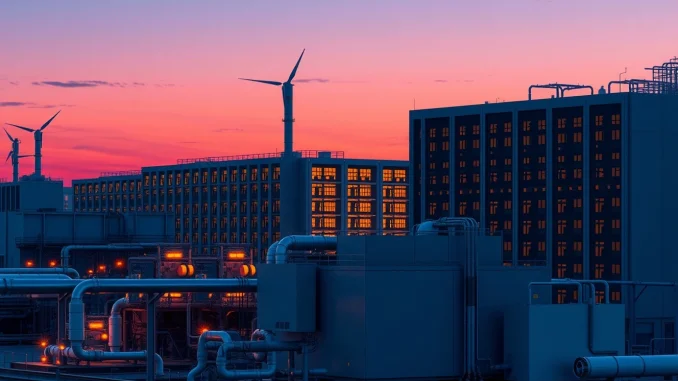
In a strategic shift with major implications for U.S. energy markets, the world’s largest technology companies are racing to secure natural gas supplies and build dedicated power plants. This move is driven by one overwhelming need: electricity for artificial intelligence. Microsoft, Google, and Meta have all announced major projects in recent weeks, signaling a new phase in the AI infrastructure build-out that prioritizes immediate, reliable power over long-term renewable goals. The scale of this pivot is enormous, and it is testing the limits of existing energy supply chains.
The Rush to Lock Down Power
The announcements came in rapid succession. On March 31, 2026, Microsoft confirmed a partnership with Chevron and investment firm Engine No. 1 to develop a natural gas power plant in West Texas. According to company statements, the facility could eventually generate up to 5 gigawatts of electricity. For context, one gigawatt can power approximately 750,000 homes. That same week, Google acknowledged its work with Crusoe Energy Systems on a 933-megawatt natural gas plant in North Texas.
Also read: OpenAI Limits GPT-5.6 Rollout After U.S. Government Request, Calls Restrictions a 'Short-Term Step'
Meta’s plans are perhaps the most staggering. The company added seven natural gas plants to its Hyperion data center campus in Louisiana. This expansion brings the site’s total capacity to 7.46 gigawatts. Data from the U.S. Energy Information Administration shows that’s enough electricity to power the entire state of South Dakota. These investments are concentrated in the southern U.S., home to the prolific Permian Basin and Haynesville shale formations. A 2025 U.S. Geological Survey report estimated one region alone holds enough natural gas to supply the entire United States for nearly ten months.
A Supply Chain Squeeze
This sudden demand from a new, capital-rich industry is causing immediate strain. The scramble for natural gas has created a critical shortage of the turbines needed to build power plants. According to a recent analysis from energy consultancy Wood Mackenzie, prices for these turbines are projected to rise 195% by the end of 2026 compared to 2019 levels. The equipment represents 20% to 30% of a power plant’s total cost.
Also read: OpenAI, Google, and SpaceX are all building their own AI chips — here's why that matters
More concerning is the delivery timeline. Wood Mackenzie notes that companies cannot place new orders for large turbines until 2028. Furthermore, it now takes up to six years for delivery once an order is placed. This suggests tech companies are making billion-dollar bets that AI’s voracious appetite for power will not only continue but grow exponentially for the rest of the decade. They are securing capacity now for AI models that have yet to be built.
The ‘Behind-the-Meter’ Strategy
A key feature of these deals is the “behind-the-meter” approach. Instead of drawing power from the public grid, companies are building plants that connect directly to their data centers. This offers two perceived advantages. First, it guarantees a dedicated power supply immune to grid instability or blackouts. Second, it allows companies to sidestep potential public scrutiny over their fossil fuel use and massive carbon footprint, as the electricity never enters the public ledger.
But analysts warn this is an accounting fiction with real-world consequences. “They’re not eliminating grid strain; they’re just shifting it,” said Dr. Sarah Chen, an energy systems researcher at Stanford University. “They move demand from the electrical grid to the natural gas pipeline network. The physical constraint remains.”
Market Risks and Price Volatility
The tech industry’s pivot assumes U.S. natural gas will remain cheap and abundant. This assumption carries significant risk. While U.S. supplies are currently plentiful, production growth in the three major shale regions—responsible for three-quarters of national output—has slowed considerably. The terms of the tech companies’ gas supply contracts are not public. A lot depends on how firmly prices are locked in.
Even with firm contracts, companies face indirect exposure. Natural gas generates about 40% of U.S. electricity, according to the EIA. Therefore, electricity prices are tightly correlated with natural gas prices. If tech companies’ behind-the-meter operations consume a large enough share of regional gas supply, they could drive up prices for all other buyers on the pipeline network. This would, in turn, increase electricity costs for utilities and consumers.
“We’ve seen this movie before with liquefied natural gas exports,” noted Michael Rodgers, a partner at energy advisory firm RBAC, Inc. “A new, inelastic buyer enters the market and changes the fundamental price dynamics for everyone. Data centers are a 24/7, non-negotiable load. That’s a powerful price driver.”
A Clash with Other Industries
The competition for natural gas could extend beyond household utility bills. Other industries that are more dependent on the fuel and have fewer alternatives may find themselves at a disadvantage. Petrochemical plants, fertilizer manufacturers, and industrial heat users cannot easily switch to wind or solar power. Their processes require the chemical properties of natural gas as a feedstock, not just its energy.
“Powering a data center with renewables and batteries is technically straightforward,” explained Chen. “Running an ammonia plant or a steel mill is not. If data centers corner a growing share of gas supply, it could have cascading effects on manufacturing and agriculture.”
The Weather Wild Card
Extreme weather presents another major risk. A severe cold snap, like the Winter Storm Uri that crippled Texas in February 2021, could force a brutal triage decision. During that event, wellheads froze, and gas supply plummeted just as demand for home heating spiked. Gas suppliers and pipeline operators faced an impossible choice: prioritize fuel for power generation or for home heating.
In a future with massive, behind-the-meter data center loads, that choice becomes even more stark. Would a pipeline operator cut gas to a 5-gigawatt AI data center to keep hospitals and homes warm? The contractual and political ramifications of such a decision are untested.
Conclusion
The AI industry’s headlong rush into natural gas reveals a stark physical truth behind the digital revolution. The creation of artificial intelligence requires staggering amounts of reliable, instantaneous electricity. For now, tech giants view natural gas as the only resource that can meet that demand at the required scale and speed. This strategy secures their immediate operational needs but introduces profound risks. It bets on perpetual gas abundance, stable prices, and societal tolerance for increased competition over a finite resource. The massive investments in turbines and plants lock in this fossil-dependent path for years. What this means for investors is a new layer of energy market exposure in tech portfolios. For the broader public, it signals rising pressure on energy costs and a potential delay in the grid’s transition to renewables. The AI era is being built, literally, on a foundation of burning gas.
FAQs
Q1: Why are tech companies suddenly building natural gas plants?
AI model training and inference require immense, constant electricity. Data centers need more power than the existing grid can reliably provide in many regions. Building dedicated “behind-the-meter” natural gas plants guarantees a direct, controllable power supply to meet this explosive demand.
Q2: What is the “behind-the-meter” approach?
It means building a power generation facility that connects directly to a consumer’s facility (like a data center), bypassing the public electrical grid. This can offer reliability and cost control but shifts energy demand to the natural gas pipeline network instead.
Q3: How could this affect household energy bills?
If data center demand significantly increases competition for natural gas, it could raise the commodity’s price. Since natural gas sets the price for about 40% of U.S. electricity, higher gas costs typically lead to higher electricity bills for everyone connected to the grid.
Q4: Aren’t these companies committed to 100% renewable energy?
Yes, most have long-term goals for renewable power. However, the immediate, 24/7 power demands of AI data centers are difficult to meet solely with intermittent solar and wind. Companies are using natural gas as a bridge fuel, but the scale of these investments suggests this bridge may be long and substantial.
Q5: What are the biggest risks of this strategy?
The main risks are natural gas price volatility, future supply constraints, competition with other industries, and extreme weather events that strain the gas pipeline system. There is also regulatory risk if governments impose carbon costs or restrictions on fossil fuel use for power generation.






Be the first to comment