
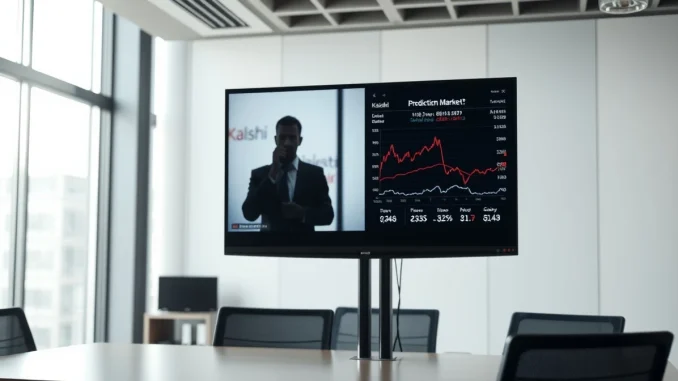
A White House teleprompter operator accused of using nonpublic information to profit from prediction market bets on President Donald Trump’s speeches is no longer employed by the federal government, according to the Associated Press.
A White House official confirmed Tuesday that Gabriel Perez, who had been placed on unpaid leave earlier this month, has left his position. The official declined to specify whether Perez resigned or was fired.
Also read: Revolut Attackers Threaten Daily Data Leaks After Customer IDs Exposed
Allegations and investigation
Perez was accused of using inside knowledge to make more than $100,000 betting on Kalshi prediction markets tied to Trump’s speeches, according to an earlier ABC News report. Kalshi, a regulated prediction market platform, detected suspicious trading activity through its surveillance team and referred the matter to the U.S. Commodity Futures Trading Commission (CFTC).
The platform explicitly prohibits users from trading on information obtained through their employment. The case raises questions about the enforcement of insider trading rules in emerging prediction market platforms, which have grown in popularity as a way to bet on political and economic events.
Also read: Trading Stocks Against BONER: Inside DeFi's Strangest New Market on Robinhood Chain
Implications for prediction markets
The incident highlights the regulatory and ethical challenges facing prediction markets like Kalshi, which operate under CFTC oversight. Unlike traditional financial markets, prediction markets often involve bets on discrete events such as political speeches, policy announcements, or election outcomes — creating potential vulnerabilities for insider trading.
Legal experts note that while insider trading laws are well-established in securities markets, their application to prediction markets is less clear. The CFTC has not publicly commented on the Perez case, and it remains uncertain whether any charges will be filed.
Broader context and industry reaction
This case comes amid increasing scrutiny of prediction markets in the United States. In recent months, several states have moved to regulate or restrict such platforms, citing concerns about market integrity and consumer protection. A federal judge in Minnesota temporarily blocked a state ban on prediction markets earlier this year, reflecting the legal uncertainty surrounding the industry.
Industry observers say the Perez case could prompt stricter compliance measures across prediction market platforms, including enhanced surveillance and clearer rules about employee trading.
Conclusion
Gabriel Perez’s departure from the White House marks a significant development in a case that has drawn attention to the intersection of government service and prediction market trading. While the full scope of the investigation remains unclear, the incident underscores the need for clearer guidelines and enforcement mechanisms as prediction markets continue to expand.
FAQs
Q1: What is Kalshi?
Kalshi is a regulated prediction market platform where users can bet on the outcome of real-world events, including political speeches, economic data releases, and elections. It operates under oversight from the U.S. Commodity Futures Trading Commission (CFTC).
Q2: What are the potential legal consequences for Gabriel Perez?
It is unclear whether Perez faces criminal or civil charges. The CFTC has not publicly commented on the case, and insider trading laws in prediction markets are less defined than in traditional securities markets. The matter remains under investigation.
Q3: How do prediction markets prevent insider trading?
Platforms like Kalshi have surveillance teams that monitor trading activity for suspicious patterns. They also prohibit users from trading on nonpublic information obtained through employment. However, enforcement can be challenging, and the Perez case has highlighted potential gaps in oversight.





Be the first to comment