
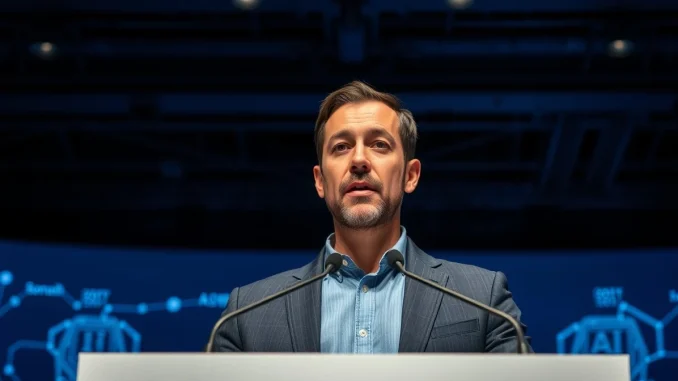
Anthropic CEO Dario Amodei on Monday directly addressed growing industry speculation that his company supports U.S. government efforts to ban open-weight Chinese AI models — or open-weight models altogether. In a blog post, Amodei wrote emphatically: “Anthropic has never advocated for a ban on open-weights models.” His clarification came days after Nvidia CEO Jensen Huang made his first post on X, sharing an open letter from Nvidia, Meta, Microsoft, Hugging Face, Mistral, and others urging policymakers to avoid “premature restrictions” on open-weight AI.
Amodei Draws a Line Between Open-Weight Models and Chinese AI Threats
Amodei argued that open-weight models without dangerous capabilities are a net positive. “They don’t cost anything besides the compute needed to run them, and they provide value to businesses, developers, and researchers,” he wrote. However, he distinguished this from the threat posed by authoritarian governments, particularly China’s Communist Party, which he described as the “most capable” of using AI to achieve “permanent military superiority” or repress citizens.
Also read: Sam Altman Says OpenAI IPO Will Not Happen in 2026: 'Ill-Advised'
The debate has intensified amid allegations that Chinese AI labs are using distillation — a process where an AI bombards another model with prompts to learn its behavior — to effectively steal intellectual property from U.S. companies. The U.S. has threatened sanctions if such IP theft is confirmed.
Open-Weight Models and the Risk of Biological Attacks
Amodei also highlighted a more specific danger: open-weight models could enable biological attacks, not just cybersecurity breaches. He noted that once open-weight models are released, they cannot be withdrawn, citing a report from the UK AI Security Institute. This runs counter to arguments from open-source advocates who say broad access to powerful models helps defenders protect themselves.
Also read: Jensen Huang Says Nvidia Could Grow Revenue 70% Next Year, Backed by Orders Growing 27% a Month
“Open-weights models that don’t have dangerous capabilities are a public good,” Amodei reiterated, but he stressed that the inability to apply guardrails or monitor usage makes them riskier in high-stakes scenarios.
Amodei’s Proposed Countermeasures: Chip Restrictions and Global Safety Testing
To counter the Chinese AI threat, Amodei backed existing U.S. policies restricting China’s access to advanced semiconductors. He also called for a formal crackdown on distillation, which he views as a primary vector for IP theft.
More notably, Amodei expressed support for a global AI safety testing organization, an idea that has gained traction under the Trump administration. “To be effective, testing would need to be global, which means even the CCP would need to be on board,” he wrote. “I think this may actually be possible … limited cooperation around preventing AI biological weapons may be possible because it is in China’s interest too.”
The proposal, while ambitious, reflects a growing consensus in the AI industry that safety standards cannot be enforced unilaterally. Whether China would agree to submit its most advanced models to international testing remains an open question.






Be the first to comment