
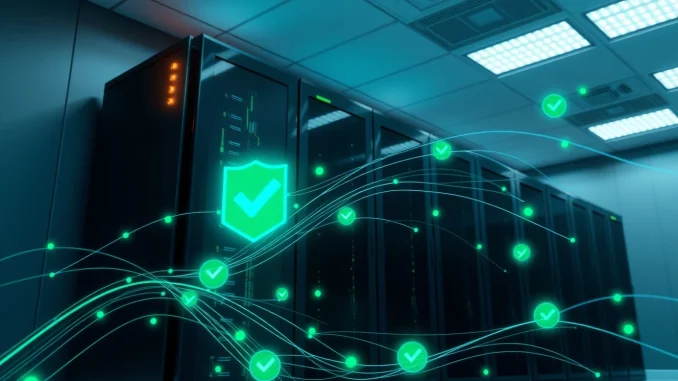
WASHINGTON, D.C. — April 13, 2026. Senior Trump administration officials have privately urged executives from the nation’s largest banks to test a new artificial intelligence model from Anthropic, a move that highlights both the potential and the political complexity of AI in finance. According to a Bloomberg report, Treasury Secretary Scott Bessent and Federal Reserve Chair Jerome Powell summoned bank leaders this week, encouraging them to use Anthropic’s recently announced ‘Mythos’ model to detect system vulnerabilities.
Regulatory Push for AI Testing in Banking
The meeting signals a notable regulatory interest in applying advanced AI to financial system stability. While JPMorgan Chase was named as an initial partner with access to Mythos, sources indicate that Goldman Sachs, Citigroup, Bank of America, and Morgan Stanley are also conducting tests. This suggests a coordinated, sector-wide evaluation is underway. The push from top financial regulators is significant. It places a powerful, general-purpose AI model at the center of critical infrastructure security discussions. Industry watchers note that such a direct endorsement from the Treasury and Fed is rare for a specific technology from a single company, especially one engaged in legal disputes with the government.
Also read: OpenAI Limits GPT-5.6 Rollout After U.S. Government Request, Calls Restrictions a 'Short-Term Step'
The Paradox of Anthropic’s Powerful Model
Anthropic announced Mythos earlier this week, immediately noting it would limit access. The company stated that Mythos—though not specifically trained for cybersecurity—demonstrates a surprising and potent ability to find security weaknesses in code and systems. “This capability emerged as a secondary feature of the model’s general reasoning,” an Anthropic spokesperson explained. Some analysts see the limited release as a prudent safety measure. Others view it as savvy marketing. “Positioning a product as ‘too powerful’ is a classic enterprise sales strategy,” said Dr. Elena Rodriguez, a technology policy fellow at the Brookings Institution. “It creates exclusivity and urgency. However, the involvement of federal regulators lends substantial credibility to the claimed capability.”
A Clash Between Utility and Policy
The situation is layered with contradiction. Anthropic is currently contesting a Trump administration designation from the Department of Defense that labels the company a supply-chain risk. This designation followed failed negotiations over limits on how U.S. government agencies could use Anthropic’s AI models. Yet, another arm of the executive branch is now promoting the company’s latest tool to safeguard the financial system. This suggests a fragmented policy approach. The implication is that different government priorities—national security versus economic stability—are creating conflicting stances toward the same AI developer.
Also read: OpenAI, Google, and SpaceX are all building their own AI chips — here's why that matters
International Scrutiny and Systemic Risk
The story extends beyond U.S. borders. The Financial Times reported that U.K. financial regulators are separately discussing the potential risks posed by the Mythos model. Their concern likely centers on the systemic implications. If multiple major global banks integrate the same core AI for vulnerability detection, it could create a new, centralized point of failure. What this means for investors is a need to monitor both the efficiency gains and the concentration risks that such AI adoption brings. A tool that finds flaws could, in theory, be repurposed to exploit them. Data from the Bank for International Settlements shows that financial firms reported a 25% increase in sophisticated cyber intrusion attempts in 2025.
How Mythos Could Change Financial Security
The potential application in banking is vast. Financial institutions manage legacy systems built over decades, often containing millions of lines of code. Manual security audits are slow and can miss complex, emergent vulnerabilities. An AI like Mythos could scan this code at historic speed and scale. Key areas for testing likely include:
- Payment Processing Networks: Identifying flaws in real-time transaction systems.
- Trading Platforms: Scanning for exploits that could manipulate markets.
- Customer Data Repositories: Finding weak points in personal financial information storage.
- Interbank Communication Protocols: Assessing the security of systems that connect major financial players.
This suggests a shift from reactive cybersecurity to proactive, AI-driven threat hunting. But the technology is not a silver bullet. Its effectiveness depends on the quality of its training data and the interpretability of its findings. A model that finds a vulnerability must also explain it in a way human engineers can understand and fix.
Broader Implications for AI Governance
The episode reveals the growing tension between innovation promotion and risk control in AI policy. The administration is simultaneously:
- Engaging in a legal fight with Anthropic over defense usage controls.
- Promoting the same company’s model for protecting the economy’s core.
This could signal a pragmatic, use-case-specific approach to AI regulation. Alternatively, it may indicate a lack of a cohesive strategy. For the AI industry, the message is mixed. A model deemed too sensitive for wide release is being fast-tracked into the most sensitive sector of the economy. The outcome of this testing phase will be critical. It will influence how regulators worldwide view the deployment of general-purpose AI in regulated industries.
Conclusion
The encouragement for banks to test Anthropic’s Mythos model marks a key moment for AI in finance. Driven by top U.S. regulators, this move acknowledges AI’s potential to fortify systemic defenses. Yet it unfolds against a backdrop of legal conflict and international caution. The coming months will show whether Mythos delivers on its promise, and whether its integration makes the financial system more resilient or introduces new, unforeseen challenges. The story of Anthropic’s model is now a central test case for balancing AI’s power with its perils.
FAQs
Q1: What is the Anthropic Mythos model?
Anthropic’s Mythos is a new general-purpose AI model. The company reports it has demonstrated a strong, emergent capability to find security vulnerabilities in software and computer systems, even though it was not specifically trained for cybersecurity tasks.
Q2: Why are Trump administration officials involved?
Treasury Secretary Scott Bessent and Fed Chair Jerome Powell met with bank executives and encouraged testing of the Mythos model. Their involvement suggests a high-level regulatory interest in using advanced AI to identify weaknesses in the financial system’s infrastructure.
Q3: Isn’t Anthropic in a legal dispute with the government?
Yes. The Department of Defense has designated Anthropic a supply-chain risk after talks broke down over limits on government use of its AI. This creates a paradoxical situation where one part of the administration is in court with Anthropic while another is promoting its technology.
Q4: Which banks are testing the model?
While JPMorgan Chase is an official launch partner, reports indicate Goldman Sachs, Citigroup, Bank of America, and Morgan Stanley are also conducting evaluations. This points to a broad, industry-wide assessment coordinated by regulators.
Q5: What are the potential risks of using such AI in finance?
Analysts point to several risks: the AI could have flaws or biases itself; over-reliance on a single tool could create a centralized point of failure; and the model’s powerful capabilities could potentially be misused if they fell into the wrong hands. U.K. regulators are also examining these systemic risks.



Be the first to comment