
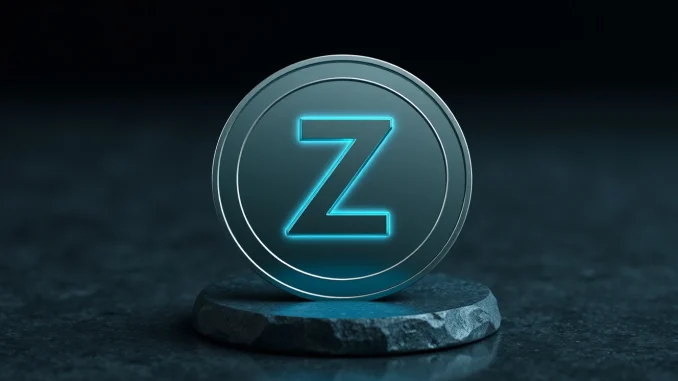
Zcash (ZEC) has long stood as a cornerstone of privacy-focused cryptocurrency technology, offering shielded transactions through zero-knowledge proofs. As the market evolves with increasing regulatory scrutiny and demand for digital privacy, questions around ZEC’s long-term price trajectory from 2026 through 2030 have become more nuanced. This article examines the fundamental factors, network developments, and market conditions that could shape Zcash’s value in the coming years, rather than offering speculative price targets.
Understanding Zcash’s Core Value Proposition
Zcash differentiates itself through its use of zk-SNARKs (zero-knowledge succinct non-interactive arguments of knowledge), which allow transactions to be verified without revealing sender, receiver, or amount. This technical foundation gives ZEC a distinct position in the cryptocurrency ecosystem, particularly as global conversations around financial privacy and surveillance intensify. Unlike Bitcoin or Ethereum, where all transaction data is public by default, Zcash offers users the option of shielded transactions. This optional privacy model has both attracted users seeking confidentiality and drawn attention from regulators concerned about illicit finance.
Also read: Notcoin (NOT) Price Prediction 2026-2030: Can the Telegram Gaming Token Stage a Recovery?
Network Upgrades and Development Roadmap
The Zcash development community, managed by the Electric Coin Company and the Zcash Foundation, has continued to release network upgrades aimed at improving usability, scalability, and privacy. The NU5 upgrade, activated in May 2022, introduced the Orchard shielded protocol, which significantly reduced transaction costs and improved the user experience for shielded transactions. Future upgrades are expected to further streamline privacy features and potentially integrate cross-chain compatibility. These technical advancements are critical for maintaining ZEC’s relevance in a competitive arena where other blockchains, including Monero and Ethereum-based privacy solutions, are also vying for market share.
Regulatory Space and Its Impact on Privacy Coins
The regulatory environment is arguably the most significant external factor affecting Zcash’s price trajectory. In recent years, several jurisdictions have moved to restrict or delist privacy-focused cryptocurrencies. Exchanges in South Korea, Japan, and parts of Europe have removed ZEC from their platforms due to compliance concerns. Conversely, the growing global emphasis on data privacy—spurred by high-profile data breaches and surveillance scandals—could drive demand for truly private digital transactions. The outcome of this tension between privacy rights and regulatory oversight will heavily influence ZEC’s adoption and, consequently, its market value.
Also read: Monero (XMR) Price Prediction 2026–2030: Can Privacy Coins Sustain Momentum?
Market Position and Competitive Dynamics
Zcash currently holds a smaller market capitalization compared to leading cryptocurrencies, but it maintains a dedicated user base and development community. Its primary competitor, Monero, offers mandatory privacy by default, which some users prefer for its simplicity. However, Zcash’s optional transparency feature makes it more palatable for institutions and regulated entities that require auditability. This hybrid model could become a strategic advantage if regulatory frameworks demand a balance between privacy and compliance. Additionally, the broader adoption of zero-knowledge proofs in other blockchain projects, such as Ethereum’s layer-2 scaling solutions, could indirectly validate Zcash’s technology and increase interest in its native token.
Supply Dynamics and Halving Events
Zcash’s monetary policy includes a fixed maximum supply of 21 million coins, mirroring Bitcoin’s scarcity model. The network also undergoes periodic halving events, which reduce the block reward for miners. The next halving is expected around late 2026, based on the network’s block schedule. Historically, halving events have been associated with increased price volatility and, in some cases, upward price pressure due to reduced new supply entering the market. However, past performance is not indicative of future results, and the impact of halving on ZEC’s price will depend on concurrent demand and market sentiment.
Conclusion
Zcash’s price from 2026 through 2030 will likely be shaped by a combination of technological progress, regulatory decisions, and broader cryptocurrency market trends. The network’s development roadmap, particularly improvements to usability and scalability, will be significant for retaining and growing its user base. Meanwhile, the evolving global stance on financial privacy will determine whether ZEC becomes a niche tool or a widely adopted asset. Investors and users should approach price predictions with caution, focusing instead on the underlying fundamentals and real-world utility of the protocol. As with any cryptocurrency investment, thorough research and risk assessment are essential.
FAQs
Q1: What makes Zcash different from other privacy coins like Monero?
Zcash offers optional privacy through shielded transactions, allowing users to choose between transparent and private transfers. Monero, by contrast, makes all transactions private by default. This difference gives Zcash a unique position for users who require both privacy and auditability.
Q2: How does Zcash’s halving schedule affect its price?
Zcash undergoes halving events approximately every four years, reducing the block reward for miners. The next halving is expected around late 2026. While halvings can create supply-side pressure that may influence price, their actual impact depends on market demand and broader economic conditions.
Q3: Is Zcash legal to use and trade?
Zcash is legal in most countries, but some jurisdictions have restricted or banned privacy-focused cryptocurrencies due to concerns about money laundering and tax evasion. Users should verify the legal status of Zcash in their specific country or region before trading or using the network.





Be the first to comment