
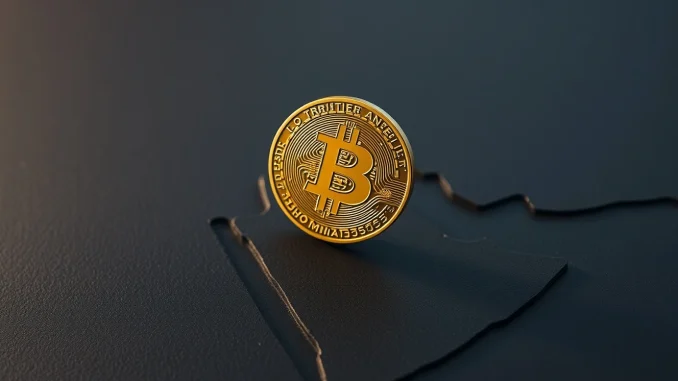
The recent bounce in Bitcoin’s price is on shaky ground. According to a leading market analyst, the ongoing conflict involving Iran has created a domino effect that will likely dictate financial market trends for the rest of 2026, pushing back hopes for Federal Reserve interest rate relief.
Bitcoin’s Fragile Recovery Meets Geopolitical Reality
Bitcoin’s price climbed roughly 5.8% starting April 6, briefly pushing above $73,000. But the rally lost steam, settling near $71,000 by April 11. This pullback coincided with reports of a breakdown in diplomatic talks. Data from TradingView shows Bitcoin was trading at about $71,276 as of April 13.
Nic Puckrin, founder of the Coin Bureau media outlet, describes the situation bluntly. “Now almost a week old, the Bitcoin recovery is ‘fragile,'” he told Cointelegraph. The crypto market, he argues, is facing intense headwinds that extend far beyond digital asset charts.
“Even if the war ends now, its repercussions will likely be the story of 2026, and certainly the dominant narrative for Q2,” Puckrin stated. His analysis points to a direct link between Middle East instability, global inflation, and central bank policy. This connection forms a major challenge for risk assets like Bitcoin.
Also read: Spain’s CNMV Chair Rules Out MiCA Deadline Extension for Crypto Firms, Impacting Binance
The Iran Conflict’s Direct Market Impact
The geopolitical trigger was a sharp escalation in early April. According to the Kobeissi Letter, peace talks between the US and Iran failed dramatically. “Peace talks appear to have come to a screeching halt,” the report noted, calling the outcome “arguably the worst-case scenario.”
In response, US President Donald Trump announced a significant military move. On Saturday, April 11, he stated he had directed the US Navy to form a blockade around the Strait of Hormuz. He also instructed the Navy to interdict vessels that had paid tolls to Iran. This critical waterway handles about 20% of global oil trade.
The immediate economic effect was an inflationary spike. The US Bureau of Labor Statistics’ Consumer Price Index report for March, published April 10, showed the conflict’s influence. Rising energy costs fueled by the crisis are chilling hopes for further interest rate cuts this year.
How Geopolitics Disrupts the Fed’s Plans
Rate cuts typically stimulate asset prices by making borrowing cheaper and reducing the appeal of safe-haven assets. The current environment is having the opposite effect. Members of the Federal Open Market Committee are now divided on the path forward for 2026.
Minutes from the March FOMC meeting reveal deep concern. Policymakers cited inflation pressures stemming directly from the war. The committee did not rule out an interest rate hike in 2026 if inflation remains stubbornly above the Fed’s 2% target.
Market expectations have shifted dramatically. According to the CME FedWatch Tool, traders see a high probability of no change at the Fed’s upcoming April and June meetings. The chance of a rate cut at the July meeting has fallen to just 33.6%.
Puckrin’s forecast aligns with this cautious outlook. “I don’t expect to see a rate cut until late Q3 or Q4, if at all,” he said. This extended period of restrictive monetary policy creates a difficult backdrop for speculative investments.
Bitcoin’s Path to $90,000 Requires a Perfect Calm
For Bitcoin to mount a sustained recovery and challenge its all-time highs, Puckrin outlines a specific set of conditions. The bar is now set high due to the geopolitical overhang.
“For a push toward $90,000, we would need to see a combination of factors,” he explained. His checklist includes:
- A durable ceasefire that meaningfully reduces geopolitical tensions.
- A sustained drop in oil prices toward $80 per barrel, easing inflation inputs.
- Softer-than-expected economic data that calms fears of stagflation.
In the shorter term, technical levels are critical. Puckrin notes that if Bitcoin can close the week above $71,000, it could signal continued upside. However, significant resistance is forming around the $74,000 level. He also observed that Bitcoin continues to trade below its 200-day exponential moving average, a key long-term trend indicator watched by many institutional traders.
What This Means for Investors in 2026
The implication is clear: 2026 is shaping up to be a year dominated by geopolitical risk assessment. For cryptocurrency investors, this means traditional market drivers like Bitcoin halving cycles or ETF flows may take a backseat.
Instead, headlines from the Middle East, oil price charts, and monthly CPI reports will command attention. The war has effectively shortened the timeline for macroeconomic news to impact digital asset prices. A single statement from a central banker or a new development in the Strait of Hormuz can now trigger immediate volatility.
Industry watchers note that this environment tests the ‘digital gold’ narrative for Bitcoin. In theory, it should act as a hedge against inflation and geopolitical instability. In practice, its correlation with traditional risk assets like tech stocks has often been stronger during periods of market stress.
The current situation suggests Bitcoin is caught between these identities. It is reacting to its role as a risk-on tech asset sensitive to interest rates, while its proponents watch for signs it will decouple and serve as a true safe haven.
Conclusion
Bitcoin’s fragile recovery faces a formidable challenge. The fallout from the Iran conflict has injected sustained uncertainty into global markets, pushing back the timeline for supportive monetary policy. Analysts now see the geopolitical situation as the dominant narrative for the second quarter of 2026 and likely beyond. For Bitcoin to break free from its current range and advance, markets will need to see concrete de-escalation, lower oil prices, and cooling inflation data—a tall order in the current climate. Investors should prepare for a period where macro headlines outweigh crypto-specific news.
FAQs
Q1: Why is the Iran war affecting Bitcoin’s price?
The conflict is driving up oil prices and global inflation. This makes the Federal Reserve hesitant to cut interest rates. Higher rates for longer tend to pressure riskier assets like stocks and cryptocurrencies, as they increase the cost of capital and make safe assets like bonds more attractive.
Q2: What does the analyst mean by a ‘fragile’ Bitcoin recovery?
The recent price increase from around $69,000 to over $73,000 lacked strong momentum and was quickly reversed by negative geopolitical news. This suggests the buying support is weak and the rally could easily fail if more bad news emerges.
Q3: When does the analyst now expect Federal Reserve rate cuts?
Nic Puckrin from Coin Bureau does not expect a rate cut until the late third quarter or fourth quarter of 2026 at the earliest. This is a significant delay from earlier market expectations of cuts beginning in the first half of the year.
Q4: What key price level is Bitcoin trying to hold?
The analyst highlighted the $71,000 level. A weekly close above this price could signal strength and potential movement toward resistance at $74,000. Falling below it could indicate the fragile recovery has broken.
Q5: How does the Strait of Hormuz blockade impact markets?
The Strait of Hormuz is a critical chokepoint for global oil shipments. A naval blockade threatens supply, which can spike oil prices. Higher energy costs feed directly into broader inflation, complicating central bank policy and hurting consumer and business sentiment.





Be the first to comment