
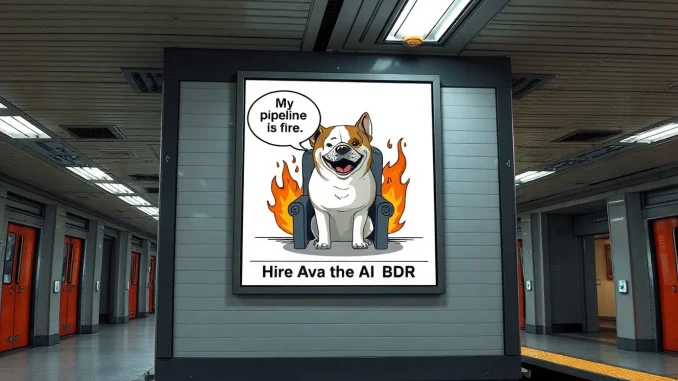
The artist behind the viral ‘This is fine’ meme says an AI startup stole his work. KC Green, the creator of the iconic comic, accused Artisan of using his art without permission. The ad appeared in a subway station. It shows Green’s smiling dog surrounded by flames. But the dog says, ‘My pipeline is on fire.’ A message below urges commuters to ‘Hire Ava the AI BDR.’
Artist reacts to stolen art by AI startup Artisan
Green posted about the ad on Bluesky on May 3, 2026. He wrote that he’s ‘been getting more folks telling me about this.’ He added that ‘it’s not anything I agreed to.’ Green called the ad ‘stolen like AI steals.’ He told followers to ‘please vandalize it if and when you see it.’
Also read: OpenAI Limits GPT-5.6 Rollout After U.S. Government Request, Calls Restrictions a 'Short-Term Step'
The post quickly gained attention. Many users shared the image. Some expressed anger at Artisan. Others questioned how the company obtained the art. Green’s response was direct and emotional. He said the ad took ‘time out of my life to try my hand at the American court system instead of putting that back into what I am passionate about, which is drawing comics and stories.’
Artisan responds to the controversy
TechCrunch reached out to Artisan for comment. The company said, ‘We have a lot of respect for KC Green and his work, and we’re reaching out to him directly.’ In a follow-up email, Artisan said it had scheduled time to speak with Green. But the damage was already done. Green said he will be ‘looking into representation.’ He added that he ‘feel I have to.’
Also read: OpenAI, Google, and SpaceX are all building their own AI chips — here's why that matters
This is not Artisan’s first brush with controversy. The startup previously ran billboards urging businesses to ‘Stop hiring humans.’ Founder and CEO Jaspar Carmichael-Jack insisted that message was about ‘a category of work,’ not ‘humans at large.’ But critics saw it as tone-deaf. The new ad campaign seems to follow a similar pattern.
The meme’s journey from webcomic to corporate ad
‘This is fine’ first appeared in Green’s webcomic ‘Gunshow’ in 2013. The comic shows a dog sitting in a burning room. The dog says, ‘This is fine.’ It became a meme almost immediately. People used it to comment on everything from climate change to bad relationships. Green has not disavowed the character. He recently turned the comic into a game. But the meme has clearly escaped his control.
Green is not alone. Many artists have seen their work used without permission. Memes spread fast online. Companies often grab them for marketing. But using art without permission is different. It raises questions about copyright and fair use. Green’s case is a clear example of this tension.
Legal options for artists facing AI theft
Green’s situation mirrors other high-profile cases. Cartoonist Matt Furie sued Infowars for using his character Pepe the Frog in a poster. Furie and Infowars eventually settled. That case set a precedent. Artists can fight back when their work is used commercially without permission. Green seems ready to do the same.
But legal action is not easy. Green said it ‘takes the wind out of my sails.’ He has to spend time on the ‘American court system instead of putting that back into what I am passionate about.’ This is a common complaint among artists. The legal system is slow and expensive. Many creators cannot afford to fight.
What this means for the AI industry
The Artisan case highlights a bigger issue. AI startups often train their models on copyrighted material. They argue that this is fair use. But artists disagree. They say their work is being stolen. The legal market is still unclear. Courts have not yet ruled definitively on AI training data. But cases like Green’s could set important precedents.
Industry watchers note that the outcome of this dispute could affect how AI companies operate. If artists win, startups may need to change their practices. They might have to license content or pay royalties. This could slow down AI development. But it could also protect creators’ rights.
Timeline of the ‘This is fine’ meme and Artisan ad
- 2013: KC Green publishes ‘This is fine’ in his webcomic ‘Gunshow.’
- 2013-2026: The meme spreads globally. It is used in countless contexts.
- May 2026: Artisan runs a subway ad featuring Green’s art without permission.
- May 3, 2026: Green posts about the ad on Bluesky. He calls it stolen.
- May 4, 2026: TechCrunch reports on the controversy. Artisan says it will reach out to Green.
The timeline shows how fast these disputes can escalate. A single ad can spark a major controversy. Social media amplifies the issue. Artists now have a platform to speak out. But they still face an uphill battle.
Conclusion
The ‘This is fine’ creator’s accusation against AI startup Artisan is a stark reminder of the tensions between artists and tech companies. KC Green’s art was used without permission in a subway ad. He is now considering legal action. The case highlights the broader debate over AI and copyright. Artists want control over their work. AI startups want access to data. The outcome of this dispute could shape the future of both industries. For now, Green’s message is clear: ‘These no-thought A.I. losers aren’t untouchable and memes just don’t come out of thin air.’
FAQs
Q1: Who is KC Green?
A1: KC Green is the artist who created the ‘This is fine’ meme in 2013. He is a webcomic creator known for his work on ‘Gunshow.’
Q2: What did Artisan do?
A2: Artisan, an AI startup, used Green’s ‘This is fine’ art in a subway ad without his permission. The ad promoted their AI sales tool, Ava.
Q3: Is Green suing Artisan?
A3: Green said he is ‘looking into representation’ and considering legal action. He has not filed a lawsuit yet as of May 4, 2026.
Q4: Why is this case important?
A4: It highlights the ongoing conflict between artists and AI companies over copyright. The outcome could set a precedent for how AI startups use copyrighted material.
Q5: Has Artisan faced similar controversies before?
A5: Yes, Artisan previously ran billboards saying ‘Stop hiring humans,’ which drew criticism. Founder Jaspar Carmichael-Jack defended the message as being about work categories, not people.


Be the first to comment