
In this article5 sections
Polymarket is reviewing dozens of bets tied to the Nov. 3 US midterm elections, and at least two of those cases have been referred to the Commodity Futures Trading Commission (CFTC), the company’s head of global intelligence and investigations, Shana Bautista, told NPR. Cointribune reported the referral alongside the surveillance details, and News.bitcoin put the backdrop into numbers: 506 individual election markets, $24 million traded on House control and $9 million on the Senate.
Key facts
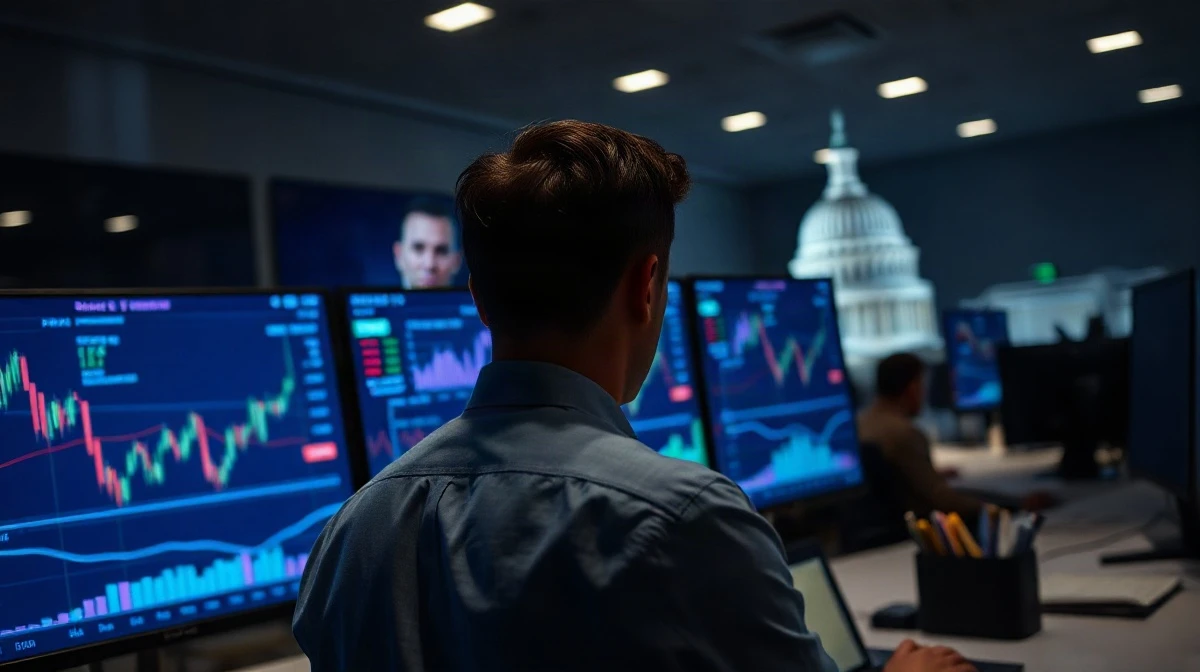
- Bautista leads a 16-person team that screens for insider trading and manipulation across Polymarket’s election markets before the November 3 vote.
- At least two Polymarket cases were referred to the CFTC, according to a person familiar with the probes who was cited by NPR and not authorized to speak publicly.
- The surveillance system ingests social media, Federal Election Commission filings, cryptocurrency firm data, banking partner data and statistical models, and triggers hundreds of alerts daily, according to Bautista.
- News.bitcoin reported $24 million in House bets and $9 million in Senate bets, and cited more than $220 million in combined midterm trading across prediction markets by mid-October.
- Polymarket does not disclose which cases it examined or what follow-up action it took on each.
Inside the monitoring system
Bautista, a former FBI official and cryptocurrency analyst, joined Polymarket in June and now oversees election-market controls. Her team pulls what she described to NPR as gigabytes of data per user. When a trader trips internally defined thresholds, an alert lands on her phone. The reports describe the warning signs in general terms: short bursts of trading, several accounts behaving alike, and device identifiers shared across trades.
Also read: Kalshi, Polymarket Hit Record $2.7B Weekly Crypto Volume
Bautista declined to state the exact criteria, citing system security, but said an alert is a pointer to activity worth checking rather than a finding of wrongdoing. She also said her team feeds the tactics it uncovers back into the detection system — the phrasing News.bitcoin used was that investigators incorporate findings from previous cases to sharpen later detection.
Coverage spans two venues. The US-regulated Polymarket exchange requires identity verification; Polymarket International allows cryptocurrency trading without systematic public identification. Bautista told NPR that anonymity rarely holds up in her team’s cases. NPR quoted her saying there has never been a case they worked where they could not potentially identify the people involved, and that if someone has information they have a duty to protect, they should not trade on it, since it breaches terms on both platforms and may break the law.
Also read: Judge denies CFTC emergency motion to halt New York enforcement case against Kalshi
Market odds and rival Kalshi’s record
The investigations run alongside heavy trading. Polymarket’s congressional control markets, as of Tuesday, October 27, 2026, according to News.bitcoin, priced a Democratic House victory at 92% and a Democratic Senate victory at 66%, with a Democratic sweep of both chambers at 65% and a Republican sweep at 8%. House control was projected at 236 Democratic seats to 199 Republican seats, and the Senate at 52 to 48. Individual Senate races drew money too: Texas led the battlegrounds at $7 million in volume, with Michigan and Maine at $3 million each.
Kalshi, Polymarket’s main competitor, built its own election controls on FEC data. News.bitcoin reported that Kalshi banned and fined political candidates who bet on themselves in April and issued a lifetime ban to former US Rep. George Santos in July over trading on his own appearances. NPR reported that Kalshi said in July it had blocked dozens of staffers, though at least one staffer told NPR they found a way around the restriction; Kalshi had said it opened over 150 investigations since the start of the year and sent more than 20 cases to law enforcement, per Cointribune.
Insider concerns predate this round of reviews. In May, campaign staffers told NPR they earned thousands of dollars betting on their own candidates using unpublished polling. Rajiv Sethi, an economics professor at Barnard College, told NPR that election markets can act as a self-fulfilling prophecy, because beliefs about a candidate’s momentum can shift behavior and prices.
Polymarket has pointed to its own enforcement history. Before this election cycle it referred more than 100 cases across various markets to law enforcement, per News.bitcoin. Cointribune reported that in April Polymarket partnered with blockchain analysis firm Chainalysis, days after an active-duty US soldier was indicted over bets placed using classified information about an operation targeting Nicolás Maduro; the soldier pleaded not guilty. The CFTC, meanwhile, has done little to police prediction markets, leaving much of the monitoring to operators, per NPR.
Why it matters
Prediction markets have become a sizable venue for political wagering, and the operators, not the federal regulator, are doing most of the policing. A referral to the CFTC is the strongest step available to a platform short of a criminal case, and it puts enforcement discretion back with an agency that has so far taken a light touch. Traders who assume crypto-funded positions are untraceable are the audience Bautista’s team is aimed at, and the results of these reviews will shape how much weight the market’s odds carry.
What to watch
The November 3 midterms are the near-term test: the volume of alerts, how many investigations convert into referrals, and whether the CFTC acts on the cases already sent will indicate how well the controls hold during the heaviest trading period. Polymarket has not said when, or whether, it will detail individual cases.
Reported by cointribune.com.
Sources: Cointribune, News.bitcoin, Npr