
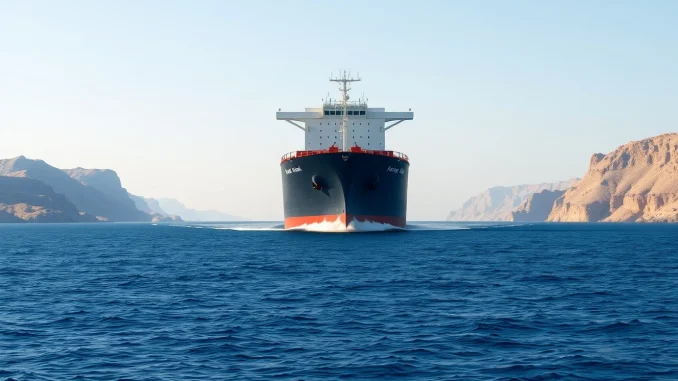
NEW YORK, April 18, 2026 – Traders on the Polymarket prediction platform now see a 73% probability that commercial traffic through the Strait of Hormuz will return to normal by May 31. This significant shift follows an announcement from Iranian officials about a temporary opening tied to a fragile ceasefire. The odds, which briefly touched 82%, reflect a volatile market reassessing geopolitical risk in one of the world’s most critical oil chokepoints.
Polymarket Odds Spike on Ceasefire Announcement
According to data from Polymarket, the contract asking “Will the Strait of Hormuz return to normal traffic by May 31, 2026?” saw a rapid price increase on Friday, April 17. The ‘Yes’ share price jumped, translating to a market-implied probability of 73%. This represents a major swing from earlier in the week. The catalyst was a statement from Iranian Foreign Minister Seyed Abbas Araghchi on the social media platform X. He declared the strait “completely open” for commercial vessels during the ceasefire period, following a coordinated route published by Iran’s Ports and Maritime Organization.
Also read: Botanix shutdown: Does Bitcoin DeFi have a demand problem?
Prediction markets like Polymarket allow users to trade shares based on the outcome of real-world events. The price of a ‘Yes’ share correlates directly with the crowd-sourced probability. This sharp move suggests traders are interpreting the Iranian announcement as a credible, though temporary, de-escalation. However, the odds for a return to normalcy by the end of April remain much lower at just 40%. This indicates the market sees substantial risk that the situation could deteriorate again quickly.
Geopolitical Context of the Strait’s Importance
The Strait of Hormuz is not just another waterway. Approximately 20% of the world’s daily oil supply passes through its narrow confines. That’s about 21 million barrels per day. Any disruption sends immediate shockwaves through global energy markets and, by extension, the broader economy. The recent conflict involving Iran, the United States, and regional actors had raised fears of a prolonged closure. Insurance premiums for vessels spiked. Shipping companies rerouted cargoes at great cost.
Also read: Bitcoin Options Traders Hedge Downside as Uncertainty Lingers, Anchorage Digital Reports
The ceasefire, announced in April, remains tenuous. US President Donald Trump stated on Friday that a US naval blockade would “remain in full force and effect” until dealings with Iran were complete. This creates a complex situation. The strait may be technically open per Iran’s declaration, but the presence of a US blockade and unresolved core issues means the path to true “normal” traffic is fraught. Industry watchers note that normalcy implies not just physical passage but also the restoration of standard insurance rates and the confidence of shipping firms to schedule transit without contingency plans.
Market Reactions Beyond Prediction Markets
The financial ripple effects were immediate and widespread. The price of Bitcoin surged on the news, briefly touching $78,000 before settling around $77,358. Crypto markets have shown heightened sensitivity to Middle East tensions, often reacting to shifts in global risk sentiment. More traditional markets also moved. Oil prices dipped on the prospect of increased supply stability, though the drop was muted by skepticism about the ceasefire’s durability.
Analyst Nic Puckrin provided context to Cointelegraph. He described the ceasefire as “fragile” and noted that unresolved core issues would likely cast a shadow over markets for most of 2026. Puckrin suggested the conflict could push back any potential Federal Reserve interest rate cuts to the third quarter of 2026, at the earliest. His view underscores how a single geopolitical flashpoint can alter macroeconomic forecasts. “A ceasefire that results in the end of geopolitical tensions, a sustained drop in oil prices toward $80, and ideally also softer-than-expected economic data that calms stagflation fears” are all needed for BTC to reclaim the $90,000 level, Puckrin said.
How Prediction Markets Function as Information Tools
Polymarket operates as a decentralized information platform. Unlike opinion polls, it requires traders to stake real money on their beliefs. This is thought to incentivize accuracy and aggregate dispersed knowledge. When the odds on a contract like the Hormuz traffic question move dramatically, it signals a collective update in beliefs based on new data. The platform has gained attention for its real-time odds on political elections and current events.
However, these markets are not perfect crystal balls. They can be influenced by liquidity, news sentiment, and the composition of the trader pool. The rapid retreat from a high of 82% down to 73% for the May 31 contract demonstrates this volatility. It suggests initial optimism was tempered by further reflection on the complexities involved. The lower odds for an April resolution (40%) show traders are hedging their bets for the near term.
Broader Implications for Shipping and Energy
The direct impact on global shipping is profound. The Strait of Hormuz connects the Persian Gulf with the Gulf of Oman and the open sea. Major oil exporters like Saudi Arabia, Iraq, the UAE, and Kuwait depend on it. A closure would force tankers to take longer, more expensive routes, squeezing global oil supply. The mere threat of disruption has kept a ‘risk premium’ baked into oil prices for months.
Data from shipping analytics firms shows a tentative increase in vessel transits following Iran’s announcement. But the numbers are not yet at pre-conflict levels. The implication is that commercial actors are proceeding with caution. They are likely waiting for sustained calm and clearer signals from military actors before fully committing to normal schedules. This lag between political announcement and commercial normalization is precisely what the Polymarket contracts are trying to price.
Conclusion
The spike in Polymarket odds to a 73% chance of normalized Strait of Hormuz traffic by May 31, 2026, highlights a cautious market optimism. It is a direct reaction to Iran’s ceasefire-linked announcement. Yet the fragility of the geopolitical situation and the stark difference between May and April odds reveal deep underlying uncertainty. For investors and industries, the prediction market serves as a dynamic barometer. It synthesizes complex political and military developments into a single, tradable probability. The coming weeks will test whether the crowd’s wisdom, as reflected in these Polymarket odds, proves correct or if the volatile strait lives up to its reputation for disruption.
FAQs
Q1: What is Polymarket?
Polymarket is a decentralized prediction market platform where users can trade shares based on the outcome of real-world events. The price of a ‘Yes’ share represents the market’s collective probability of that event occurring.
Q2: Why is the Strait of Hormuz so important?
The strait is a critical maritime chokepoint for global oil trade. Around 20% of the world’s daily oil supply, or about 21 million barrels, passes through it. Disruption there directly impacts global energy prices and economic stability.
Q3: What does ‘return to normal traffic’ mean in this context?
For traders, it likely means the restoration of pre-conflict shipping patterns, including standard insurance premiums, the absence of military threats to vessels, and the confidence of shipping companies to operate without special security measures or rerouting.
Q4: How accurate are prediction markets like Polymarket?
Research suggests prediction markets often aggregate information effectively because traders are financially incentivized to be correct. However, they can be swayed by sentiment, news cycles, and low liquidity, especially for niche contracts.
Q5: What was the immediate market reaction to Iran’s announcement?
Beyond the Polymarket odds spike, Bitcoin’s price rose briefly above $78,000, and oil prices dipped. This shows how news from the Strait of Hormuz quickly affects both digital asset and traditional commodity markets.




Be the first to comment