
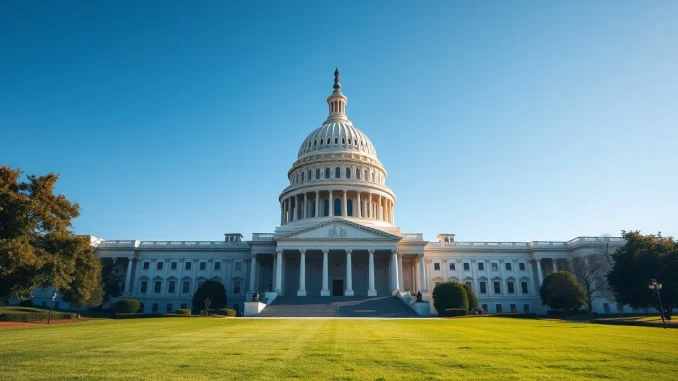
Three major stories are shaping the crypto arena today: a key US Senate committee is preparing to mark up the CLARITY Act amid lingering ethics concerns from Democrats, Circle has raised $222 million in a private token presale for its Arc blockchain network, and Bitcoin briefly dipped before rallying 2.3% after President Donald Trump rejected Iran’s latest peace proposal.
CLARITY Act markup faces ethics hurdles
The US Senate Banking Committee is scheduled to consider the Digital Asset Market Clarity Act (CLARITY) on Thursday, after months of delays. The bill, which passed the House in July 2025, aims to provide a regulatory framework for digital assets, but some Senate Democrats are holding out over ethics provisions. Senator Kirsten Gillibrand told Cointelegraph that negotiations remain positive, but stressed the need for “real ethics reforms so politicians can’t cash in on their insider status for personal gain.” The bill must also pass through the Agriculture Committee, which approved its version in January. The outcome could set a precedent for how Congress handles crypto oversight.
Circle raises $222M in ARC token presale
Circle Internet Group, the issuer of USDC, has sold 740 million ARC tokens at $0.30 each in a private placement led by a16z crypto, valuing the Arc blockchain at $3 billion on a fully diluted basis. The round included BlackRock, Apollo Funds, ARK Invest, Bullish, and others. Circle disclosed the sale alongside its Q1 2026 results, which showed higher revenue but lower net income. The move marks Circle’s expansion beyond stablecoin issuance into blockchain infrastructure, with Arc designed as a settlement layer for stablecoin finance and tokenized assets. Circle’s stock (CRCL) rose about 3% in premarket trading to $116.70, extending a 40% year-to-date gain.
Bitcoin rallies 2.3% after Trump rejects Iran peace offer
Bitcoin (BTC) briefly fell from $81,430 to $80,520 within 45 minutes of Trump’s Truth Social post calling Iran’s counteroffer “totally unacceptable,” but quickly recovered to $82,347, a 2.3% gain. The volatility wiped out nearly $64 million in short positions over four hours, according to Coinglass. The US-Iran conflict, including the dispute over the Strait of Hormuz, has disrupted oil markets, with crude rising another 4.6% to $98.70 per barrel. S&P 500 futures edged up 0.13% after the news. The rejection dashes hopes for a quick end to hostilities, with Israeli Prime Minister Benjamin Netanyahu adding that the war will not end until Iran’s uranium sites are dismantled.
Also read: Spain’s CNMV Chair Rules Out MiCA Deadline Extension for Crypto Firms, Impacting Binance
Conclusion
Today’s developments underscore the intersection of politics, regulation, and geopolitics in crypto markets. The CLARITY Act markup could define US digital asset policy for years, Circle’s ARC token sale signals growing institutional interest in blockchain infrastructure, and Bitcoin’s reaction to geopolitical events continues to demonstrate its sensitivity to macro risk. Readers should monitor the Senate markup this week and further developments in US-Iran negotiations.
FAQs
Q1: What is the CLARITY Act?
The Digital Asset Market Clarity Act (CLARITY) is a US bill that aims to establish a federal regulatory framework for digital assets, including stablecoins and tokenized securities. It passed the House in July 2025 and is now under consideration by the Senate Banking Committee.
Q2: Why did Circle raise $222 million in a token presale?
Circle sold 740 million ARC tokens to fund the development of its Arc blockchain, a layer-1 network focused on stablecoin finance and tokenized assets. The sale was led by a16z crypto and included major institutional investors.
Q3: How did Bitcoin react to Trump rejecting Iran’s peace proposal?
Bitcoin initially dropped from $81,430 to $80,520 within 45 minutes of Trump’s post, but then rallied 2.3% to $82,347. The move liquidated nearly $64 million in short positions, highlighting the market’s sensitivity to geopolitical events.


Be the first to comment