
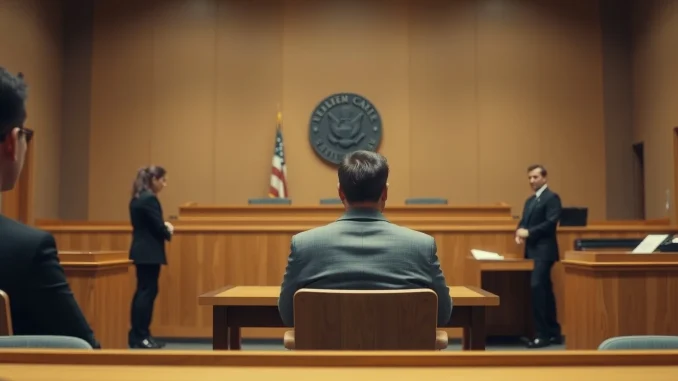
A federal court in Oakland heard testimony Thursday from a former OpenAI employee and a board member who said the company’s push to bring AI products to market compromised its founding commitment to safety. The hearing is part of Elon Musk’s lawsuit seeking to dismantle OpenAI’s for-profit structure, arguing it violates the organization’s original mission to ensure artificial general intelligence (AGI) benefits humanity.
Testimony reveals shift from research to product focus
Rosie Campbell, who joined OpenAI’s AGI readiness team in 2021 and left in 2024 after her team was disbanded, testified that the company’s culture changed significantly during her tenure. “When I joined it was very research-focused and common for people to talk about AGI and safety issues,” she said. “Over time it became more like a product-focused organization.”
Also read: Claude is quietly winning over paying AI consumers, data shows, even as ChatGPT still dominates
Campbell’s testimony was echoed by the closure of another safety team, the Super Alignment team, in the same period. Under cross-examination, she acknowledged that building AGI likely requires substantial funding, but argued that developing super-intelligent models without adequate safety measures contradicts the mission she originally joined.
Microsoft deployment of GPT-4 in India flagged as red flag
Campbell pointed to an incident where Microsoft deployed a version of OpenAI’s GPT-4 model in India through its Bing search engine before the company’s Deployment Safety Board (DSB) had evaluated it. While she noted the model itself did not present a huge risk, she emphasized the importance of setting strong precedents. “We want to have good safety processes in place we know are being followed reliably,” she testified.
Also read: Databricks' former AI chief claims his new chip can cut AI's energy bill by 1,000x
The deployment was one of several events that led OpenAI’s non-profit board to briefly fire CEO Sam Altman in 2023. At the time, employees including then-chief scientist Ilya Sutskever and then-CTO Mira Murati raised concerns about Altman’s management style and lack of transparency.
Board members detail governance failures
Tasha McCauley, a board member at the time, testified about a pattern of Altman misleading the board. She said Altman lied to another board member about her intention to remove a third member, Helen Toner, who had published a white paper critical of OpenAI’s safety policy. Altman also failed to inform the board about the decision to launch ChatGPT publicly, and members were concerned about undisclosed conflicts of interest.
“We are a non-profit board and our mandate was to be able to oversee the for-profit underneath us,” McCauley told the court. “Our primary way to do that was being called into question. We did not have a high degree of confidence at all to trust that the information being conveyed to us allowed us to make decisions in an informed way.”
The board reversed its decision to fire Altman after staff sided with him and Microsoft worked to restore the status quo, with board members opposed to Altman stepping down.
Expert witness says process failures undermine safety mission
David Schizer, a former Dean of Columbia Law School serving as an expert witness for Musk’s team, echoed McCauley’s concerns. “OpenAI has emphasized that a key part of its mission is safety and they are going to prioritize safety over profits,” Schizer said. “Part of that is taking safety rules seriously, if something needs to be subject to safety review, it needs to happen. What matters is the process issue.”
Under questioning, Campbell admitted that in her “speculative opinion,” OpenAI’s safety approach is superior to that of xAI, Musk’s AI company acquired by SpaceX earlier this year. OpenAI declined to comment on its current approach to AGI alignment but noted it releases model evaluations and shares a safety framework publicly. The company hired Dylan Scandinaro, formerly of Anthropic, as its head of Preparedness in February. Altman said the hire would let him “sleep better tonight.”
Broader implications for AI governance
McCauley said the governance failures at OpenAI should be a reason to embrace stronger government regulation of advanced AI. “[If] it all comes down to one CEO making those decisions, and we have the public good at stake, that’s very suboptimal,” she testified.
The case highlights a fundamental tension in the AI industry: how to balance rapid product development with safety oversight, especially when non-profit boards are tasked with overseeing for-profit entities. The outcome of Musk’s lawsuit could set a precedent for how AI companies structure their governance and prioritize safety.
Conclusion
As AI becomes deeply embedded in for-profit companies, the issues raised in this case extend far beyond a single lab. The testimony from former employees and board members paints a picture of an organization struggling to maintain its safety mission amid commercial pressures. The court’s decision could have lasting implications for AI governance and the balance between innovation and public safety.
FAQs
Q1: What is the core argument of Elon Musk’s lawsuit against OpenAI?
The lawsuit argues that OpenAI’s transformation from a non-profit research organization into a for-profit company broke the implicit agreement of its founders to ensure AGI benefits humanity. Musk seeks to dismantle the for-profit structure.
Q2: What specific safety failures were highlighted in the court testimony?
Witnesses cited the disbanding of safety teams (AGI readiness and Super Alignment), the deployment of GPT-4 in India without proper safety evaluation, and a lack of transparency from CEO Sam Altman to the non-profit board.
Q3: Why does this case matter beyond OpenAI?
The case raises broader questions about how AI companies govern themselves, particularly when non-profit boards oversee for-profit operations. It could influence future regulation and industry standards for AI safety.



Be the first to comment