
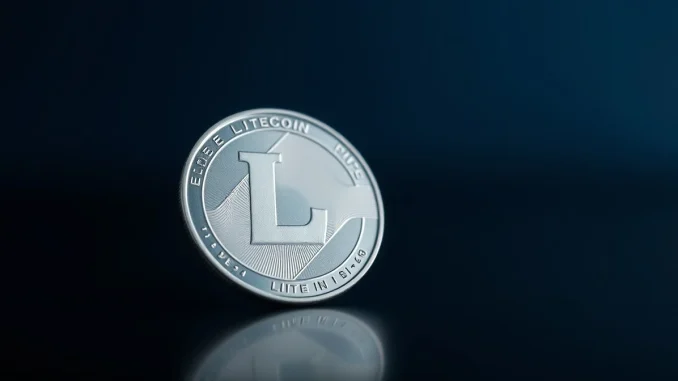
Litecoin (LTC), often referred to as the silver to Bitcoin’s gold, has maintained a consistent presence in the cryptocurrency market since its launch in 2011. As investors look ahead to 2026 and beyond, understanding LTC’s potential price trajectory requires examining its network fundamentals, adoption trends, and broader market cycles rather than relying on speculative forecasts.
Litecoin’s Position in the Evolving Crypto Space
Litecoin continues to operate as a proof-of-work blockchain with a focus on faster transaction times and lower fees compared to Bitcoin. Its halving events, which reduce block rewards approximately every four years, have historically influenced supply dynamics and, in some cases, preceded price increases. The most recent halving occurred in August 2023, reducing the block reward from 12.5 LTC to 6.25 LTC. The next halving is expected around mid-2027, which could affect supply-side pressures.
Also read: Notcoin (NOT) Price Prediction 2026-2030: Can the Telegram Gaming Token Stage a Recovery?
Adoption metrics such as active addresses, transaction volume, and merchant acceptance provide a more grounded basis for price analysis. Litecoin has seen steady integration into payment platforms and remains one of the most widely accepted cryptocurrencies for retail transactions. However, its market dominance has declined relative to newer blockchain networks offering smart contract capabilities.
Market Cycles and Historical Price Patterns
Cryptocurrency markets have historically moved in cycles often aligned with Bitcoin’s halving events. Litecoin has tended to follow broader market trends while exhibiting its own volatility. After reaching an all-time high near $413 in May 2021, LTC experienced a prolonged bear market, trading in a range between $50 and $100 through much of 2022 and 2023. The 2024 bull cycle saw renewed interest, with LTC briefly surpassing $120 before retracing.
Also read: Monero (XMR) Price Prediction 2026–2030: Can Privacy Coins Sustain Momentum?
Analysts point out that past performance does not guarantee future results, and the crypto market’s increasing correlation with macroeconomic factors—such as interest rates, regulatory developments, and institutional adoption—adds complexity to price predictions. Regulatory clarity in major economies like the United States and the European Union could either constrain or catalyze LTC’s growth depending on how frameworks classify and treat proof-of-work assets.
What Could Drive LTC Higher by 2030?
Several factors could support a higher LTC price over the long term. First, Litecoin’s brand recognition and first-mover advantage in payments give it a durable niche. Second, ongoing development such as the MimbleWimble Extension Blocks (MWEB) upgrade enhances privacy and fungibility, which may attract users seeking transaction confidentiality. Third, if institutional investors increasingly allocate to a diversified basket of digital assets, Litecoin’s established track record and liquidity could make it a candidate for inclusion.
On the other hand, competition from faster and more programmable blockchains, shifting user preferences toward proof-of-stake networks, and potential environmental regulations targeting proof-of-work mining present headwinds. The net effect of these opposing forces will determine LTC’s price trajectory more than any single prediction model.
Conclusion
Litecoin’s price between 2026 and 2030 will likely reflect a combination of its fundamental utility, broader market cycles, and regulatory developments. While optimistic scenarios envision LTC revisiting or exceeding its all-time high if crypto adoption deepens, conservative estimates suggest gradual appreciation tied to network growth. Investors should treat any specific price targets with caution and focus on Litecoin’s real-world adoption and technological evolution as more reliable indicators of long-term value.
FAQs
Q1: What is the next Litecoin halving date?
The next Litecoin halving is expected around mid-2027, approximately every 840,000 blocks. This event will reduce the block reward from 6.25 LTC to 3.125 LTC.
Q2: Is Litecoin a good long-term investment?
Litecoin has demonstrated longevity and consistent network usage since 2011. However, like all cryptocurrencies, it carries significant volatility and risk. Long-term investors should assess their own risk tolerance and consider diversification.
Q3: How does Litecoin differ from Bitcoin?
Litecoin offers faster block generation times (2.5 minutes vs. Bitcoin’s 10 minutes) and uses a different hashing algorithm (Scrypt vs. SHA-256). These differences make LTC transactions quicker and cheaper, though it has a smaller market capitalization and less network security.



Be the first to comment