
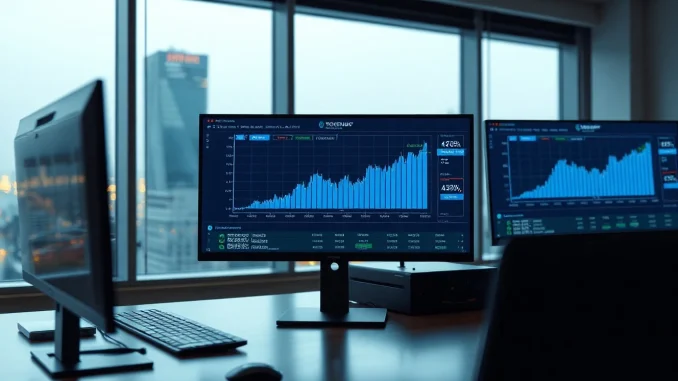
The tokenized real-world asset (RWA) market has grown by more than 420% since the start of 2025, reflecting a structural shift in how institutional capital accesses blockchain-based financial products. According to data from analytics platform RWA.xyz, the sector’s market capitalization rose from approximately $5.8 billion on January 1, 2025, to over $30.2 billion by late April 2026.
Tokenized Treasurys lead the surge
Tokenized US Treasury products were the primary driver of this expansion. Their market capitalization climbed from $3.9 billion at the beginning of 2025 to more than $15 billion by April 2026. Dominick John, an analyst at Zeus Research, told Cointelegraph that the growth reflects a transition from speculative inflows toward yield-driven capital allocation. “Tokenized Treasurys offer compliant onchain access to real-world yield and effectively turn blockchain rails into a distribution layer for institutional capital,” John said.
Commodities, particularly tokenized gold, also saw notable gains. John noted that heightened geopolitical volatility has driven interest in 24/7 markets that provide continuous liquidity and global access when traditional venues are closed.
Regulatory clarity attracts institutional players
Clearer regulatory frameworks, including Europe’s Markets in Crypto-Assets Regulation (MiCA), have encouraged traditional financial institutions to enter the RWA space. In a report published Thursday, CoinGecko’s head of research, Zhong Yang Chan, and research analyst Yuqian Lim noted that the sector previously rallied on hype but has now begun to take substantive shape. “Regulatory clarity has enabled major TradFi institutional players to dip their toes in. As early experiments paved the way by turning into best practices and playbooks, the pace of tokenization has noticeably accelerated,” they wrote.
Also read: Spain’s CNMV Chair Rules Out MiCA Deadline Extension for Crypto Firms, Impacting Binance
Major asset managers have moved into the space. BlackRock launched its USD Institutional Digital Liquidity Fund (BUIDL) in March 2024, providing onchain access to short-term US government debt. Fidelity followed in September 2025 with its own tokenized Fidelity Digital Interest Token (FDIT).
What this means for the broader crypto market
The expansion of tokenized RWAs signals a maturation of the digital asset ecosystem, moving beyond speculative trading toward real-world financial utility. Cathie Wood’s ARK Invest has projected that digital assets could grow into a $28 trillion market by 2030, with tokenized RWAs, Bitcoin, decentralized finance, and stablecoins as key drivers.
Long-term growth may depend on diversification
While tokenized Treasurys and commodities have led the current wave, analysts caution that sustained expansion will require growth in other asset classes. “Growth remains strong as tokenized Treasurys keep absorbing capital and bring more institutions on board, but the rate of expansion should moderate as the easiest flow has been allocated,” John said. “The next leg higher depends on whether tokenized equities, funds and private credit scale meaningfully.”
Conclusion
The tokenized RWA market has experienced rapid, substantiated growth driven by regulatory clarity and institutional adoption. While tokenized Treasurys and commodities have been the primary catalysts, the sector’s long-term trajectory will depend on diversification into equities, funds, and private credit. The trend underscores a broader shift toward integrating blockchain technology with traditional finance.
FAQs
Q1: What are tokenized real-world assets?
Tokenized RWAs are digital tokens that represent ownership or rights to physical or financial assets, such as government bonds, commodities, or real estate, on a blockchain.
Q2: Why has the RWA market grown so quickly since 2025?
The growth has been driven by regulatory clarity, particularly in Europe under MiCA, and increased participation from traditional financial institutions seeking compliant onchain access to yield-bearing assets.
Q3: What are the main risks associated with tokenized RWAs?
Risks include regulatory uncertainty in some jurisdictions, smart contract vulnerabilities, reliance on off-chain asset custodians, and potential liquidity mismatches. Investors should conduct independent due diligence.





Be the first to comment