
In this article4 sections
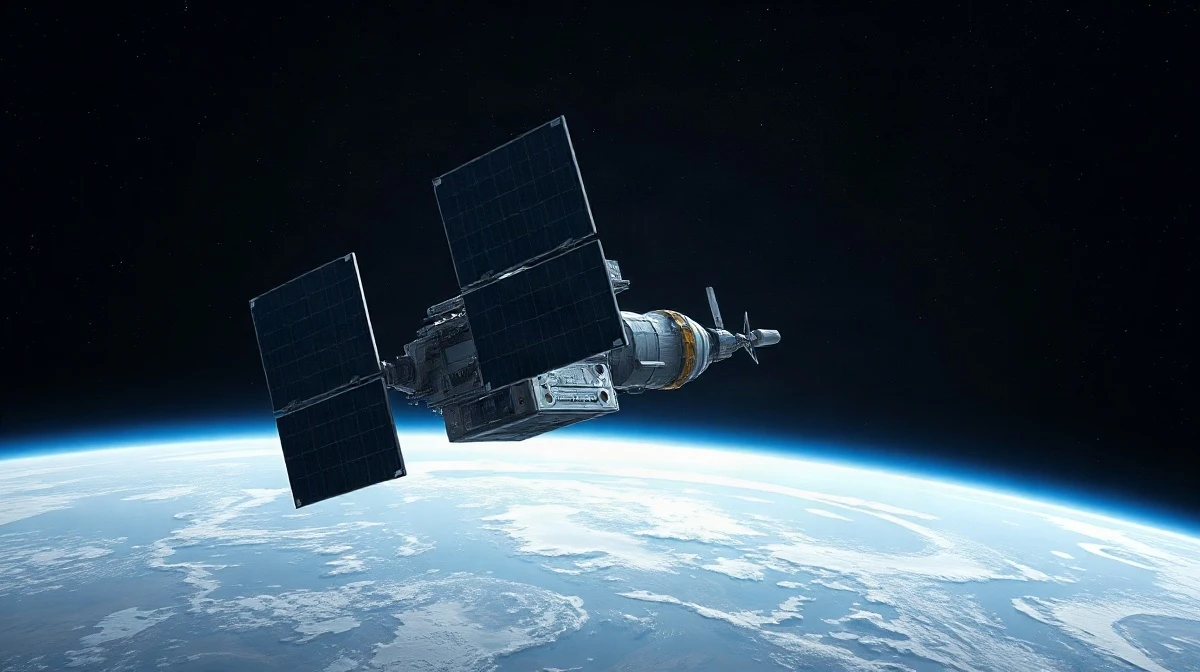
Starcloud, a startup building satellites designed to run AI inference in orbit, has secured a $250 million extension to its Series A round, bringing the company’s valuation to $2.3 billion. The additional capital, announced Wednesday, will fund a larger manufacturing facility and accelerate development of Starcloud-3, the company’s largest orbital data center spacecraft, which is designed to launch aboard SpaceX’s Starship rocket.
The funding comes as the orbital computing sector faces a mounting challenge: securing reliable launch capacity. SpaceX plans to retire its workhorse Falcon 9 rocket in 2028, and the transition to the much larger but still unproven Starship has created uncertainty for satellite operators planning missions years in advance.
Also read: SpaceX's $75B IPO rests on three near-impossible engineering feats
Securing launch capacity before it runs out
CEO Philip Johnston told TechCrunch that the company is moving quickly to lock in launch contracts. “We can see what’s coming—we’re going to need to book an enormous amount of launch,” he said. “One of the biggest costs is now on securing your launch capacity. Launch is pretty constrained right now because Falcon 9 program is scheduled to end in 2028.”
Starcloud has already filed a request with the Federal Communications Commission to operate 88,000 spacecraft. The company is exploring multiple options, including purchasing a dedicated Falcon 9 flight and signing contracts with other providers to support future missions. “As soon as we can, we want to get under contract with things like Starship,” Johnston added.
The launch bottleneck extends beyond SpaceX. Blue Origin’s New Glenn and ULA’s Vulcan are not yet flying at regular cadence, and Rocket Lab’s Neutron has not reached the pad. The constraints have become so severe that at least one orbital data center startup has opted to develop its own rockets rather than depend on external providers.
Orbital inference: the path to production
For the near term, Starcloud is focused on launching two of its new-generation Starcloud-2 spacecraft, each equipped with 8 kW of compute capacity, on rideshare missions in 2027. These satellites will perform orbital inference tasks for customers, including U.S. government agencies.
The company’s long-term strategy, however, hinges on Starship’s ability to dramatically reduce launch costs. Johnston said he remains confident in SpaceX’s capability to demonstrate rapid reusability of the world’s most powerful rocket. This week, SpaceX CEO Elon Musk announced a delay of several months in the next attempt to catch a returning Starship booster, with the first re-flight of the vehicle now targeted for late 2026 or early 2027.
“Obviously if we can’t book any SpaceX launch capacity in 2029, that will be challenging for us,” Johnston acknowledged.
Nvidia’s bet on space-grade AI hardware
The funding round was led by Manhattan West Ventures, with notable participation from Nvidia and Cisco. A person familiar with the deal said Nvidia contributed $25 million. Other backers include Benchmark, EQT, Soma, NFX, 776, Cedar Capital, Goanna Capital, and Standard Capital.
Johnston pointed to Nvidia’s investment as validation of Starcloud’s technical approach. The company operates the only Nvidia H100 data center GPU currently in orbit and has completed the first in-space model training run using that hardware. Most other space-based GPUs are limited to edge processing tasks.
Starcloud is sharing operational data with Nvidia as the chipmaker develops its first purpose-built GPU for space, the Vera Rubin Space-1 chip. “The reason they’ve chosen to do this investment now is because of all of this data that we got from Starcloud One,” Johnston said. “They, more than any other VC, did way more technical duty on this than anybody else.”
The space-ready chip has not yet been manufactured, but Starcloud hopes to fly it in late 2028. Engineers are tracking several design variables, including chip operating temperature relative to radiator size, radiation shielding placement, and the ruggedization needed to survive launch forces.
Building a production line in Washington
Starcloud, which employs 25 people and is hiring, is developing production lines at a 100,000-square-foot facility in Woodinville, Washington. The location sits near satellite manufacturing operations for both SpaceX and Amazon, positioning the company within a growing aerospace cluster in the Pacific Northwest.
The company’s progress comes amid broader interest in space-based computing. As terrestrial data centers face power constraints and cooling challenges, orbital inference offers an alternative for workloads that can tolerate latency. The sector’s viability, however, depends on solving the same launch economics that Starcloud is now working to secure.
With the additional capital and a clear roadmap for Starcloud-2 and Starcloud-3, the company is betting that the orbital compute market will mature in step with Starship’s operational debut. The next two years will test whether launch infrastructure can keep pace with the ambitions of companies building data centers above the atmosphere.
This article is for informational purposes only and does not constitute financial advice. The space computing sector involves significant technological and market uncertainty, and investment decisions should be made with appropriate caution.
Source: TechCrunch