
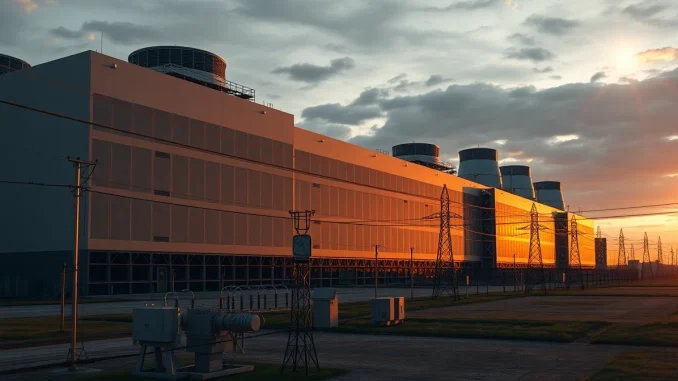
The operator of the largest electrical grid in the United States, PJM Interconnection, will begin cutting power to large data centers during supply shortages starting in June 2027, after an auction for new generating capacity failed to meet demand. The decision, announced this week, marks an escalation in the struggle to balance the explosive growth of energy-hungry data centers with the reliability of the grid that serves 67 million customers from Virginia to Illinois.
Why PJM is curbing data center power
PJM has come under increasing pressure in recent months as wholesale electricity prices have nearly doubled over the past year. The grid operator’s independent market monitor has attributed much of that increase to the rapid expansion of data centers, which are expected to consume four times more electricity by 2035 than they do today. The auction shortfall underscored the challenge: the grid simply cannot add new generation fast enough to keep pace with the influx of large facilities.
Also read: Sam Altman Says OpenAI IPO Will Not Happen in 2026: 'Ill-Advised'
The curtailment program is a form of demand response, a decades-old practice where large users — typically manufacturers — agree to reduce consumption during peak periods in exchange for compensation. PJM will apply the cuts only to data centers 50 megawatts or larger, and participants will receive advance notice ranging from 30 minutes to a few days, depending on forecasted demand. The grid operator is also running another auction for new generating capacity to address the shortfall.
On-site power and the diesel generator dilemma
The prospect of routine power cuts is likely to accelerate a trend already underway: data center operators building their own on-site power generation. Many favor diesel generators because the fuel is widely available and can be stored on-site. Federal regulations allow such generators to run for up to 50 hours per year for demand response events, and up to 100 hours if including emergencies and maintenance.
Also read: Jensen Huang Says Nvidia Could Grow Revenue 70% Next Year, Backed by Orders Growing 27% a Month
But the reliance on diesel carries environmental costs. This week, Vantage Data Centers faced criticism for its apparent coordination with Virginia environmental regulators to cast doubt on a report that found diesel backup generators could contribute tens of millions of dollars in annual health damages for people living near a 96-megawatt data center in Northern Virginia. Those who cannot or choose not to install on-site generation will likely rely on backup generators, which tend to be costlier to run and more polluting than grid power.
What this means for the grid and the data center industry
PJM’s move is a clear signal that the era of unlimited, cheap grid power for large data centers is ending in its territory. The grid operator’s territory covers a broad swath of the eastern US, including major data center hubs in Northern Virginia, which is home to the world’s largest concentration of data centers. The decision will likely spur new data centers — and potentially existing ones — to set up their own sources of on-site power, whether natural gas, diesel, or emerging technologies like fuel cells or battery storage.
For the broader energy industry, the development highlights the tension between the rapid buildout of AI and cloud infrastructure and the physical limits of the electrical grid. Utilities and grid operators across the country are grappling with similar challenges, and PJM’s approach may become a template for other regions. The next PJM auction for new generating capacity will be closely watched as a measure of whether the market can respond fast enough to prevent further strain.






Be the first to comment