
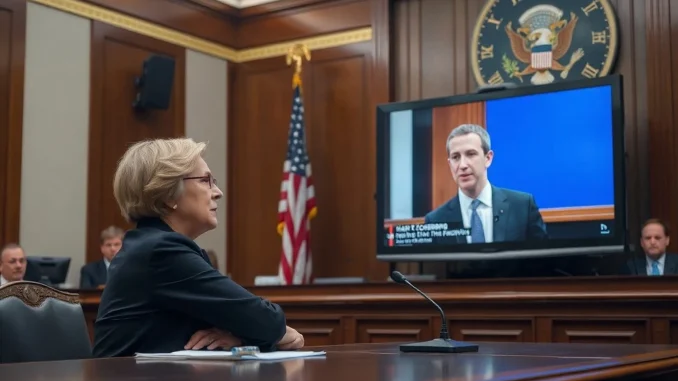
U.S. Senator Elizabeth Warren (D-Mass.) has formally requested that Meta CEO Mark Zuckerberg provide detailed information about the company’s renewed stablecoin initiatives, raising concerns about consumer protections and regulatory oversight. In a letter sent Wednesday, Warren questioned the lack of transparency surrounding Meta’s stablecoin integration, which follows a limited trial payout in USDC to content creators in Colombia and the Philippines last month.
Warren cites Meta’s history with Libra and Diem
Warren, the ranking member of the Senate Banking Committee, pointed to Meta’s failed Libra project—later rebranded as Diem—as a reason for heightened scrutiny. She described the company’s current lack of disclosure as “deeply troubling,” especially given ongoing efforts in Congress to establish a federal framework for digital assets. The senator has asked Zuckerberg to provide answers by May 20 on the scope of the trial, any third-party stablecoins involved, and the privacy safeguards in place.
“It is critical that Meta be transparent with Congress and the public regarding its stablecoin-related plans,” Warren wrote. She added that the company’s history of product safety failures warrants skepticism toward any new financial services offerings.
Regulatory context: The CLARITY Act and stablecoin yield compromise
The letter arrives as the Senate Banking Committee considers the CLARITY Act, a comprehensive digital asset market structure bill that has stalled in the chamber for months. Lawmakers recently announced a compromise between crypto and banking industry representatives on stablecoin yield provisions, which could allow the bill to advance to a markup and potentially a full floor vote. However, some crypto advocates have urged caution, warning that unresolved issues—including ethics and conflicts of interest—remain.
Also read: Spain’s CNMV Chair Rules Out MiCA Deadline Extension for Crypto Firms, Impacting Binance
Warren’s request for information underscores the tension between innovation and consumer protection in the rapidly evolving stablecoin market. Her committee oversees financial regulators including the Securities and Exchange Commission (SEC), which has taken an increasingly active role in digital asset enforcement.
Why this matters for Meta and the crypto industry
Meta’s renewed interest in stablecoins signals a potential shift in strategy after the Libra/Diem collapse, which faced intense regulatory pushback globally. If Meta proceeds with a broader rollout, it could bring stablecoin payments to billions of users across Facebook, Instagram, and WhatsApp. However, the company must manage a fragmented regulatory environment and rebuild trust with lawmakers who remain wary of its data privacy record.
For the broader crypto industry, the outcome of this exchange could influence how large technology platforms integrate digital currencies. A transparent, compliant approach from Meta might accelerate mainstream adoption, while regulatory clashes could reinforce calls for stricter oversight.
Conclusion
Senator Warren’s letter to Mark Zuckerberg marks a significant development in the ongoing debate over stablecoin regulation in the United States. As Meta explores new payment products, the company faces heightened scrutiny from Congress and federal regulators. The answers Zuckerberg provides by May 20 could shape the trajectory of both Meta’s crypto ambitions and the legislative framework governing digital assets.
FAQs
Q1: What did Senator Warren ask Mark Zuckerberg about Meta’s stablecoin plans?
Warren requested detailed information on Meta’s stablecoin trial, including launch dates, third-party stablecoins involved, and privacy guardrails. She cited concerns about transparency and consumer protection, referencing Meta’s failed Libra project.
Q2: Has Meta already launched a stablecoin product?
Meta rolled out a limited trial in April 2026, paying select creators in Colombia and the Philippines using USDC (USD Coin). The trial is described as “small and focused,” with no confirmed public launch date.
Q3: What is the CLARITY Act and how does it relate to stablecoins?
The CLARITY Act is a proposed U.S. digital asset market structure bill under consideration in the Senate Banking Committee. It aims to establish a federal framework for digital assets, including rules for stablecoin issuers. A recent compromise on stablecoin yield provisions may help advance the legislation.


Be the first to comment