
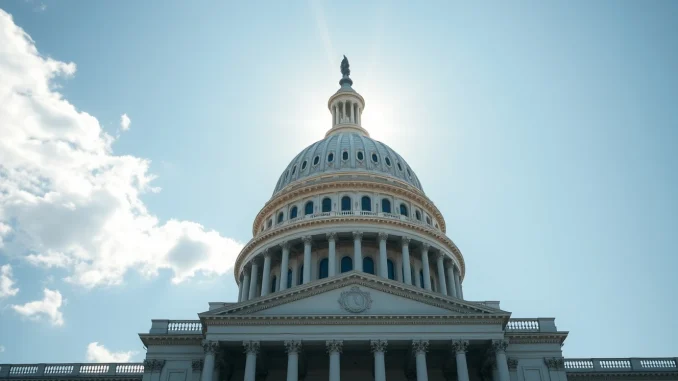
A senior member of the U.S. Senate Banking Committee has confirmed that comprehensive cryptocurrency market structure legislation is on track for April 2026 consideration, signaling a potential breakthrough in Washington’s long-stalled efforts to regulate digital assets. This development comes after years of fragmented regulatory approaches and industry uncertainty.
Senate Banking Committee Sets April 2026 Crypto Framework Deadline
According to sources familiar with the committee’s schedule, lawmakers plan to introduce and mark up legislation next month. The timeline represents the most concrete commitment to date from the panel responsible for financial regulation. Committee staff have been working through technical details since late 2025.
This push follows multiple high-profile crypto firm failures that exposed regulatory gaps. The 2022 collapse of FTX alone affected millions of customers and resulted in billions in losses. Industry watchers note that these events created political pressure for clearer rules.
What the Proposed Legislation Would Address
The forthcoming bill aims to resolve fundamental questions about how cryptocurrencies should be classified and regulated. Current U.S. regulation operates under a patchwork system where different agencies claim jurisdiction based on how they interpret existing laws.
Also read: Spain’s CNMV Chair Rules Out MiCA Deadline Extension for Crypto Firms, Impacting Binance
Key areas the legislation is expected to cover:
- Asset Classification: Clear criteria for when a digital asset is a security versus a commodity
- Trading Platform Oversight: Registration requirements for crypto exchanges and trading venues
- Consumer Protection: Standards for custody, disclosures, and conflict-of-interest management
- Market Integrity: Rules to prevent manipulation and ensure fair trading practices
Data from the Blockchain Association shows that regulatory uncertainty has caused some crypto firms to limit U.S. operations or move overseas. This legislation could reverse that trend.
The SEC vs. CFTC Jurisdiction Battle
A central challenge has been determining whether the Securities and Exchange Commission (SEC) or the Commodity Futures Trading Commission (CFTC) should have primary authority. The SEC has pursued numerous enforcement actions under its interpretation that most tokens are securities. Meanwhile, the CFTC has argued for broader commodity classification.
Previous legislative attempts failed to bridge this divide. The new framework reportedly creates a pathway for tokens to transition from securities to commodities once they achieve sufficient decentralization. This suggests a compromise that acknowledges the evolving nature of blockchain networks.
Political Dynamics and Industry Response
The April timeline indicates bipartisan cooperation is advancing. Senate Banking Committee leaders from both parties have expressed urgency about establishing clear rules. Their concern stems from both consumer protection needs and maintaining U.S. competitiveness in financial innovation.
Major industry groups have cautiously welcomed the development. “We’ve been advocating for sensible legislation that provides clarity while building innovation,” said a representative from the Crypto Council for Innovation, speaking on background. “This timeline suggests lawmakers are serious about moving forward.”
But significant hurdles remain. Some consumer advocates worry the legislation might weaken existing securities protections. Others question whether any bill can pass both chambers in an election year. The implication is that while committee action is likely, full congressional approval remains uncertain.
International Context and Competitive Pressure
The U.S. legislative effort comes as other jurisdictions establish their own frameworks. The European Union implemented its Markets in Crypto-Assets (MiCA) regulation in 2024. Singapore, the United Kingdom, and Japan have also developed comprehensive regimes.
This global activity creates pressure for the U.S. to act. Financial services executives have warned that unclear American rules could push innovation and investment to other markets. What this means for investors is potentially greater stability and institutional participation if the U.S. establishes clear guidelines.
Potential Market Impacts and Implementation Timeline
If the Senate Banking Committee approves legislation in April 2026, several outcomes become possible. The full Senate could consider the bill later in the year. The House Financial Services Committee has been working on parallel legislation, though differences would need reconciliation.
Market participants should prepare for several scenarios:
| Scenario | Likelihood | Potential Market Impact |
|---|---|---|
| Committee approval but no full vote in 2026 | Moderate | Continued uncertainty, status quo regulation |
| Bill passes Senate but stalls in House | Moderate | Partial progress, possible executive action |
| Comprehensive legislation enacted | Lower | Major regulatory reset, increased institutional adoption |
Even if legislation passes, regulatory agencies would need time to write implementing rules. This process could extend into 2027 or beyond. The practical effect is that while the April timeline marks progress, full regulatory clarity remains some distance away.
Conclusion
The Senate Banking Committee’s April 2026 timeline for crypto market structure legislation represents a significant step toward resolving America’s digital asset regulatory uncertainty. While political and technical challenges remain, the commitment to committee action next month suggests growing consensus on the need for comprehensive rules. The outcome will shape how cryptocurrencies are traded, regulated, and integrated into the broader financial system for years to come.
FAQs
Q1: What exactly is “crypto market structure” legislation?
This refers to laws that define how cryptocurrency markets should operate, including rules for trading platforms, asset classification, consumer protections, and which regulators have authority over different aspects of the digital asset ecosystem.
Q2: Why is April 2026 significant for this legislation?
The Senate Banking Committee has confirmed it plans to introduce and potentially vote on a comprehensive bill during that month, marking the most concrete timeline for congressional action after years of discussion and delay.
Q3: How would this legislation affect ordinary cryptocurrency investors?
It could provide clearer protections against fraud and manipulation, establish standards for how platforms handle customer funds, and potentially reduce regulatory uncertainty that has limited product availability and institutional participation in U.S. markets.
Q4: What are the main obstacles to passing this legislation?
Key challenges include resolving jurisdictional disputes between regulatory agencies, addressing concerns about weakening existing investor protections, and dealing with the political complexities of an election year where financial regulation can become partisan.
Q5: How does this U.S. effort compare to regulations in other countries?
The European Union has already implemented its comprehensive MiCA framework, while several other major economies have established clearer rules. The U.S. has lagged behind, creating competitive concerns as firms consider where to base their operations and innovation.






Be the first to comment