
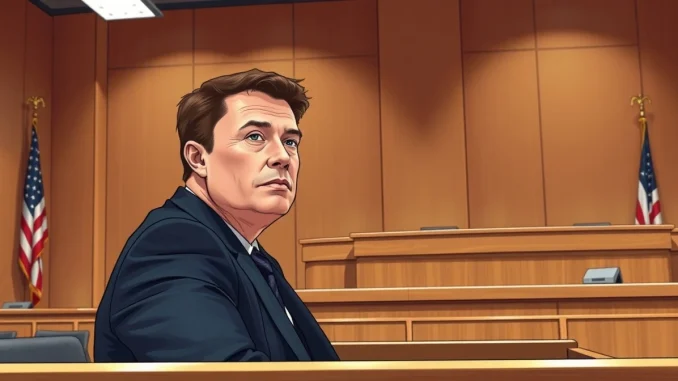
In a San Francisco federal courtroom on Tuesday, Elon Musk testified in his lawsuit against OpenAI. The most striking part of his testimony was not about charity or money. It was about a broken friendship with Google co-founder Larry Page. Musk’s testimony offered a rare, sworn account of how a disagreement over AI safety ended one of Silicon Valley’s most notable partnerships.
OpenAI Trial Testimony: Musk Details Falling Out with Page
Musk told the court that his motivation for co-founding OpenAI in 2015 was rooted in a conversation with Page. Musk raised the possibility that artificial intelligence could wipe out humanity. Page reportedly shrugged it off, saying that would be “fine” as long as AI itself survived. Page called Musk a “speciest” for being “pro human.” Musk described Page’s attitude as “insane.”
Also read: NyesteCasino.com Reports: iGaming Industry Navigates Dual Pressures of Regulation and Growth
This was not the first time Musk told this story. He previously shared it with author Walter Isaacson for his biography. But Tuesday was the first time Musk said it under oath. The legal setting adds weight to his claims.
Friendship Details Revealed in Court
The two tech billionaires were once extremely close. Fortune magazine included them on its 2016 list of secretly best-friend business leaders. Musk was so comfortable with Page that he regularly stayed at Page’s Palo Alto home. Page once told journalist Charlie Rose that he would rather give his money to Musk than to charity.
Also read: Theker raises $85M to build reconfigurable factory robots that adapt to any task
That friendship ended when Musk recruited Google AI researcher Ilya Sutskever to help launch OpenAI. Page felt personally betrayed. He cut off contact with Musk entirely.
Page has not commented on Musk’s testimony. It is worth noting that everything Musk said was in service of his lawsuit against OpenAI. The court will weigh the evidence.
AI Safety Concerns Drove the Split
The core of the dispute was AI safety. Musk has long warned that unchecked AI development poses an existential risk to humanity. Page, according to Musk, did not share that concern. This fundamental disagreement led to the creation of OpenAI as a nonprofit alternative to Google’s AI efforts.
Musk testified that he wanted to build an AI that was “safe for humanity.” He believed Google, under Page, was not taking safety seriously enough. OpenAI was supposed to be the counterbalance.
Industry watchers note that this tension between AI development and safety remains unresolved. Companies like OpenAI, Google, and Anthropic continue to debate how to balance progress with precaution.
Musk’s Ongoing Attempts to Reconcile
Despite the rift, Musk has tried to repair the relationship. In 2023, he told tech podcaster Lex Fridman that he wanted to patch things up. “We were friends for a very long time,” Musk said on the podcast.
There is no indication that Page responded to those overtures. The two have not spoken publicly since the split. Musk’s testimony suggests the wound is still fresh.
The implication for the OpenAI trial is that Musk’s personal history with Page may influence the court’s view of his motivations. The lawsuit claims OpenAI abandoned its original nonprofit mission. Musk argues that the company’s shift to a for-profit model betrayed the founding principles.
Legal and Business Implications
The trial is being closely watched by the tech industry. OpenAI is now a major player in AI, valued at billions of dollars. Musk’s lawsuit seeks to block the company’s for-profit conversion.
Data from court filings shows that Musk invested over $50 million in OpenAI in its early years. He claims the company’s current leadership, including CEO Sam Altman, misled him about its direction.
Altman has denied those claims. The trial is expected to last several weeks. A ruling could reshape how AI companies structure themselves.
What this means for investors is that the outcome could affect OpenAI’s valuation and future partnerships. Companies like Microsoft, which has invested heavily in OpenAI, are watching closely.
Conclusion
Elon Musk’s testimony in the OpenAI trial has revealed a deeply personal story. A friendship with Larry Page, once celebrated as one of Silicon Valley’s strongest bonds, collapsed over AI safety. Musk’s sworn account adds credibility to his narrative, but the court will decide the legal merits. The trial continues to highlight the ongoing tension between AI innovation and safety.
FAQs
Q1: What was the main reason Elon Musk co-founded OpenAI?
A1: Musk co-founded OpenAI in 2015 after a falling out with Google’s Larry Page over AI safety. Musk was concerned about the existential risks of AI, while Page reportedly dismissed those concerns.
Q2: What did Elon Musk testify about Larry Page?
A2: Musk testified that Page called him a “speciest” for being “pro human” and said it would be “fine” if AI wiped out humanity. This disagreement ended their friendship.
Q3: How close were Elon Musk and Larry Page before the split?
A3: They were very close. Fortune listed them as secretly best-friend business leaders in 2016. Musk regularly stayed at Page’s home, and Page said he would rather give his money to Musk than to charity.
Q4: What is the OpenAI trial about?
A4: Musk is suing OpenAI, claiming the company abandoned its original nonprofit mission to develop safe AI. He wants to block its conversion to a for-profit model.
Q5: Has Larry Page responded to Musk’s testimony?
A5: No, Page has not commented publicly. Musk’s testimony is part of his lawsuit, and the court will evaluate the evidence.




Be the first to comment