
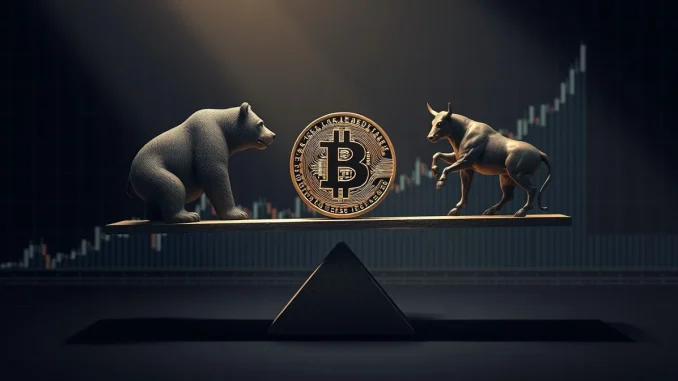
Bitcoin shorts have piled up near $80,000, creating a $1.4 billion liquidation risk. Data from CoinGlass shows this buildup happened over the past 48 hours. Bitcoin’s price rejected at $79,500, but the market is watching closely. A short squeeze could be brewing.
Bitcoin shorts liquidation risk mounts as price nears $80K
The concentration of leveraged short positions at $80,000 is unusual. According to CoinGlass, $1.4 billion in shorts would be liquidated if Bitcoin breaks above that level. This creates a potential bear trap. Bears have grown confident, but their bets may backfire.
Also read: Trump-linked stablecoin USD1 fuels UFC bonuses as ethics debate intensifies
Bitcoin has held above $76,000 for the past week. This is a significant recovery from its yearly low of $60,500. The rally has been driven by spot market buying. Bitcoin ETFs and corporate buyers like Strategy have added substantial positions.
Data from Laevitas shows the Bitcoin perpetual futures funding rate has been mostly negative for two weeks. This is a classic sign of bearish sentiment. Yet Bitcoin’s price rose from $72,000 to $78,000 during that period. Many of those short bets are now underwater.
Also read: CFTC hires SEC crypto adviser with blockchain forensics expertise; Strategy adds 1,587 BTC
Federal Reserve policy shift could trigger Bitcoin short squeeze
The Federal Reserve’s next move is critical. US government bond futures show 20% odds of an interest rate cut by September. This is a sharp reversal from one month ago. Traders now see the Fed in a tough spot.
High oil prices are adding pressure. Brent crude has reclaimed $100 per barrel. This drives inflation expectations higher. But the Fed is also worried about a weakening job market. An interest rate cut could fuel inflation further.
Industry watchers note that a softer Fed stance would reduce the appeal of fixed-income assets. Investors might rotate into Bitcoin. This could accelerate the short squeeze. The implication is that bears are betting against a shifting macro backdrop.
Options market signals caution among whales
The Bitcoin options delta skew at Deribit shows put options trading at an 11% premium relative to calls. This indicates bearish sentiment among professional traders. Whales and market makers are hedging against downside risk.
But this could reinforce the bear trap thesis. If Bitcoin reclaims $80,000, those hedges could unwind quickly. The resulting buying pressure might amplify the squeeze. Options markets often exaggerate directional moves during liquidations.
Spot accumulation drives Bitcoin bullish momentum
Strategy added $255 million in Bitcoin between April 20 and April 26. US-listed Bitcoin ETFs saw $824 million in net inflows during the same period. This buying has provided a price floor.
Spot market demand has been persistent. Buyers continued accumulating even as Bitcoin failed to hold above $79,000. This suggests strong conviction. The accumulation trend may continue if macro conditions remain supportive.
What this means for investors is that the short squeeze potential is real. But it’s not guaranteed. Bitcoin’s price could still retreat if spot buying weakens. The key level to watch is $80,000.
Bitcoin short squeeze timeline and triggers
Several factors could trigger the squeeze. A Fed policy shift is the most significant. But high oil prices and inflation data also play a role. The next Fed meeting is in June. Market expectations could shift before then.
If Bitcoin breaks $80,000, liquidations could cascade. The $1.4 billion in shorts would be forced to cover. This could push prices well beyond $80,000. The speed of the move would depend on liquidity.
Data from CoinGlass shows liquidation levels are concentrated at $80,000. A breakout could trigger a rapid price surge. But bears may also add more shorts at higher levels. This could create a tug-of-war.
Bitcoin bear trap: Risks and opportunities
The bear trap scenario is not without risks. If Bitcoin fails to break $80,000, shorts could remain profitable. The negative funding rate might persist. Bears could wait for a pullback to cover.
But the accumulation trend is strong. Bitcoin ETFs have seen consistent inflows. Corporate buyers are adding. This suggests institutional demand is real. The short squeeze potential is higher than usual.
Industry experts caution that apply cuts both ways. A failed squeeze could lead to a sharp selloff. Traders should monitor liquidation levels closely. The $76,000 support is also critical.
Comparison with past Bitcoin short squeezes
Historical data shows that large short squeezes often precede major rallies. In October 2023, a similar setup led to a 30% price surge. The current configuration is comparable.
But each market cycle is different. The macro environment is more complex now. High oil prices and Fed uncertainty add variables. The outcome is not predetermined.
What this means for traders is that risk management is key. Position sizing and stop-losses are essential. The $1.4 billion liquidation risk is a double-edged sword.
Conclusion
Bitcoin shorts face a $1.4 billion liquidation risk near $80,000. Spot accumulation and a potential Fed policy shift could trigger a squeeze. The bear trap is set, but the outcome depends on market dynamics. Investors should watch the $80,000 level closely. A breakout could propel Bitcoin to new highs.
FAQs
Q1: What is a Bitcoin short squeeze?
A short squeeze happens when a sharp price rise forces traders with short positions to buy back Bitcoin, amplifying the upward move.
Q2: How much in Bitcoin shorts are at risk of liquidation?
According to CoinGlass, $1.4 billion in leveraged short positions near $80,000 could be liquidated.
Q3: What could trigger the Bitcoin short squeeze?
A Federal Reserve policy shift, high oil prices, or sustained spot market buying could trigger the squeeze.
Q4: Is a Bitcoin short squeeze guaranteed?
No. The outcome depends on market conditions. If Bitcoin fails to break $80,000, shorts may remain profitable.
Q5: How does spot accumulation affect the squeeze potential?
Persistent buying from ETFs and corporate buyers provides a price floor, increasing the likelihood of a squeeze.




Be the first to comment