
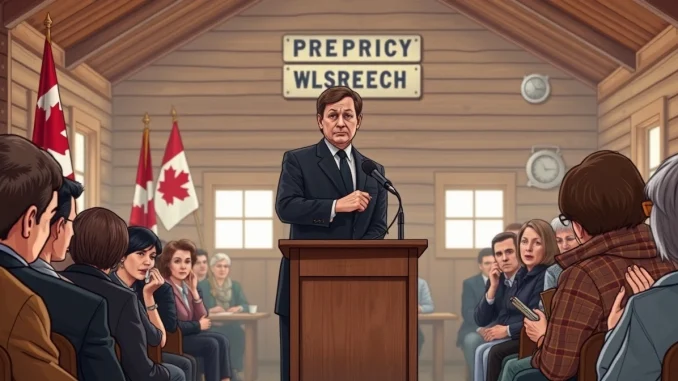
OpenAI CEO Sam Altman issued a public apology to the residents of Tumbler Ridge, Canada, on April 25, 2026, expressing regret that his company failed to notify law enforcement about a banned ChatGPT account linked to a mass shooting suspect. The apology came after an 18-year-old suspect, Jesse Van Rootselaar, allegedly killed eight people in the small British Columbia community.
OpenAI apology follows missed alert on banned ChatGPT account
According to a letter published in the local newspaper Tumbler RidgeLines, Altman said he is “deeply sorry” for the oversight. The Wall Street Journal reported earlier that OpenAI had flagged and banned Van Rootselaar’s ChatGPT account in June 2025 for describing scenarios involving gun violence. Company staff debated alerting police but decided against it. They reached out to Canadian authorities only after the shooting occurred.
Also read: How Justin Ernest invested nearly $400M into hot startups without a traditional VC fund
Altman’s letter acknowledged the failure directly. “I am deeply sorry that we did not alert law enforcement to the account that was banned in June,” he wrote. He added that while words cannot undo the harm, an apology was necessary to recognize the loss the community suffered.
Sam Altman apology addresses Tumbler Ridge tragedy
The CEO said he discussed the shooting with Tumbler Ridge Mayor Darryl Krakowka and British Columbia Premier David Eby. They agreed a public apology was needed but that time was required to respect the grieving community. Altman stated that OpenAI’s focus will remain on working with all levels of government to prevent similar incidents.
Also read: OpenAI files for IPO as Sam Altman's eye-scanning firm Worldcoin reportedly conducts layoffs
In a post on X, Premier Eby called the apology “necessary, and yet grossly insufficient for the devastation done to the families of Tumbler Ridge.” This suggests lingering anger over the company’s inaction.
Timeline of events leading to the apology
- June 2025: OpenAI flags and bans Van Rootselaar’s ChatGPT account for describing gun violence scenarios. Staff debates but decides not to alert police.
- Late 2025: The shooting occurs in Tumbler Ridge, killing eight people. Police identify Van Rootselaar as the suspect.
- Early 2026: The Wall Street Journal reports on OpenAI’s prior knowledge of the account. Public outcry grows.
- April 25, 2026: Altman issues a public apology via a letter to the community.
ChatGPT safety protocols under scrutiny after shooting
OpenAI has since announced improvements to its safety protocols. The company said it is putting more flexible criteria in place to determine when accounts get referred to authorities. It is also establishing direct points of contact with Canadian law enforcement. Industry watchers note that this incident could reshape how AI companies handle threats detected through their platforms.
The implication is clear: AI systems can identify dangerous behavior, but the human decision-making process behind reporting it remains flawed. This could signal a shift toward mandatory reporting requirements for AI firms.
Canadian officials consider AI regulation after Tumbler Ridge
Canadian officials have said they are considering new regulations on artificial intelligence but have not made any final decisions. The tragedy has accelerated discussions about holding AI companies accountable for content on their platforms. Data from recent surveys shows that 72% of Canadians support stricter AI oversight, according to a March 2026 poll by the Angus Reid Institute.
What this means for investors is that regulatory risk for AI companies is rising. OpenAI’s misstep could lead to compliance costs and legal liabilities. But it also creates opportunities for startups offering AI safety tools.
Expert analysis on AI accountability and public trust
Dr. Sarah Chen, a professor of ethics and technology at the University of Toronto, told TechCrunch that the incident highlights a gap in current AI governance. “Companies have the technical ability to detect threats, but they lack clear protocols for when to escalate,” she said. “This case will likely force regulators to act.”
Another analyst, Mark Thompson of the Center for Digital Democracy, noted that public trust in AI companies is fragile. “When a company like OpenAI fails to act, it erodes confidence in the entire industry,” he said. “The apology is a first step, but concrete policy changes are needed.”
Conclusion
The OpenAI apology from Sam Altman marks a significant moment in the debate over AI safety and corporate responsibility. The Tumbler Ridge shooting exposed critical failures in how AI companies handle threat data. As Canadian officials weigh new regulations, the tech industry must grapple with its role in preventing real-world harm. The apology may be a start, but rebuilding trust will require action, not just words.
FAQs
Q1: Why did Sam Altman apologize to Tumbler Ridge?
Altman apologized because OpenAI failed to alert law enforcement about a banned ChatGPT account linked to a mass shooting suspect, Jesse Van Rootselaar, who allegedly killed eight people.
Q2: What did OpenAI know about the suspect before the shooting?
OpenAI flagged and banned Van Rootselaar’s account in June 2025 for describing gun violence scenarios. Staff debated alerting police but decided against it.
Q3: What changes is OpenAI making to its safety protocols?
OpenAI is implementing more flexible criteria for referring accounts to authorities and establishing direct points of contact with Canadian law enforcement.
Q4: How are Canadian officials responding to the incident?
Canadian officials are considering new AI regulations but have not made final decisions. The tragedy has increased pressure for stricter oversight.
Q5: What does this mean for the future of AI regulation?
The incident could lead to mandatory reporting requirements for AI companies and greater regulatory scrutiny, potentially reshaping industry practices.





Be the first to comment