
In San Francisco, Sam Altman’s Tools for Humanity is making a bold move to scale its human verification technology. The company, known for its World project, announced a major expansion on April 30, 2025, with dating giant Tinder as its first high-profile partner in a push to embed “proof of human” checks across daily life.
World’s Verification Tech Expands to Dating and Ticketing
Tools for Humanity detailed plans to integrate its verification system into dating apps, event ticketing, business software, and email platforms. The announcement came at an event at The Midway venue. “We are also heading to a world now where there’s going to be more stuff generated by AI than by humans,” Altman told the crowd. He framed the technology as a necessary response to a looming problem: distinguishing people from AI agents online.
Also read: Lovable signs multi-year Google Cloud deal to expand AI usage fivefold
World’s approach uses cryptography to verify someone is a real, living person while protecting their anonymity. The core technology involves zero-knowledge proof-based authentication. This creates what the company calls a “verified World ID” without revealing the user’s personal data.
The Tinder Pilot and Concert Kit Launch
The most immediate application is on Tinder. The dating app ran a pilot program in Japan last year. According to the company, the test was successful. World announced that Tinder would now launch the verification integration in global markets, including the United States. Verified users will have a World ID emblem on their profiles.
Also read: Crypto Platform 1win Welcomes Ilia Topuria as the 1win VIP Community Member
But dating apps are just the start. World is also launching “Concert Kit.” This feature lets artists reserve tickets specifically for users with a verified World ID. The goal is to combat automated scalping bots. The system works with major platforms like Ticketmaster and Eventbrite. Partnerships with artists Bruno Mars and 30 Seconds to Mars are already in place for upcoming tours.
Business and Agent-Focused Tools
The expansion targets corporate security, too. New integrations with Zoom and DocuSign aim to verify participants on business calls and ensure signatures are authentic. Perhaps the most forward-looking development involves “agent delegation.” This allows a person to delegate their World ID to an AI agent to act on their behalf online.
A partnership with authentication firm Okta has created a beta system for this. “Websites will know a verified person is behind the behavior,” said Okta’s chief product officer, Gareth Davies, at the event. This could signal a new layer of trust for automated online activity.
Solving the Scaling Problem with Tiers
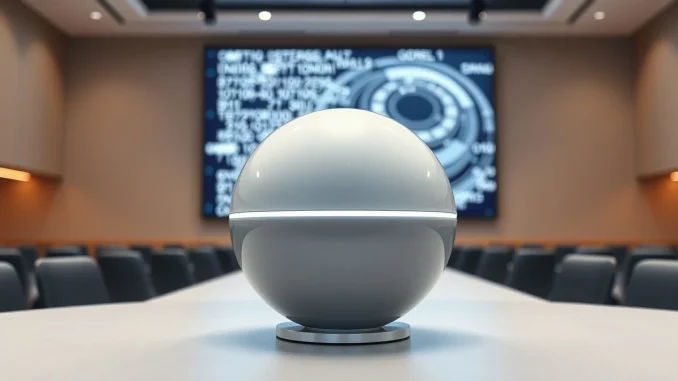
Scaling has been a persistent challenge for World. For years, getting its highest verification tier required an in-person iris scan with its spherical Orb device. The company is addressing this with a three-tier system.
- Orb Verification (High): The original gold standard using an iris scan.
- Government ID Scan (Mid): Uses an NFC chip scan from an official ID.
- Selfie Check (Low): A new, low-friction option involving a photo.
Tiago Sada, World’s chief product officer, explained the strategy to TechCrunch. Developers can choose the tier based on their needed security level. “Selfie is private by design,” said Tools for Humanity executive Daniel Shorr. He emphasized that image processing happens locally on the user’s device. Sada acknowledged the limits of selfie verification, noting fraudsters can sometimes spoof it. “But it has limits,” he said.
To support Orb verification, World is expanding its physical presence. The company is placing more devices in New York, Los Angeles, and San Francisco. It’s also promoting a service where an Orb can be brought to a user’s location.
Analysis: A Bet on the Post-AI Internet
World’s aggressive expansion is a direct bet on a specific future. Industry watchers note that as AI generation becomes ubiquitous, proving humanity will carry economic and social value. The move into dating and ticketing targets markets where bot fraud is both costly and erodes user trust.
The partnership with Tinder is particularly significant. Dating apps have long struggled with fake profiles and scams. A verified badge could become a premium feature or a trust signal that changes user behavior. What this means for investors is a potential new revenue stream for Tools for Humanity, moving beyond its initial crypto-based model.
The tiered verification system suggests a pragmatic shift. By offering a simple selfie option, World lowers the barrier to entry. This could drive adoption, but it also introduces a security trade-off. The implication is that for many use cases, a “good enough” verification may suffice, creating a layered market for digital trust.
Conclusion
Sam Altman’s World project is accelerating its mission to become a fundamental layer of the internet. With Tinder as a flagship partner and new tools for concerts and businesses, the company is betting that verifying human identity will be as key as verifying email. The success of this push hinges on user adoption and whether the market agrees that “proof of human” is a feature worth having.
FAQs
Q1: What is World verification?
World verification is a privacy-focused system developed by Tools for Humanity. It uses cryptographic techniques to confirm a user is a real human without revealing their personal identity, creating an anonymous “World ID.”
Q2: How does World verification work on Tinder?
Tinder users can undergo World’s verification process. Once verified, a World ID emblem appears on their profile, indicating to other users that they have been confirmed as a real person. This pilot launched globally after a test in Japan.
Q3: What is the World Orb?
The Orb is a physical hardware device that scans a user’s iris to create a unique, anonymous cryptographic identifier. It represents the highest tier of verification offered by World, though the company now offers less stringent digital options.
Q4: What is Concert Kit?
Concert Kit is a new World feature that allows musicians and event organizers to set aside tickets exclusively for users who have a verified World ID. This is designed to prevent ticket scalping bots from buying up inventory.
Q5: Is World verification secure?
World employs zero-knowledge proofs, a cryptographic method that allows verification without sharing underlying data. The highest security tier uses a biometric iris scan. However, the company now offers lower-tier options like a selfie check, which its executives acknowledge have security limitations compared to the Orb.



Be the first to comment