
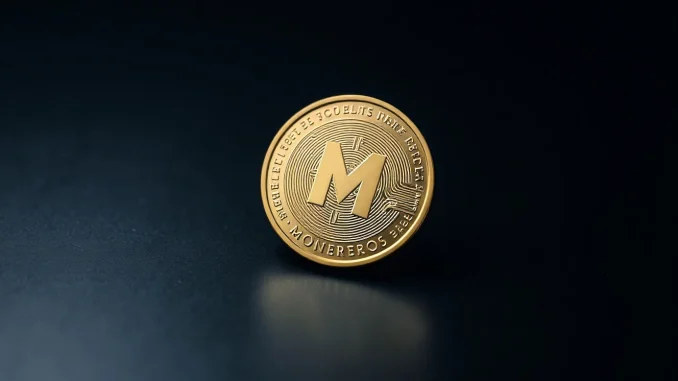
Monero (XMR), the leading privacy-focused cryptocurrency, has maintained a distinct position in the digital asset ecosystem since its launch in 2014. As the market anticipates the next major bull cycle, questions arise about whether privacy coins like Monero can lead the rally or if regulatory headwinds will limit their upside. This analysis examines Monero’s price outlook from 2026 through 2030, grounded in fundamental factors, regulatory trends, and market dynamics.
Monero’s Unique Value Proposition
Monero’s core technology sets it apart from Bitcoin and Ethereum. Using ring signatures, stealth addresses, and confidential transactions, Monero obscures sender, receiver, and transaction amounts by default. This privacy-by-design approach has made XMR a preferred tool for users who prioritize financial anonymity. However, this same feature has attracted scrutiny from regulators worldwide, creating a complex operating environment that directly impacts price potential.
Also read: Notcoin (NOT) Price Prediction 2026-2030: Can the Telegram Gaming Token Stage a Recovery?
Regulatory Field and Market Access
The most significant factor influencing Monero’s price trajectory is regulatory treatment. Several major exchanges have delisted XMR in recent years due to compliance concerns, reducing liquidity and accessibility for mainstream investors. In jurisdictions like the European Union, upcoming Markets in Crypto-Assets (MiCA) regulations impose strict requirements on anonymity-enhancing coins. Conversely, some privacy advocates argue that regulatory clarity could ultimately legitimize privacy coins, potentially leading to a price recovery if compliance frameworks become workable.
Exchange Listings and Liquidity
Exchange availability remains a critical variable. If major platforms like Binance or Kraken maintain or restore Monero listings, price appreciation becomes more feasible. The decentralized exchange (DEX) ecosystem offers alternative trading venues, but lower liquidity on DEXs can amplify volatility. Investors should monitor listing announcements and regulatory developments as leading indicators for XMR price movement.
Also read: Monero (XMR) Price Prediction 2026–2030: Can Privacy Coins Sustain Momentum?
Market Cycles and Historical Performance
Monero has historically followed broader cryptocurrency market cycles, with significant price increases during bull runs and sharp corrections during bear markets. The 2021 bull cycle saw XMR reach an all-time high near $517, though it underperformed relative to Bitcoin and Ethereum. This pattern suggests that Monero’s price appreciation is correlated with overall market sentiment, but privacy coin narratives may not drive outsized gains unless a specific catalyst emerges.
Technical Developments and Network Upgrades
Monero’s development community continues to improve the network. Upgrades like the upcoming change to a proof-of-work algorithm resistant to ASIC mining aim to maintain decentralization. Security enhancements and scalability improvements could strengthen Monero’s utility and, by extension, its long-term value proposition. These technical factors, while less visible to retail traders, underpin the network’s reliability and adoption potential.
Price Prediction 2026-2030
Forecasting cryptocurrency prices involves substantial uncertainty, and this analysis does not constitute financial advice. Based on current fundamentals, regulatory trends, and historical patterns, plausible scenarios for Monero include:
- 2026: If regulatory clarity improves and broader market conditions are favorable, XMR could trade in the $200–$400 range. Continued delistings or restrictive regulations could push prices lower, toward $100–$150.
- 2027–2028: The next halving cycle for Bitcoin could lift the entire market. Monero may benefit from renewed interest in privacy, potentially reaching $500–$700 if adoption grows. However, sustained regulatory pressure could limit gains to $250–$350.
- 2029–2030: Long-term price depends heavily on whether privacy coins achieve mainstream regulatory acceptance. In a favorable scenario, XMR could approach its all-time high or exceed it, trading in the $600–$1,000 range. In a restrictive environment, prices may stagnate or decline.
Will Privacy Coins Lead the Next Bull Run?
It is unlikely that privacy coins will lead the next bull run in the same way that decentralized finance (DeFi) or non-fungible tokens (NFTs) drove previous cycles. Regulatory headwinds and exchange delistings reduce the speculative appeal of privacy coins. However, a significant data breach, a renewed focus on financial surveillance, or a major regulatory compromise could shift attention back to Monero. For now, XMR remains a niche asset with strong fundamentals but limited mainstream momentum.
Conclusion
Monero’s price trajectory through 2030 will be shaped by regulatory decisions, exchange availability, and broader market cycles. While the network’s technology remains sturdy, the path to significant price appreciation faces substantial hurdles. Investors should weigh the potential for privacy-focused assets against the risks of increased regulatory action. As with all cryptocurrency investments, due diligence and risk management are essential.
FAQs
Q1: Is Monero legal to own and trade?
Yes, Monero is legal to own and trade in most countries, though some jurisdictions have imposed restrictions on exchanges that support privacy coins. Always check local regulations before trading.
Q2: Why have some exchanges delisted Monero?
Exchanges have delisted Monero due to regulatory concerns over anti-money laundering (AML) compliance, as privacy features can obscure transaction origins and destinations.
Q3: Can Monero’s price reach $1,000 by 2030?
While possible under favorable regulatory and market conditions, reaching $1,000 would require significant adoption and a supportive legal framework. It remains a high-risk, high-reward scenario.






Be the first to comment