
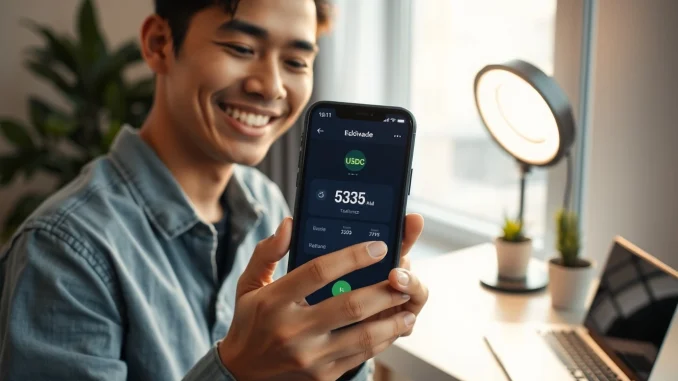
Meta has introduced USDC stablecoin payouts for creators on its platforms in the Philippines and Colombia, marking a significant step in the company’s return to digital currency payments after its abandoned Libra project. The initiative allows eligible creators to receive earnings directly into self-custodial crypto wallets on the Solana and Polygon blockchains.
How the stablecoin payout system works
Creators who opt into the service can connect a third-party crypto wallet to Facebook’s payout platform. Payments are settled in USDC, the second-largest stablecoin by market capitalization, currently standing at over $77.3 billion. Meta does not offer a built-in conversion to local fiat currency, so recipients must use an external exchange to convert USDC into pesos or other currencies.
The service is initially available to a select group of creators in both countries. Polygon confirmed that the rollout is expected to expand to more than 160 markets in the coming months. Facebook paid creators nearly $3 billion in 2025, a 35% increase from the previous year, indicating the scale of the payment infrastructure involved.
Why stablecoins matter for creators
Stablecoins offer faster settlement times and access to dollar-denominated assets, which can be particularly valuable in markets with currency volatility or limited banking infrastructure. In the Philippines and Colombia, where remittances and digital payments are already widespread, USDC payouts could reduce transaction delays and fees associated with traditional cross-border payments.
Also read: Spain’s CNMV Chair Rules Out MiCA Deadline Extension for Crypto Firms, Impacting Binance
Lamine Brahimi, co-founder and managing partner at crypto custody provider Taurus, told Cointelegraph that financial institutions across Europe are actively selecting infrastructure partners to support stablecoin adoption, underscoring the growing institutional interest in the asset class.
Meta’s history with stablecoins
The move comes years after Meta first attempted to enter the stablecoin space through the Libra project in 2019. That initiative faced intense regulatory opposition from central banks and lawmakers over concerns about financial stability, consumer protections, and privacy. In January 2022, the project was officially scrapped, with all assets sold to Silvergate Capital Corporation. The current USDC payout system represents a more cautious, partnership-driven approach that avoids the regulatory friction of the earlier attempt.
Implications for the broader crypto ecosystem
Meta’s adoption of USDC for creator payments signals growing mainstream acceptance of stablecoins as a legitimate payment rail. Circle’s USDC is the second-largest stablecoin, trailing Tether’s USDT, which has a market cap of $189.4 billion. The integration with Solana and Polygon also highlights the importance of scalable blockchain networks for real-world applications.
Visa recently added support for Polygon and Base for stablecoin settlements, with its run rate reaching $7 billion, further validating the infrastructure. For creators, the ability to receive dollar-pegged payments directly into self-custodial wallets represents a shift toward greater financial autonomy, though the need for external exchanges to convert to fiat remains a practical hurdle.
Conclusion
Meta’s USDC payout rollout in the Philippines and Colombia is a measured re-entry into stablecoin payments, applying existing blockchain infrastructure rather than building proprietary technology. The expansion to over 160 markets could significantly increase stablecoin adoption among content creators globally, provided regulatory and technical challenges are managed effectively.
FAQs
Q1: Which creators are eligible for Meta’s USDC payouts?
Currently, the service is available to select creators in the Philippines and Colombia who use Facebook or Instagram to monetize content. Meta plans to expand to more than 160 markets in the future.
Q2: Do creators need a crypto wallet to receive payments?
Yes, creators must connect a third-party crypto wallet that supports USDC on Solana or Polygon to Facebook’s payout platform. Meta does not provide a built-in wallet.
Q3: Can creators convert USDC to local currency within Meta’s platform?
No, Meta does not offer a conversion service. Creators must use an external cryptocurrency exchange to convert USDC to Philippine pesos or Colombian pesos.



Be the first to comment