
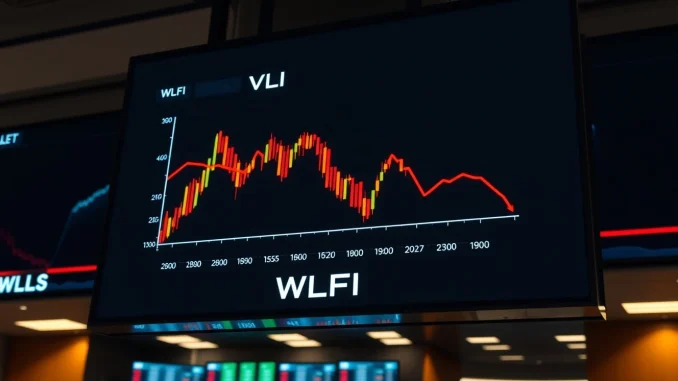
The native token of World Liberty Financial (WLFI), a decentralized finance project linked to the Trump family, dropped nearly 14% on Wednesday as a governance proposal to unlock over 62 billion tokens went to a community vote. The proposal, which would place the tokens under multiyear vesting schedules, has drawn sharp criticism from some community members despite receiving overwhelming preliminary approval.
Proposal details and voting status
The proposal, first submitted on April 15, officially went live for voting on Wednesday. It aims to lock more than 62 billion WLFI tokens held by early investors and insiders for a two-year cliff period, after which they would be gradually released over two to three years. Voting runs until May 7, and at the time of writing, 99.95% of votes are in favor, with the quorum requirement of 1 billion tokens already met—6 billion tokens have voted yes against 3.2 million no votes.
World Liberty Financial described the proposal as one of the most significant in its history, stating that none of the locked tokens would touch the market for a minimum of two years if passed. However, the structure has faced backlash for its length and the voting process, which locks tokens indefinitely for those who do not participate.
Community backlash and market impact
Despite near-unanimous voting power in favor, the proposal has been met with strong criticism on social media. Moonrock Capital founder Simon Dedic likened the proposal to a rug pull, questioning the timing of the two-year unlocks coinciding with the remainder of Donald Trump’s term as US president. Tron founder Justin Sun, a significant WLFI holder, called it one of the most absurd proposals he has ever seen.
Also read: Spain’s CNMV Chair Rules Out MiCA Deadline Extension for Crypto Firms, Impacting Binance
The unlocking schedule for early investors includes a two-year cliff followed by a two-year linear vest, while insiders such as founders and team members have a two-year cliff and three-year linear vest. Critics argue that the extended timeline and voting mechanism could disenfranchise smaller holders.
Why this matters to WLFI holders
This governance vote is decisive for WLFI’s future, as it directly impacts token supply dynamics and holder confidence. The 14% price drop reflects market uncertainty about the proposal’s implications, including potential dilution and insider control. The outcome could set a precedent for how the project manages token distribution and community governance, affecting long-term value and trust.
Conclusion
The WLFI token’s sharp decline underscores the market’s sensitivity to governance decisions that alter tokenomics. While the proposal’s approval seems likely given the current vote tally, the ongoing backlash highlights a divide between large token holders and the broader community. The final result, due by May 7, will be a key indicator of World Liberty Financial’s governance direction and its ability to maintain holder confidence.
FAQs
Q1: What is the WLFI token unlock proposal?
The proposal aims to lock over 62 billion WLFI tokens held by early investors and insiders for a two-year cliff, followed by a gradual release over two to three years. It is currently being voted on by the community.
Q2: Why has the WLFI token price dropped?
The price fell nearly 14% due to market concerns over the proposal’s impact on token supply and governance, as well as backlash from influential community members who view the unlock schedule as unfavorable.
Q3: When does the vote end?
The voting period runs until May 7, 2026. The quorum of 1 billion tokens has already been met, with over 99% of votes in favor at the time of reporting.





Be the first to comment