

Meta has signed a capacity reservation agreement with Overview Energy, a startup planning to beam solar power from space to data centers at night. The deal targets up to 1 gigawatt of power, enough to run a large data center cluster.
Meta’s Space Solar Power Deal: How It Works
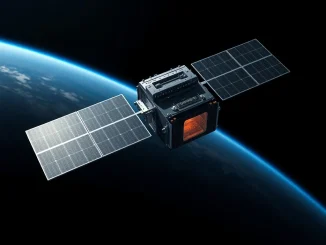
Overview Energy, a four-year-old company based in Ashburn, Virginia, emerged from stealth in December 2024. The company plans to launch a fleet of satellites into geosynchronous orbit. Each satellite will collect solar power in space, where sunlight is constant and more intense than on Earth.
Also read: OpenAI Limits GPT-5.6 Rollout After U.S. Government Request, Calls Restrictions a 'Short-Term Step'
Instead of converting the power to electricity and sending it down via cables, Overview will convert the collected energy into near-infrared light. This light will be beamed down to existing solar farms on Earth. The solar panels, designed to convert sunlight into electricity, can also convert this infrared light.
The beam is wide and low-intensity. CEO Marc Berte says you can stare directly into it with no harm. This avoids the safety issues linked to high-power lasers or microwave beams, which have been proposed for other space-based power projects.
Also read: OpenAI, Google, and SpaceX are all building their own AI chips — here's why that matters
Meta’s data centers used more than 18,000 gigawatt-hours of electricity in 2024. That is roughly enough to power 1.7 million U.S. homes for a year. The company’s need for compute power is only increasing, driven by AI model training and inference.
Meta has committed to building 30 gigawatts of renewable power sources. It is focusing on industrial-scale solar power plants. But solar farms only generate power when the sun is shining. Data centers need power 24/7.
The Problem Solar Power From Space Solves
Data centers that rely on solar power must invest in battery storage or use other generation sources at night. Batteries are expensive and have limited capacity. Natural gas plants are often used as backup, but they produce emissions.
Overview’s solution sidesteps both problems. The satellites can beam power to solar farms after sunset. This extends the useful generation window of the solar farm. It reduces the need for batteries or fossil fuel backup.
The company developed a new metric for this contract: megawatt photons. This measures the amount of light required to generate a megawatt of electricity. It is a novel way to quantify the power delivered from space.
Timeline and Scale
Overview plans to launch its first test satellite to low Earth orbit in January 2028. That satellite will perform the first power transmission from space to ground. The company has already demonstrated power transmission from an aircraft to the ground.
Berte expects to begin launching the satellites that would fulfill the Meta commitment in 2030. The goal is to fly 1,000 spacecraft in geosynchronous orbit. Each satellite would remain fixed above the same point on Earth.
Each spacecraft is expected to provide power from space for more than 10 years. The fleet would cover about a third of the planet. The initial deployment will reach from the West Coast of the United States across to Western Europe.
Market Implications and Challenges
Industry watchers note that this deal is a significant vote of confidence for space-based solar power. Meta is one of the largest corporate buyers of renewable energy. Its commitment could encourage other tech companies to explore similar solutions.
But the technology faces major hurdles. Launching 1,000 satellites is expensive. The cost of building and deploying the fleet is not disclosed. Overview must also secure regulatory approval for beaming power from space.
The company says its beam is safe. But regulators may still have questions about potential interference with other satellite communications or ground-based systems. The infrared beam is not visible to the naked eye, which could raise safety concerns for aircraft or wildlife.
Berte sees opportunity in combining generation and transmission. The satellites can deliver power to solar farms wherever and whenever it is most valuable. This flexibility could allow Overview to sell power into multiple energy markets.
“There’s a big difference between being in any one energy market, and being in all of the energy markets,” Berte told TechCrunch. This suggests the company aims to operate as a global power supplier, not just a niche technology provider.
Broader Context: AI’s Energy Demand
The race to secure electricity for AI models has driven tech companies to explore unusual sources. Microsoft has invested in nuclear fusion. Google is buying geothermal power. Amazon has purchased wind and solar farms.
Data from the International Energy Agency shows that data centers could consume 8% of global electricity by 2030. AI workloads are a major driver. Training a single large language model can consume as much electricity as 100 U.S. homes use in a year.
Meta’s deal with Overview is part of a broader strategy to secure clean, reliable power. The company has also invested in wind and solar farms, but those sources are intermittent. Space-based solar power could provide baseload renewable power.
What this means for investors is that space-based solar power is moving from science fiction to a real business proposition. Overview is not the only company working on this technology. Others include Emrod, which uses microwave beams, and Solaren, which has been working on space solar for years.
Conclusion
Meta’s deal with Overview Energy marks a major step toward using space-based solar power for data centers. The technology could provide reliable, renewable power at night. But it faces significant technical and regulatory challenges. The deal is a bet that those challenges can be overcome. If successful, it could transform how data centers are powered.
FAQs
Q1: What is the Meta solar power from space deal?
Meta signed a capacity reservation agreement with Overview Energy to receive up to 1 gigawatt of power beamed from satellites in space to solar farms on Earth.
Q2: How does Overview Energy beam power from space?
The company’s satellites collect solar power in space, convert it to near-infrared light, and beam it to existing solar farms. The solar panels convert the light into electricity.
Q3: When will the space-based solar power system be operational?
Overview plans to launch a test satellite in January 2028. Commercial power delivery to Meta is expected to begin in 2030, with 1,000 satellites in geosynchronous orbit.
Q4: Why does Meta need solar power from space?
Meta’s data centers need power 24/7. Solar farms only generate power during the day. Space-based solar power can provide power at night, reducing the need for batteries or fossil fuel backup.
Q5: Is the beam from the satellites safe?
CEO Marc Berte says the beam is a wide, low-intensity infrared light that is safe to look at. It avoids the safety issues of high-power lasers or microwave beams.




Be the first to comment