
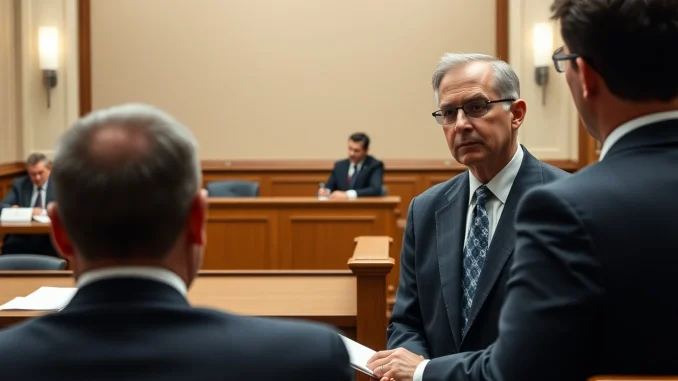
San Francisco, CA – May 27, 2026 – A key subtext of Elon Musk’s legal effort to halt OpenAI’s for-profit transformation centers on a familiar question: when should the public take warnings about artificial intelligence seriously? Musk’s attorneys argue that OpenAI was originally founded as a safety-focused charity, only to drift toward profit-driven ambitions. To support that claim, they called their sole expert witness today: Peter Russell, a University of California, Berkeley computer science professor and longtime AI researcher.
The Expert’s Testimony and Its Limits
Russell’s role was to provide background on AI and establish that the technology poses genuine dangers. He co-signed a March 2023 open letter calling for a six-month pause in AI research—a letter Musk also signed, even as he launched his own for-profit AI lab, xAI. In court, Russell outlined risks including cybersecurity threats, misalignment problems, and the winner-take-all dynamics of developing Artificial General Intelligence (AGI). He emphasized a fundamental tension between racing toward AGI and ensuring safety.
Also read: Asian AI Startups Rush to Fill Void Left by US Export Ban on Anthropic’s Mythos
However, Russell’s broader concerns about existential threats from unconstrained AI were not fully aired. OpenAI’s attorneys successfully objected, leading Judge Yvonne Gonzalez Rodgers to limit his testimony. During cross-examination, OpenAI’s legal team focused on establishing that Russell had not directly evaluated the organization’s corporate structure or specific safety policies.
The Arms Race Dynamic
Outside the courtroom, Russell has been a vocal critic of the global arms race among frontier AI labs competing to reach AGI first. He has called for tighter government regulation. This dynamic is central to the case: OpenAI’s founders have consistently warned about AI risks while simultaneously racing to build the technology and pursuing for-profit ventures. The organization’s need for massive computing power—fundable only through for-profit investment—drove the very competition they feared, ultimately fracturing the founding team and leading to this lawsuit.
Also read: As Government Scrutiny Intensifies, AI Labs Face a Shared Regulatory Bind
Broader Implications for Policy and Public Trust
The same tension is playing out at the national level. Senator Bernie Sanders has proposed a law imposing a moratorium on data center construction, citing AI fears voiced by Musk, OpenAI CEO Sam Altman, and researcher Geoffrey Hinton. Hoden Omar of the Center for Data Innovation criticized selectively citing tech billionaires’ fears without their optimism, questioning why the public should trust only parts of their statements.
Both sides of the case are asking the court to take some arguments seriously while discounting others—a reflection of the complex relationship between corporate greed and AI safety concerns. The trial highlights how the pursuit of AGI, once a shared goal, has become a source of legal and ethical conflict.
Conclusion
The OpenAI trial underscores the growing tension between AI safety and commercial ambition. As expert testimony reveals, the same fears that motivated OpenAI’s founding also drove the competitive dynamics that may have undermined its original mission. The outcome could set a precedent for how courts view the responsibilities of AI developers in an era of rapid advancement.
FAQs
Q1: Who is Peter Russell?
Peter Russell is a computer science professor at UC Berkeley and a longtime AI researcher. He co-signed a 2023 open letter calling for a pause in AI research and served as Elon Musk’s only expert witness in the OpenAI trial.
Q2: What is the main argument in Musk’s lawsuit against OpenAI?
Musk’s attorneys argue that OpenAI was founded as a charity focused on AI safety but has since prioritized profit, violating its original mission. They cite emails and statements from founders about needing a counterweight to Google DeepMind.
Q3: How does the trial relate to broader AI policy debates?
The trial reflects ongoing debates about AI regulation, including proposals for moratoriums on data center construction and calls for government oversight. It highlights the challenge of balancing innovation with safety concerns.






Be the first to comment