
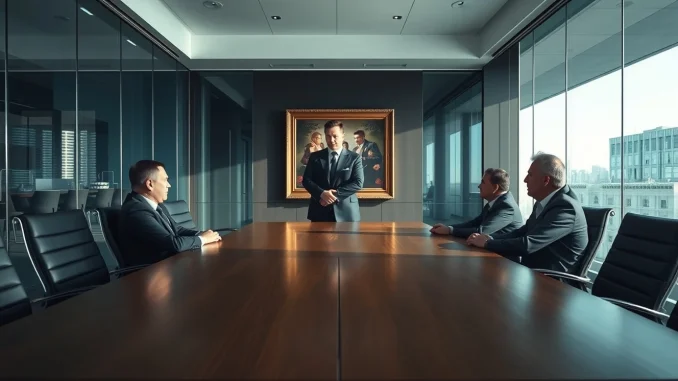
In late August 2017, a small group of OpenAI cofounders gathered in a San Francisco office to decide the future of the nonprofit AI research lab. The meeting, described in court testimony by OpenAI president Greg Brockman, ended with Elon Musk storming out after his demand for full control was rejected — a rupture that would ultimately lead to a multibillion-dollar lawsuit and reshape the AI industry.
The Meeting That Broke OpenAI’s Founding Team
Brockman, testifying for two days in the ongoing Musk v. OpenAI trial, recounted the important moment in vivid detail. Musk had just given each cofounder a Tesla Model 3, which Brockman described as an attempt to butter them up ahead of a critical vote. OpenAI’s head of research, Ilya Sutskever, had commissioned a painting of a Tesla as a friendly gesture for Musk.
Also read: OpenAI Limits GPT-5.6 Rollout After U.S. Government Request, Calls Restrictions a 'Short-Term Step'
But the atmosphere shifted when Musk demanded “unequivocal” control of the for-profit subsidiary the group was discussing. The other founders proposed equal shares. When they refused Musk’s terms, Brockman said Musk sat in silence for several minutes, then stood up.
“I decline,” Musk said, according to Brockman. “He stood up and stormed around the table. I thought he was going to hit me. He grabbed the painting and started to storm out of the room. And then he turned around and said, ‘When will you be departing OpenAI?’”
Also read: OpenAI, Google, and SpaceX are all building their own AI chips — here's why that matters
Brockman and Sutskever did not leave. Within six months, Musk left the board, stopped his regular donations, and predicted that “OpenAI is on a path of certain failure.” He continued paying for shared office space with Neuralink until 2020.
Why the 2017 Disagreement Matters Now
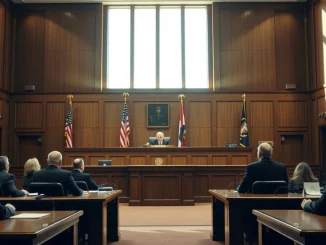
The trial, which began in 2024, centers on Musk’s claim that OpenAI’s founders “stole a charity” by converting the nonprofit into a for-profit company. OpenAI’s legal team argues Musk had the same plan and only left when he couldn’t control it.
The inciting incident for the entire dispute was a breakthrough: an OpenAI model defeated the top human player in the video game DOTA II. That convinced the team that massive computing power — not just research — was the key to AGI, and that fundraising as a nonprofit would be insufficient.
More than 20 variations of a for-profit structure were discussed, according to Shivon Zillis, an OpenAI advisor who acted as a go-between for Musk. But none satisfied Musk’s demand for control.
“It should not be the case that there exists one person with full and absolute control over OpenAI,” Brockman testified.
Brockman’s Journal Entries and the ‘Steal the Nonprofit’ Line
Musk’s lawyers seized on a November 2017 journal entry where Brockman wrote: “[C]an’t see us turning this into a for-profit without a very nasty fight… it’d be wrong to steal the non-profit from him… that’d be pretty morally bankrupt.”
Brockman explained that the entry reflected a debate about whether to remove Musk from the board — a step they ultimately did not take. Musk left voluntarily in February 2018.
“This is the only chance we have to get out from Elon,” Brockman wrote at the time. “Is he the ‘glorious leader’ that I would pick?” He also mused about his personal financial goals: “Financially what will take me to $1B?”
Musk’s attorney, Steve Molo, used that line to question Brockman’s motives. “Why you didn’t take the $29 billion more than the billion you said you would be good with, and donate that to the charity?” Molo demanded.
Brockman, whose current stake is worth nearly $30 billion, replied: “Look at what we accomplished. The OpenAI non-profit has over $150 billion of OpenAI equity value. That is something we have built through hard work, blood, sweat and tears, all this time since Elon has left.”
The Fallout and What Comes Next
In 2019, OpenAI created a for-profit subsidiary and raised $1 billion from Microsoft, followed by $13 billion more over four years. That capital fueled the company’s rise as the leading AI frontier lab — and fueled Musk’s suspicions that Altman and Brockman had outmaneuvered him.
Brockman also testified that Musk did not understand AI, describing how Musk dismissed an early demonstration of the software that would become ChatGPT. “He did not and does not know AI,” Brockman said. “The fact that Elon saw this very early version of the research… didn’t recognize that spark — that was exactly the kind of thing that was critical to avoid.”
The trial is expected to continue through next week. The jury will decide whether Altman and Brockman “stole a charity” or simply built the company Musk abandoned.
Conclusion
The 2017 meeting was a fork in the road for AI history. Musk’s exit set the stage for OpenAI’s explosive growth under Microsoft’s backing — and for a legal battle that has exposed the raw personal dynamics behind one of the most consequential companies in technology. The trial’s outcome could reshape how AI companies are governed and who controls the future of artificial general intelligence.
FAQs
Q1: Why did Elon Musk leave OpenAI in 2018?
Musk left after the other cofounders refused his demand for full control of a planned for-profit subsidiary. He stopped donations and left the board in February 2018, later predicting the company would fail.
Q2: What is the current lawsuit about?
Musk sued OpenAI in 2024, alleging that cofounders Sam Altman and Greg Brockman “stole a charity” by converting the nonprofit into a for-profit company. OpenAI argues Musk had the same plan and left only when he couldn’t control it.
Q3: How did Brockman’s personal journal become evidence?
Brockman’s journal entries from 2017 were introduced by Musk’s lawyers to show that Brockman considered removing Musk from the board and mused about personal wealth. Brockman described the journal as “deeply personal writings” but said he stands by them.




Be the first to comment