
In this article3 sections
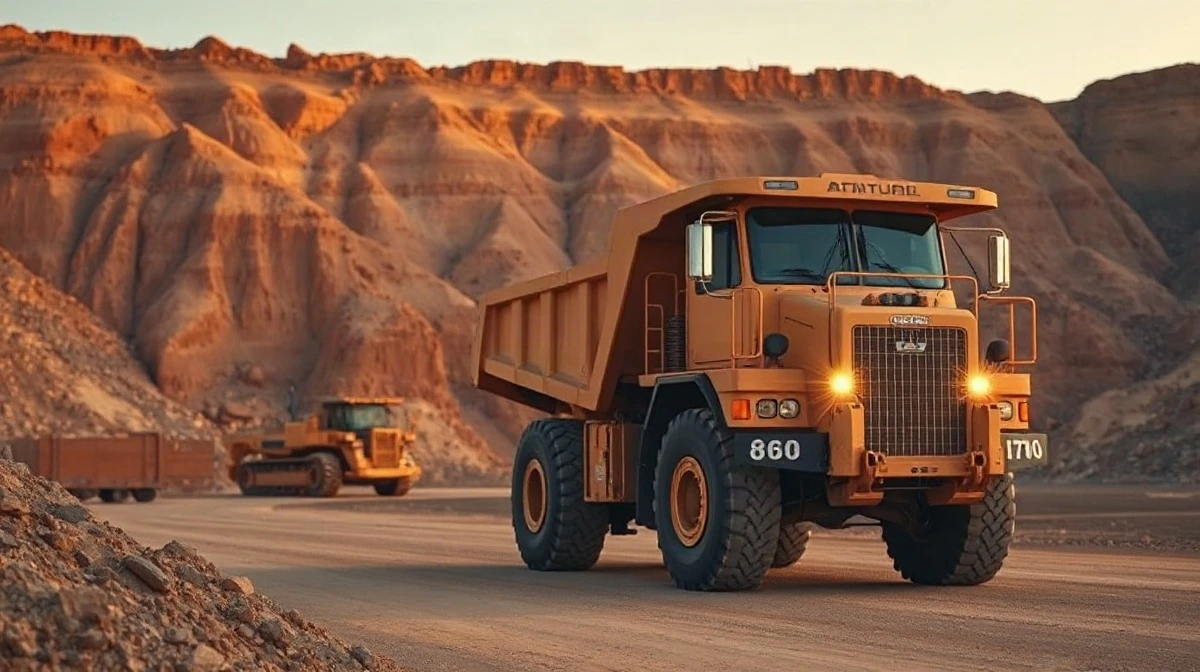
LAS VEGAS — Caterpillar’s CTO Jaime Mineart stood on the sidelines of the Ai4 conference earlier this month and described a problem that sounds familiar to nearly every company trying to deploy artificial intelligence: the technology works, but integrating it into daily operations is hard. For Caterpillar, that challenge is not new. The industrial giant has spent decades automating some of the harshest environments on Earth — open-pit mines where labor shortages and hazardous conditions make remote operation a practical necessity, not a novelty.
That experience is now shaping how Caterpillar approaches AI across its entire business, from field service to software development. The company currently sells autonomous haul trucks, drilling systems, underground loaders, dozers, and remote-controlled construction equipment, along with a software command center and fleet management tools. “Now we’re in this super exciting time where we can take all of that learning from mining and bring it into much more dynamic environments, jobsites, quarries, and construction sites,” Mineart told TechCrunch.
Also read: Russia expands crypto mining ban to Moscow, Kursk Region through 2032
From haul trucks to voice-activated repair assistants
Caterpillar’s AI push extends beyond the mining pit. One of its most visible consumer-facing tools is the Cat AI Assistant, which lets field technicians use voice commands to pull up repair procedures, troubleshoot potential problems, and identify parts needed before starting a repair. Mineart said the tool is now in use by customers, operators, and technicians, drawing on a proprietary data pool that spans roughly 1.6 million connected assets and more than 16 petabytes of structured data.
The company is also deploying AI in manufacturing, using software to scan job sites and generate digital twins that analyze operations in real time. Internally, Caterpillar uses AI agents to modernize legacy code, generate and test new software, and detect defects earlier in the development cycle, according to Mineart.
But Mineart is careful to distinguish between building the technology and deploying it in the field. “The hard part about autonomy and about physical AI is incorporating that technology into the customer jobsite and into the workflows,” she said. That distinction has guided Caterpillar’s approach: rather than simply bolting AI onto existing processes, the company leans on experienced operators to train its systems, applying decades of institutional knowledge.
The $100 million retraining bet
As machines become more autonomous, the role of the human operator is shifting. Some workers who once controlled a single machine are now overseeing multiple units from remote command centers. That transition has created a new challenge for Caterpillar: retraining its 118,000 employees. The company plans to spend $100 million over the next five years on AI, autonomy, and robotics training for its workforce.
The investment comes as Caterpillar’s financial picture brightens. The company reported record quarterly revenue of $20.5 billion in the second quarter of 2026, helped by strong demand for power-generation equipment used in data centers. Its power-generation division saw sales spike 72% to $3.10 billion, and CEO Joe Creed said “no one is slowing down” when it comes to demand for cloud computing and generative AI infrastructure.
What this means for the broader industrial sector
Caterpillar’s experience offers a case study for other industrial companies wrestling with AI adoption. The company’s approach — starting with a controlled environment like mining, then expanding to more dynamic settings — mirrors a pattern seen across the sector. The key lesson, according to Mineart, is that AI deployment is as much about people and processes as it is about technology.
For companies watching from the sidelines, the takeaway is that successful AI integration requires a clear-eyed view of how work actually happens on the ground. Caterpillar’s $100 million training commitment signals that the company sees workforce development as a core part of its AI strategy, not an afterthought. As the industrial sector continues to digitize, that balance between automation and human expertise will likely define which companies thrive in the AI era.
Disclosure: This article discusses Caterpillar’s AI deployment strategy and financial performance. It does not constitute financial advice, and market conditions are subject to change. Readers should conduct their own research before making investment decisions.
Source: TechCrunch