
In this article3 sections
Applied Computing, a London-based startup building a foundation AI model for the oil, gas and petrochemical industry, has raised a $20 million Series A led by engineering giant KBR, with Databricks Ventures participating. Founded in 2023, the startup targets facilities where thousands of sensors measure temperature, pressure, velocity and viscosity — yet operators currently make decisions using less than 8% of the data available, according to co-founder and CEO Callum Adamson.
Why oil and gas operators are drowning in data
Adamson told TechCrunch that the core problem is fragmentation. Operators already collect vast amounts of sensor information, but they struggle to combine those readings with engineering documentation and physics-based chemistry models quickly enough to make real-time predictions. “It’s getting those three data sources to talk to each other in real time. That’s the real key,” he said.
Also read: WindBorne raises $37M to turn AI weather forecasting into a business
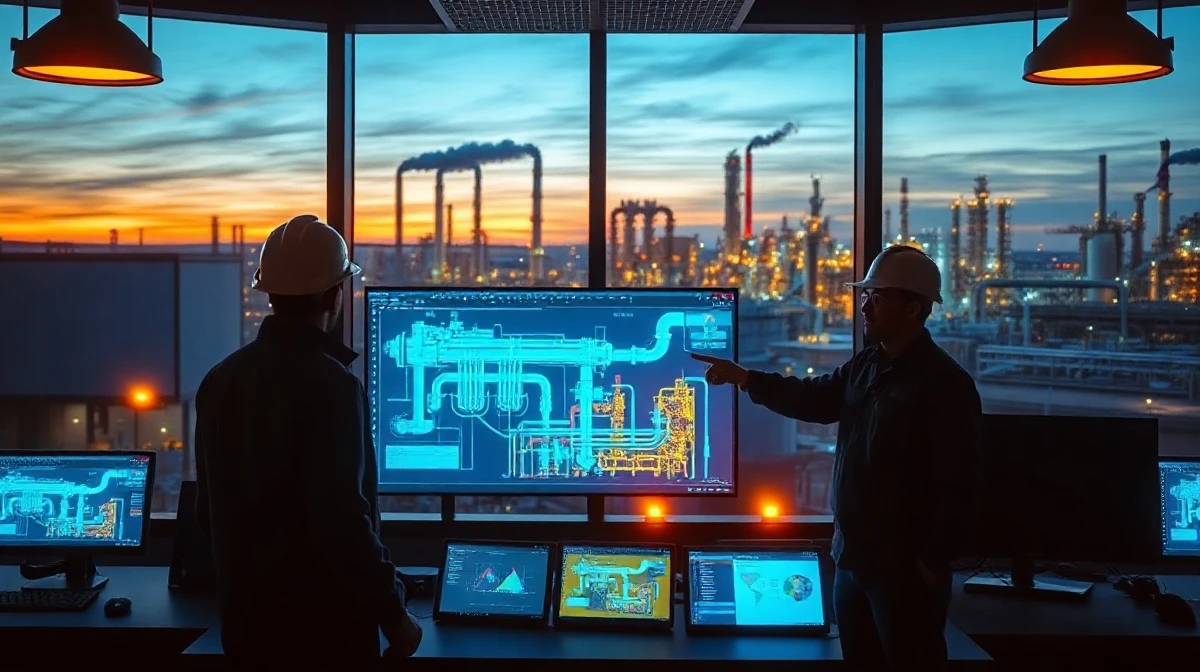
Unlike large language models that predict the next word, Applied Computing’s Orbital model fuses a time series model, a physics-based model, and a language model to predict the overall state of a facility. It analyzes sensor readings while keeping equipment constraints and operator activity in mind, and allows technicians to run simulations of how a change in one part of a facility could affect the rest of its operations.
The startup claims Orbital can compress investigations that previously took days or weeks into seconds, helping operators reduce energy use while maintaining output. Adamson said the product has already generated double-digit millions in annual recurring revenue, going from stealth to paying customers in under 18 months.
Also read: Google brings Gemini Spark to Mac, adds real-time tracking and app integrations
Competition and moat in industrial AI
Applied Computing enters a market with entrenched players. AspenTech sells simulation and AI-powered modeling for upstream, refining and chemical operations. AVEVA offers physics-based process simulation and what-if modeling. Cognite and Seeq focus on the data layer, helping facilities analyze industrial data and apply AI to design workflows.
Adamson argues the company’s moat is not access to data or process knowledge, but the ability to assemble AI researchers to build a competing model. “It’s an AI problem. It’s not a data problem, and it’s not an energy problem,” he said. “If you’re a tier-one AI researcher, where are you going to work? … I don’t think Shell’s on that list.”
He also pointed to the operational data Orbital receives through its deployments. Real refinery data is generally not available publicly, and simulated data cannot fully reproduce what happens inside a working plant. The KBR partnership, which integrates Orbital into KBR’s INSITE 3.0 digital platform for energy projects, gives Applied Computing access to operational data, industry expertise, and customer introductions. The startup is already using the product for ammonia production with KBR.
Expansion plans and what’s next
Applied Computing plans to use the $20 million to expand internationally, hire for research and engineering roles, and explore additional energy client deployments. The company said Thursday it has opened an office in Houston, adding to its headquarters in London and operational hub in Bengaluru. Adamson said the U.S. base puts the startup closer to two existing customers in North America, and an expansion into the Middle East is also in the works.
The startup is working with Indian energy company Wipro, a “major U.S. upstream operator,” and plans to announce a partnership with a European oil major in the coming weeks, Adamson said.
As oil and gas operators face increasing pressure to improve efficiency and reduce emissions, AI models that can make sense of existing sensor data without requiring new hardware may find a receptive market. Applied Computing’s bet is that speed — compressing weeks of analysis into minutes — will be the differentiator that convinces plant operators to trust an AI model with their entire facility.
Source: TechCrunch