
In this article5 sections
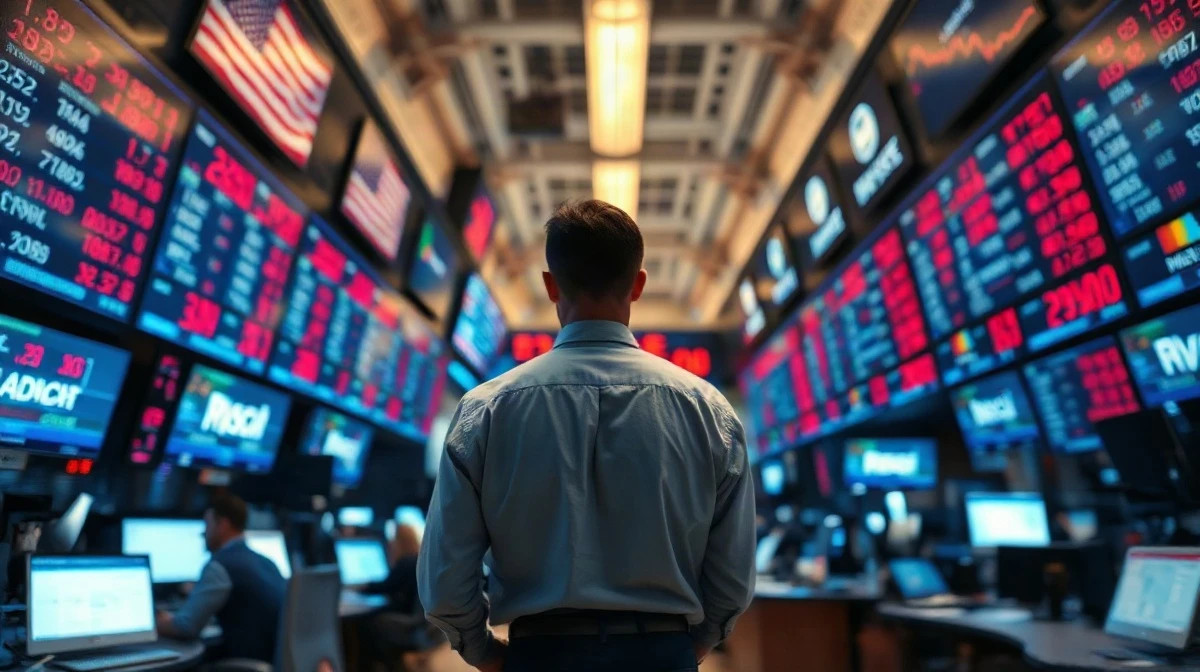
Wall Street enters Monday, Oct. 19, 2026, on the 39th anniversary of the 1987 crash, a date that again lands on a Monday with Brent crude near $110 a barrel, AI-linked shares under pressure and inflation running at 3.7% annually, according to News.bitcoin. The outlet reported that Bitcoin changed hands around $80,400 to $81,000 over the weekend while social media accounts circulated crash warnings.
News.bitcoin noted that on Oct. 19, 1987, the Dow Jones Industrial Average erased 22.6% in a single session, a record that still stands. Coinpedia added that the S&P 500 lost 20.5% and the Nasdaq 11.4% that day, and that Hong Kong shut its exchange for four days, with the Hang Seng falling 33% when it reopened.
Also read: Bitcoin holds above $82,000 as 'Black Monday' warnings fade
Key facts
- The Dow fell 22.6% on Oct. 19, 1987, wiping roughly $500 billion in U.S. stock value, per News.bitcoin.
- The S&P 500 closed Oct. 16 at 7,659.44, down 1.09%, while the Nasdaq Composite lost about 2.2% and Coreweave dropped nearly 12%, News.bitcoin reported.
- Brent crude approached $110 a barrel and West Texas Intermediate traded above $100 amid tensions involving Iran, the Strait of Hormuz and attacks on energy infrastructure, according to News.bitcoin.
- Coinpedia reported that about $51.6 million in leveraged chip-stock positions were liquidated in roughly 10 minutes over the weekend, citing CoinGlass.
- Coinpedia reported that U.S. circuit breakers halt trading on a 7% or 13% S&P 500 fall before 3:25 pm ET and end the session at 20%; the 20% level has never been hit.
The 1987 parallels, and where they break down
The Kobeissi Letter, writing on X on Saturday, argued the opposite of a crash, saying that if history holds the S&P 500 should reach 8,000 and telling readers to ignore the noise, News.bitcoin reported. Not every voice on social media agreed in tone: the account MBAeconomics told followers to hold cash for metals and mining dips, while Cryptonobler predicted the worst Black Monday in history.
Fund manager Adrian Day told Coinpedia that some conditions echo 1987, including higher rates, concerns about the dollar and the deficit, and an AI sector many consider overvalued. He added that yields are not yet high enough to pull large sums out of stocks into long-term Treasuries, and that the most recent 10-year auction drew solid demand.
Also read: Bitcoin decouples from tech stocks as AI frenzy draws capital away
The two reports also diverge on weekend figures. News.bitcoin put the Cboe Volatility Index climbing toward 20, while Coinpedia said the VIX sat at a four-month high. Coinpedia linked Friday’s Brent close near $110 partly to reports of Ukrainian strikes on oil facilities near St. Petersburg; News.bitcoin cited Iran, the Strait of Hormuz and attacks on energy infrastructure.
The AI trade becomes the worry
Artificial intelligence shares, long the market’s engine, are now the source of unease. News.bitcoin reported that Coreweave’s weakness reflected questions about borrowing costs and infrastructure spending, and that some of the company’s debt approached yields of 15%. Coinpedia reported that crypto entrepreneur Ran Neuner said $1.9 trillion has been wiped from U.S. tech stocks, and that unconfirmed rumours of trouble at an AI-focused fund were circulating.
Safe-haven assets held their ground. News.bitcoin reported gold trading around $4,150 to $4,200 an ounce and silver near $56 to $58, with the wider crypto market near $2.7 trillion. Coinpedia noted that Bitcoin and Ethereum fell alongside the tokenized AI contracts before recovering, with funding rates close to neutral, suggesting traders were not heavily positioned either way.
Why it matters
Circuit breakers, introduced in 1988 and tightened in 2013, change the arithmetic of any repeat: they pause selling rather than prevent it, and Coinpedia noted they first tripped on Oct. 27, 1997, and four times in eight trading days in March 2020. Crypto has no such brakes and trades around the clock, so a sharp AI-led selloff would reach digital-asset holders before the U.S. opening bell. Higher energy costs and a Fed benchmark target between 3.75% and 4% leave little room for policymakers to cushion a fall.
What to watch
The Nasdaq at Monday’s U.S. open, oil prices and Treasury yields are the immediate signals, Coinpedia reported. Whether Bitcoin holds its recent lows will show if weekend stability survives a full trading session. Nothing here is financial advice; markets are volatile and uncertain.
Reported by news.bitcoin.com.
Sources: Bitcoin.com News, Coinpedia