
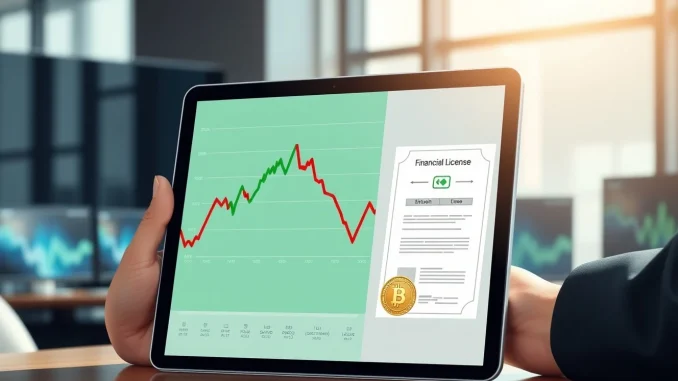
Major cryptocurrency markets showed unexpected strength on April 11, 2026, shrugging off a significant U.S. inflation report that dampened hopes for near-term Federal Reserve rate cuts. The resilience in digital assets like Bitcoin contrasted sharply with a dramatic collapse in a high-profile token linked to former President Donald Trump. Meanwhile, Hong Kong took a definitive step in its crypto regulatory journey by issuing its first official stablecoin licenses.
Bitcoin’s Defiant Stand Against Hot Inflation Data
Data from the U.S. Bureau of Labor Statistics delivered a jolt to traditional markets. The Consumer Price Index (CPI) rose 0.9% month-over-month in March, marking the largest single-month increase since mid-2022. On an annual basis, inflation registered at 3.3%. Energy costs, driven by geopolitical tensions affecting global oil supply, were the primary driver behind the surge.
Also read: Botanix shutdown: Does Bitcoin DeFi have a demand problem?
This report had an immediate impact on interest rate expectations. Futures markets now price in less than a 2% chance of a rate cut at the Federal Open Market Committee’s upcoming meeting. Analysts are divided on whether the Fed’s next move will be a cut or even a hike as policymakers work to control persistent price pressures.
Yet, the cryptocurrency market reaction was notably muted. Bitcoin (BTC) traded steadily above $73,000 following the data release. Ether (ETH) climbed toward the $2,300 level. This stability suggests investors may be viewing crypto assets as a potential hedge against currency devaluation, or that the inflation news was already priced into recent trading activity. Market watchers note that Bitcoin’s decoupling from negative macro news, even temporarily, is a significant test of its perceived store-of-value narrative.
Also read: Bitcoin Options Traders Hedge Downside as Uncertainty Lingers, Anchorage Digital Reports
WLFI Token Plummets Amid Collateral Controversy
While major cryptos held firm, the WLFI token faced a severe crisis. The native token of the Donald Trump-backed World Liberty Financial platform sank to a record low of approximately $0.07714. This represents an 83% decline from its all-time high of $0.46 reached in September 2025.
The catalyst for the sell-off was a revelation about the project’s financial practices. According to on-chain intelligence firm Arkham, a wallet associated with World Liberty Financial deposited around 5 billion WLFI tokens on Dolomite, a decentralized lending platform. These tokens were then used as collateral to borrow $75 million in USD and USDC stablecoins. A subsequent transfer of over $40 million to the institutional trading platform Coinbase Prime raised further questions.
Using a project’s own tokens as collateral for a loan is a risky maneuver that can trigger a vicious cycle. If the token’s price falls, it can lead to automatic liquidations of the collateral, forcing more selling and driving the price down further. Crypto users expressed deep concern over this practice, viewing it as a major red flag for project sustainability and governance. The WLFI token was down 4.66% over the past day and has fallen 65% over the past year, according to CoinMarketCap data.
A Cautionary Tale for Crypto Investors
The WLFI situation highlights ongoing risks in the digital asset space, particularly for tokens linked to celebrity or political figures. The episode serves as a reminder for investors to scrutinize the underlying fundamentals and treasury management practices of crypto projects, beyond surface-level endorsements. The rapid decline also shows how on-chain data transparency can quickly expose potentially problematic financial engineering.
Hong Kong’s Cautious Leap into Stablecoin Regulation
Across the globe, Hong Kong established a new regulatory milestone. The Hong Kong Monetary Authority (HKMA) granted its first stablecoin issuer licenses to two entities: Anchorpoint Financial and The Hongkong and Shanghai Banking Corporation Limited (HSBC’s local banking arm).
This move follows the implementation of Hong Kong’s new regulatory framework for stablecoins, which aims to bring clarity and consumer protection to the market. The approval of these first licensees had been anticipated but was delayed past an initial March timeline indicated by HKMA Chief Executive Eddie Yue in February.
The choice of licensees is telling. Anchorpoint Financial is a joint venture involving established institutions like Standard Chartered Bank (Hong Kong), Animoca Brands, and Hong Kong Telecommunications. The Hongkong and Shanghai Banking Corporation Limited is one of the city’s three note-issuing banks. This suggests regulators are prioritizing entities with strong institutional backing, deep roots in traditional finance, and established risk management frameworks for the initial phase of licensing.
Industry watchers see this as a deliberate, cautious approach by Hong Kong authorities. By starting with bank-linked issuers, the HKMA likely aims to set a high bar for stability, compliance, and anti-money laundering standards. The implication is that this could shape the future of stablecoin issuance not just in Hong Kong, but potentially influence regulatory thinking in other major financial centers.
What This Means for the Stablecoin Market
The licensing of HSBC’s entity is particularly significant. It signals that major global banks are willing to engage directly with the stablecoin ecosystem under clear regulatory guidelines. For the broader market, Hong Kong’s action provides a concrete example of how stablecoins can be integrated into a regulated financial system. This could accelerate similar processes in other jurisdictions and potentially attract more institutional capital into the crypto space, seeking the safety of regulated, fiat-backed digital currencies.
Conclusion
The events of April 11, 2026, painted a complex picture of the cryptocurrency field. Bitcoin and Ether demonstrated resilience in the face of adverse macroeconomic data, potentially strengthening their case as independent asset classes. Conversely, the collapse of the WLFI token underscored the persistent risks of poor governance and speculative projects within the broader ecosystem. Finally, Hong Kong’s issuance of its first stablecoin licenses marked a key step toward the formal integration of digital assets into the global financial system, favoring institutional players and setting a precedent for regulated growth. Together, these developments highlight the ongoing maturation, volatility, and regulatory evolution defining the crypto market.
FAQs
Q1: Why didn’t Bitcoin’s price fall after the high inflation report?
Market analysts suggest a few reasons. The inflation data may have been partially anticipated by traders. Some investors also view Bitcoin as a potential long-term hedge against currency devaluation, so positive flows into ETFs or direct holdings could have offset selling pressure. The market’s reaction shows it is reacting to a complex mix of factors beyond just traditional macroeconomic indicators.
Q2: What is the problem with using your own token as loan collateral?
This practice creates a dangerous feedback loop. If the token price drops, the value of the collateral falls. This can trigger automatic liquidations by the lending protocol to cover the loan, forcing the sale of more tokens and driving the price down further. It is often seen as a sign of weak fundamentals, as the project is essentially creating artificial demand for its own token to secure financing.
Q3: Who exactly got Hong Kong’s stablecoin licenses?
The Hong Kong Monetary Authority licensed two entities. The first is Anchorpoint Financial, a joint venture between Standard Chartered Bank (Hong Kong), Animoca Brands, and Hong Kong Telecommunications. The second is The Hongkong and Shanghai Banking Corporation Limited, which is HSBC’s Hong Kong-based banking subsidiary and a major local note-issuing bank.
Q4: What does Hong Kong’s stablecoin licensing mean for other countries?
It provides a working model for how a major financial hub can regulate stablecoins. Other jurisdictions, including the United States and the European Union (which has its MiCA framework), are watching closely. Hong Kong’s approach—starting with large, institution-backed entities—could influence how other regulators balance innovation with financial stability and consumer protection.
Q5: How low did the WLFI token fall?
According to data from CoinMarketCap, the WLFI token hit a record low of approximately $0.07714 on April 11, 2026. This represents a decline of roughly 83% from its all-time high of $0.46, which was reached in September 2025.



Be the first to comment