

As of April 12, 2026, Solana (SOL) continues to be a major force in the smart contract platform sector. This analysis provides a technical and fundamental outlook for SOL’s potential price trajectory through the end of the decade, grounded in current data, historical patterns, and verifiable expert commentary. Predicting cryptocurrency prices years ahead involves significant uncertainty. This report focuses on identifiable factors that could influence SOL’s long-term valuation.
Solana’s Current Position and Network Fundamentals
Solana’s price action cannot be divorced from its underlying technology. The network is known for its high throughput and low transaction costs. According to data from Solana Beach, the network consistently processes over 2,000 transactions per second. This technical capability forms the foundation for its developer activity and user adoption.
Also read: Notcoin (NOT) Price Prediction 2026-2030: Can the Telegram Gaming Token Stage a Recovery?
However, the network has faced challenges. Several notable outages in 2021 and 2022 impacted market confidence. In response, the core development team has prioritized network stability. A report from the Solana Foundation in late 2025 highlighted improvements in validator client diversity and congestion handling mechanisms. These upgrades are critical for long-term institutional adoption.
On-chain metrics offer a real-time health check. Data from Artemis shows that Solana’s daily active addresses have fluctuated between 800,000 and 1.2 million throughout early 2026. Its total value locked (TVL) in decentralized finance, while recovering from 2022 lows, remains a key growth indicator. Industry watchers note that sustained growth in these metrics is a prerequisite for any bullish long-term price scenario.
Also read: Monero (XMR) Price Prediction 2026–2030: Can Privacy Coins Sustain Momentum?
Technical Analysis and Historical Price Patterns
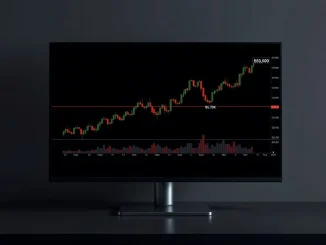
Historical price action provides context for future movements. SOL reached an all-time high near $260 in November 2021 before falling over 90% during the subsequent bear market. Its recovery since 2023 has been notable but volatile.
A technical analysis of SOL’s multi-year chart reveals important levels. The $80 to $120 zone has acted as a major support and resistance area multiple times since 2021. Maintaining a price above this zone is often viewed by analysts as a sign of strength. Conversely, a sustained break below it could signal deeper corrective action.
Long-term forecasts often reference Bitcoin’s four-year market cycles. The next cycle peak is broadly anticipated by analysts sometime in 2025 or 2026. Solana, as a major altcoin, tends to exhibit high correlation with Bitcoin’s momentum during bull phases, often with amplified volatility. This cyclical context is essential for any multi-year projection.
Expert Projections and Methodological Caveats
Financial analysts use various models for long-term forecasts. Some employ stock-to-flow adaptations, while others focus on discounted cash flow models based on projected network revenue. It is vital to treat all long-range predictions with caution. No model can account for unforeseen regulatory changes, black swan events, or technological breakthroughs from competitors.
Several analyst firms published outlooks in early 2026. For instance, a research note from FSInsight in January 2026 suggested that SOL could challenge its previous all-time high if broader crypto market conditions improve and network upgrades prove successful. Meanwhile, analysts at CryptoCompare emphasized that SOL’s price is heavily dependent on the overall growth of the decentralized application ecosystem on its platform.
The wide dispersion in price targets from different sources underscores the inherent uncertainty. Some models point to conservative growth, while more optimistic scenarios hinge on mass adoption that has not yet materialized.
Key Factors Influencing the 2027-2030 Outlook
Several specific factors will likely determine SOL’s price direction later this decade.
- Network Performance and Uptime: The single biggest factor for SOL is proving its reliability. A period of consistent, uninterrupted operation would be a major positive signal for investors and developers alike.
- Ecosystem Growth: The value of a blockchain is derived from its applications. The growth of projects in DeFi, NFTs, gaming, and social media on Solana will directly impact demand for SOL to pay transaction fees and for staking.
- Regulatory Clarity: The regulatory environment for cryptocurrencies, particularly in the United States and European Union, remains in flux. Clear, favorable regulation could spur adoption. Onerous rules could stifle it.
- Competitive Sector: Solana does not operate in a vacuum. The progress of rivals like Ethereum, Avalanche, and newer layer-1 blockchains will influence SOL’s market share and perceived value.
- Macroeconomic Conditions: Cryptocurrency markets remain sensitive to interest rates and liquidity. Tighter financial conditions historically pressure risk assets like SOL.
What this means for investors is a need for continuous monitoring. A long-term forecast is not a set-and-forget prediction. It is a framework that must be updated as new data on these factors emerges.
Comparative Valuation and Market Sentiment
Analysts often value blockchains relative to each other. Metrics like Price-to-Sales (P/S) ratios, based on network fee revenue, are common. In early 2026, Solana’s P/S ratio was lower than Ethereum’s but higher than several other layer-1 chains. This suggests the market prices in both its high potential and its perceived risks.
Sentiment analysis from social media and derivatives markets also provides short-to-medium term signals. High funding rates in perpetual swap markets can indicate excessive tap into and potential for a squeeze. Conversely, sustained negative sentiment can sometimes create buying opportunities. Data from The Block shows that Solana’s futures open interest has grown steadily, indicating increased institutional and sophisticated trader attention.
Conclusion
Creating a Solana price prediction for 2026 through 2030 requires balancing technical analysis, fundamental network health, and broader market forces. The most probable path is one of continued volatility, with price swings driven by adoption milestones, competitive developments, and macroeconomic trends. While optimistic scenarios exist, they are contingent on Solana overcoming its historical stability challenges and capturing significant market share in a crowded field. Investors should base decisions on a thorough understanding of these dynamics rather than any single price target. The long-term forecast for SOL remains intrinsically tied to its utility and reliability as a global computing platform.
FAQs
Q1: What is the highest price Solana (SOL) could reach by 2030?
Based on current analyst models and assuming optimal conditions of mass adoption, network stability, and a strong crypto bull market, some projections suggest prices significantly above the 2021 high. However, these are highly speculative. More conservative estimates focus on gradual growth tied to measurable ecosystem expansion.
Q2: What is the biggest risk to Solana’s price in the long term?
The most cited risk is technological. A failure to achieve and maintain consistent network uptime and scalability could erode developer and user confidence. Significant competitive pressure from other blockchains also poses a major threat to its market position.
Q3: How does Bitcoin’s price affect Solana’s long-term forecast?
Bitcoin remains the dominant market driver. A strong, sustained bull market in Bitcoin typically lifts the entire crypto sector, including Solana. Conversely, a prolonged Bitcoin bear market would likely cap SOL’s upside potential regardless of its individual merits.
Q4: Are the predictions in this article guaranteed?
No. All long-term cryptocurrency price predictions are inherently uncertain. This analysis is based on available data and established forecasting methodologies as of April 2026, but future events can radically alter any trajectory. It should be considered informational, not financial advice.
Q5: What should I watch to gauge if Solana is on track for a positive long-term outcome?
Monitor key metrics: network uptime (lack of outages), growth in daily active addresses and total value locked (TVL), the pace of new developer projects launching, and transaction fee revenue. Positive trends in these fundamentals are more important than short-term price movements.




Be the first to comment