
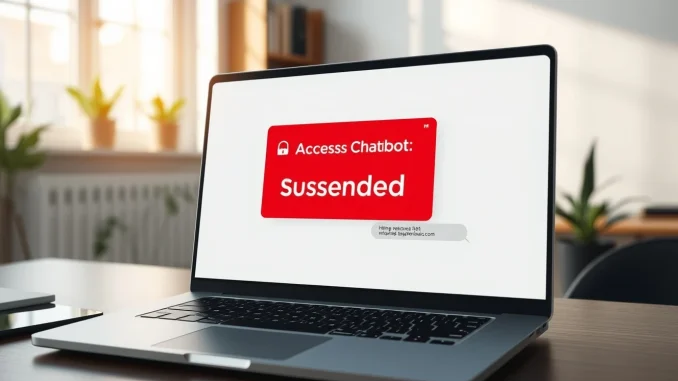
Anthropic, the AI company behind Claude, temporarily suspended the account of Peter Steinberger, the creator of the popular open-source tool OpenClaw, in a move that has ignited debate about control and access in the AI ecosystem. The brief ban, which occurred on April 10, 2026, and was reversed hours later, came just days after Anthropic announced significant pricing changes affecting how third-party tools like OpenClaw interact with its models.
Anthropic’s Sudden Suspension of a Key Developer
Peter Steinberger posted on X early Friday morning with a screenshot showing his Anthropic account was suspended due to “suspicious” activity. “Yeah folks, it’s gonna be harder in the future to ensure OpenClaw still works with Anthropic models,” he wrote. The post quickly gained attention across the developer community. According to Steinberger’s account, he was adhering to Anthropic’s new API usage rules when the suspension hit. The ban was short-lived. After his post went viral, an Anthropic engineer publicly reached out, stating the company had never banned anyone for using OpenClaw and offering assistance. Steinberger’s account was reinstated within hours.
Also read: OpenAI Limits GPT-5.6 Rollout After U.S. Government Request, Calls Restrictions a 'Short-Term Step'
This incident wasn’t isolated. It followed a major policy shift from Anthropic announced the previous week. The company stated that standard subscriptions to Claude would no longer cover usage through “third-party harnesses including OpenClaw.” Users of such tools must now pay separately via Claude’s API, based on consumption. Some in the industry have dubbed this new cost a “claw tax.” Anthropic’s rationale, detailed in its announcement, centered on infrastructure. The company argued that standard subscriptions weren’t designed for the “usage patterns” of automated agent tools. These tools, which can run continuous reasoning loops and integrate with many external services, demand more computing power than simple prompts.
The Underlying Conflict: Open Source vs. Proprietary Platforms
Steinberger, who is now employed by Anthropic’s rival OpenAI, was skeptical of the company’s explanation. After the pricing change was revealed, he suggested on X that the timing was strategic. “Funny how timings match up, first they copy some popular features into their closed harness, then they lock out open source,” he posted. While not specified, this likely refers to features in Anthropic’s own agent platform, Claude CoWorker. For instance, Claude Dispatch, which allows remote control of agents, launched shortly before the OpenClaw pricing update.
Also read: OpenAI, Google, and SpaceX are all building their own AI chips — here's why that matters
The online discussion revealed deeper tensions. When one commenter implied Steinberger’s job choice at OpenAI was the root of his problems, his reply was sharp: “One welcomed me, one sent legal threats.” This suggests past friction between Steinberger and Anthropic predating this incident. When questioned why he used Claude at all while working for OpenAI, Steinberger clarified his dual roles. He uses Claude for testing OpenClaw compatibility, a project of the OpenClaw Foundation, which is separate from his OpenAI job focused on product strategy. He noted that Claude remains a popular model choice for OpenClaw users, making testing essential.
A Signal of Broader Industry Tensions
Industry watchers note this event is a microcosm of a larger struggle. AI model providers are grappling with how to manage their ecosystems. On one hand, third-party tools drive innovation and adoption. On the other, they can create support burdens, unexpected costs, and potential security issues. The move to API-based billing for such tools is a clear attempt to align revenue with compute costs. However, the abrupt account suspension of a high-profile developer, even if temporary, raises questions about transparency and communication. It suggests automated systems for detecting “suspicious” activity may lack nuance for legitimate, high-volume development work.
Data from developer forums shows OpenClaw is widely used to create custom workflows and automations with Claude. Its potential incompatibility or increased cost directly impacts a significant user base. What this means for developers is more uncertainty. Building on top of a closed API means your access and costs are subject to change with little notice. This could push more development toward fully open-source model alternatives, though they currently lag behind leaders like Claude in performance.
Comparing AI Platform Strategies
The approaches of major AI companies to third-party tools vary significantly. The table below outlines key differences.
| Company / Model | Third-Party Tool Policy | Pricing Model for Tools | Native Agent Platform |
|---|---|---|---|
| Anthropic (Claude) | Allowed via API; recent restrictions on subscription plans. | Separate API billing based on usage (token consumption). | Claude CoWorker |
| OpenAI (ChatGPT) | Generally allowed via API; has a history of suspending accounts for TOS violations. | Standard API pricing applies; no special “tool” tax. | GPTs & Custom Actions |
| Google (Gemini) | API access for developers; tightly integrated with Google Cloud services. | Standard Cloud API pricing tiers. | Vertex AI Agent Builder |
This comparison shows Anthropic’s new policy is distinctive in explicitly carving out third-party tool usage for separate billing. The implication is that the company sees tools like OpenClaw not just as API customers, but as a distinct category with different economic impacts. For startups building on these platforms, such policy shifts are a major business risk. A sudden cost increase can destroy a thin margin.
What’s Next for OpenClaw and AI Developers?
In response to a question about the pricing change, Steinberger posted, “Working on that.” This brief comment is telling. It hints that his work at OpenAI may involve developing competitive agent strategies or more developer-friendly policies. The incident has already spurred discussion about vendor lock-in and the fragility of building businesses atop proprietary AI platforms.
The key takeaways for the AI community are clear:
- Policy Risk: API terms and pricing are not static. Developers must factor in sudden changes.
- Access Uncertainty: Even prominent developers can face abrupt access issues, often resolved only through public pressure.
- Strategic Positioning: AI companies are actively defining their ecosystem boundaries, balancing openness with control and profitability.
Anthropic has not publicly commented on the specifics of Steinberger’s temporary ban. The company’s swift reversal after the engineer’s intervention suggests it may have been an error. But the damage to developer trust may be longer-lasting. The event underscores a central tension: AI companies need a thriving developer ecosystem, but they also need to manage their resources and protect their core products. How they address this balance will shape the next phase of AI tooling and accessibility.
Conclusion
Anthropic’s temporary ban on OpenClaw creator Peter Steinberger, though quickly resolved, highlights growing pains in the commercial AI sector. The conflict stems from a recent pricing policy that charges extra for third-party tool usage via API. For developers, the message is that building on top of leading AI models carries inherent platform risk. As companies like Anthropic refine their business models and ecosystem rules, the relationship between open-source tool creators and proprietary model providers will remain complex and occasionally contentious. The stability of this relationship is critical for the continued innovation and practical application of AI technology.
FAQs
Q1: What is OpenClaw?
OpenClaw is an open-source software framework that allows developers to build automated AI agents and workflows. It can connect to various large language models (LLMs), including Anthropic’s Claude, to perform complex, multi-step tasks.
Q2: Why did Anthropic change its pricing for tools like OpenClaw?
Anthropic stated that standard subscription plans were not built to handle the “usage patterns” of automated agent tools. These tools can consume more computing resources through continuous operation and retry logic, so the company moved to a pay-per-use API model to align costs.
Q3: Was Peter Steinberger banned for using OpenClaw?
According to an Anthropic engineer who commented publicly, the company has never banned anyone for using OpenClaw. The specific reason for the brief suspension was listed as “suspicious activity,” and the account was reinstated after the issue was reviewed.
Q4: How does this affect regular Claude users?
Regular users who interact with Claude directly through the website or official apps are unaffected. The pricing and policy changes specifically target usage that flows through third-party developer tools and platforms that access Claude via its API.
Q5: What does this mean for the future of AI development?
This event signals that AI model providers are actively defining the rules of their ecosystems. Developers relying on these APIs may face more frequent policy and pricing changes. This could encourage more investment in open-source models or lead to greater demand for stable, long-term developer agreements from AI companies.





Be the first to comment