
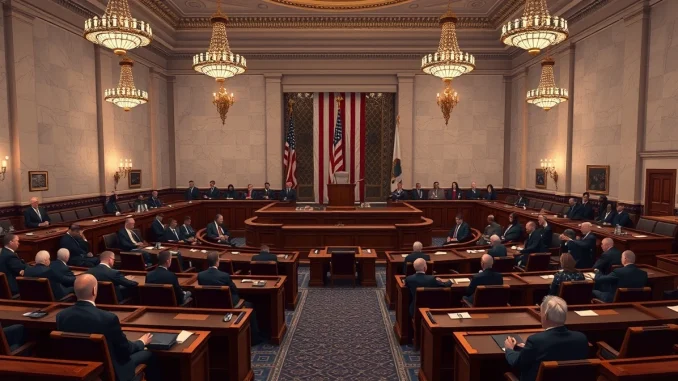
The US Senate unanimously passed a resolution banning its members and staff from using prediction markets. The move aims to prevent insider trading on political events. Lawmakers approved the rule on May 1, 2026, in Washington, D.C.
The resolution changed Senate rules immediately. It prohibits senators and their aides from placing bets on platforms like Polymarket and Kalshi. These markets allow users to wager on outcomes such as elections, wars, and economic data.
Also read: Trump-linked stablecoin USD1 fuels UFC bonuses as ethics debate intensifies
Republican Senator Bernie Moreno introduced the resolution. He argued that betting on prediction markets erodes public trust. “By changing the standing rules of the Senate, what we’re doing is allowing our constituents to know, once and for all, that no member of the United States Senate can ever use that inside information as a way to monetize this job,” Moreno said on the Senate floor.
Democratic leader Chuck Schumer called the vote a “no-brainer.” He warned against turning Congress into a casino. “We must never allow Congress to turn into a casino where members representing the public can gamble on wars, or economic crises, or elections,” Schumer stated.
Also read: CFTC hires SEC crypto adviser with blockchain forensics expertise; Strategy adds 1,587 BTC
Senate Prediction Market Ban: Background and Context
The resolution followed recent scandals involving insider trading on prediction platforms. On April 23, a special forces soldier was charged with using classified information to place bets on Polymarket. The soldier, involved in a plan to capture former Venezuelan President Nicolás Maduro, pleaded not guilty.
Lawmakers also expressed concerns over well-timed bets on the Iran war. These incidents highlighted gaps in existing rules. The Senate acted quickly to close those gaps.
Prediction markets have grown rapidly in recent years. Platforms like Polymarket and Kalshi allow users to trade contracts on real-world events. The market for political outcomes alone exceeds $1 billion in trading volume, according to data from CoinMarketCap.
But the platforms face scrutiny over insider trading. Unlike traditional stock markets, prediction markets lack strong surveillance systems. This creates opportunities for individuals with non-public information to profit.
How the Resolution Changes Senate Rules
The resolution bans members and staff from “engaging in any way in a prediction market.” It covers all forms of participation, including placing bets, trading contracts, or providing tips to others. The rule applies to both senators and their immediate staff.
Violations could result in disciplinary action, including censure or expulsion. The Senate Ethics Committee will enforce the rule. Similar bans exist for stock trading, but prediction markets were not previously covered.
The resolution does not apply to the House of Representatives. But Republican Representative Ashley Hinson announced plans to introduce a similar measure. “I will introduce a resolution to ban the use of prediction markets in the House,” Hinson posted on X.
Industry Reaction to the US Senate Ban
Prediction market platforms welcomed the Senate’s action. Polymarket posted on X that it “fully supports the Senate resolution.” The company noted that its terms of service already prohibit insider trading. “Codifying this into law is a step forward for the industry,” the statement read.
Tarek Mansour, co-founder and CEO of Kalshi, also celebrated the resolution. He said Kalshi “already proactively blocks members of Congress and enforces against insider trading.” Mansour emphasized that the industry wants to operate within legal boundaries.
Industry watchers note that the ban could reduce trading volume on political contracts. But they argue it improves the market’s credibility. “Prediction markets need trust to function,” said a regulatory analyst. “If insiders can cheat, the whole system breaks down.”
Comparison with Stock Trading Rules
The Senate’s prediction market ban mirrors existing rules for stock trading. The STOCK Act of 2012 prohibits members of Congress from using non-public information for stock trades. But enforcement has been weak.
Prediction markets operate differently from stocks. They are event-based contracts that settle when an outcome occurs. This makes them particularly vulnerable to insider trading. A senator who knows about a pending military action could bet on war contracts.
The new rule closes this loophole. But critics say it does not go far enough. Schumer argued that the administration should apply similar rules to executive branch employees. “The administration and its employees must apply these very same rules too,” he said.
Timeline of Events Leading to the Ban
- April 23, 2026: Special forces soldier charged with using classified info on Polymarket
- April 2026: Lawmakers raise concerns about well-timed bets on Iran war contracts
- May 1, 2026: Senate passes unanimous resolution banning prediction markets
- May 1, 2026: Representative Hinson announces House resolution plans
Impact on Prediction Market Platforms
The ban could reshape the prediction market industry. Polymarket and Kalshi have grown rapidly, attracting millions of users. But regulatory uncertainty remains a challenge.
Data from Dune Analytics shows that Polymarket processed over $3 billion in trading volume in 2025. Kalshi, a regulated exchange, handled $500 million. The Senate ban targets only members and staff, not the general public.
But the move signals increased scrutiny. The Commodity Futures Trading Commission (CFTC) has also investigated prediction markets. In 2024, the CFTC proposed rules requiring platforms to monitor for insider trading.
What this means for investors is that the industry may face more regulation. Platforms could implement stricter identity verification and surveillance systems. Some may choose to block US users altogether.
Broader Implications for Political Betting
The Senate ban raises questions about the future of political betting in the US. Several states have legalized sports betting, but prediction markets remain in a gray area. The federal government has not explicitly banned them.
But the Senate’s action could lead to broader restrictions. Lawmakers in both parties have expressed concerns about the impact of betting on democracy. “Gambling on elections undermines the integrity of our political system,” said a Senate aide.
Proponents of prediction markets argue they provide valuable information. Research shows that market prices can predict election outcomes more accurately than polls. But the insider trading problem threatens this utility.
The implication is that the industry must self-regulate or face government intervention. Platforms are already taking steps to block political insiders. But the Senate’s ban sets a precedent for other branches of government.
Conclusion
The US Senate’s unanimous ban on prediction markets marks a significant step in preventing insider trading. The resolution, passed on May 1, 2026, prohibits senators and staff from betting on political events. It follows recent scandals involving classified information and well-timed bets. Industry platforms support the move, but broader regulation may follow. The House is expected to introduce a similar resolution. This could signal a new era of oversight for prediction markets.
FAQs
Q1: What does the Senate prediction market ban cover?
The ban prohibits senators and their staff from engaging in any prediction market activity, including placing bets, trading contracts, or sharing tips.
Q2: Why did the Senate ban prediction markets?
The ban followed insider trading scandals involving classified information on platforms like Polymarket. Lawmakers aimed to restore public trust.
Q3: Does the ban apply to the House of Representatives?
No, the ban currently applies only to the Senate. But Representative Ashley Hinson plans to introduce a similar resolution in the House.
Q4: How will the ban be enforced?
The Senate Ethics Committee will enforce the rule. Violations could lead to censure or expulsion.
Q5: What is the impact on prediction market platforms?
Platforms like Polymarket and Kalshi support the ban. But the move signals increased regulatory scrutiny for the industry.





Be the first to comment