
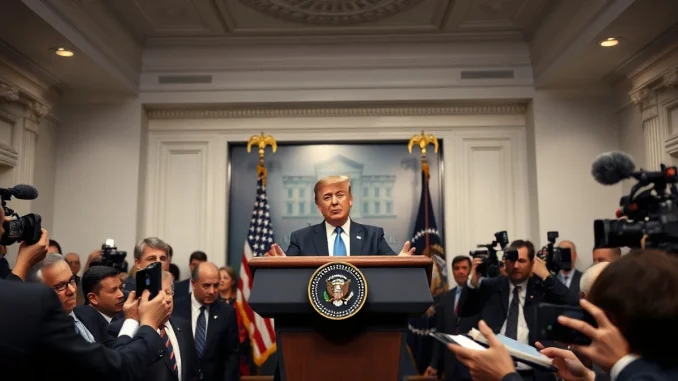
President Donald Trump has delayed signing a planned executive order that would have required the government to evaluate advanced artificial intelligence models before their public release. The decision, announced to the White House press pool on Wednesday, signals a significant pause in the administration’s approach to AI regulation.
Why the Order Was Delayed
Trump told reporters he was not satisfied with the current language of the draft order. “I didn’t like certain aspects of it,” he said. “We’re leading China, we’re leading everybody, and I don’t want to do anything that’s going to get in the way of that leading.”
Also read: OpenAI unveils GPT-5.6 family: Sol, Terra, Luna target coding, cybersecurity, and cost savings
According to multiple reports, an unofficial reason for the delay was that several major tech CEOs could not attend a planned signing ceremony on short notice. The White House had hoped for a high-profile photo opportunity with industry leaders, a common practice for significant executive actions.
What the Order Would Have Done
The anticipated executive order would have tasked the Office of the National Cyber Director and other federal agencies with developing a formal process to evaluate AI models for security vulnerabilities before their release. The measure was partly a response to concerns raised by the launch of Anthropic’s Mythos and OpenAI’s GPT-5.5 Cyber, both of which demonstrated the ability to rapidly identify and exploit security flaws.
Also read: OpenAI Shuts Down Atlas Browser, Moves AI Features to ChatGPT and Chrome
A key sticking point in the draft language, reported by CNN, was a proposed requirement that AI companies share advanced models with the government between 14 and 90 days ahead of public launch. Trump expressed concern that the current wording “could have been a blocker” for innovation.
Industry and Policy Implications
The delay underscores the ongoing tension between national security concerns and the desire to maintain U.S. leadership in artificial intelligence. The proposed pre-release review process was seen by some as a necessary safeguard against rapidly advancing AI capabilities, while others in the tech industry argued it could slow development and give competitors an advantage.
Critics of the order had warned that requiring early model disclosure could chill innovation and lead to regulatory overreach. Supporters, including some cybersecurity experts, argued that the risks posed by autonomous AI systems capable of finding zero-day exploits demanded more proactive government oversight.
What Happens Next
It remains unclear whether the executive order will be revised and reintroduced, or if the administration will pursue alternative regulatory approaches. The White House has not announced a new timeline for the order. The delay comes as the global race for AI dominance intensifies, with both the U.S. and China investing heavily in next-generation models.
For now, the AI industry faces continued uncertainty about the regulatory space, while security experts watch closely for the administration’s next move.
Conclusion
President Trump’s decision to delay the AI security executive order reflects a calculated effort to balance national security with economic competitiveness. The move provides temporary relief for tech companies wary of pre-release oversight, but leaves unresolved questions about how the U.S. government will address the security risks posed by increasingly powerful AI systems.
FAQs
Q1: Why did President Trump delay the AI security executive order?
Trump stated he was unhappy with the language of the draft order, fearing it could hinder U.S. leadership in AI. Unofficial reports also indicated that several tech CEOs were unable to attend a planned signing ceremony on short notice.
Q2: What would the executive order have required?
The order would have directed federal agencies to develop a process for evaluating AI models for security vulnerabilities before their public release, and would have required companies to share advanced models with the government between 14 and 90 days ahead of launch.
Q3: How does this affect the AI industry?
The delay provides temporary relief for AI companies concerned about regulatory burdens and potential slowdowns in innovation. However, it also leaves the industry in a state of regulatory uncertainty, with no clear timeline for when or if similar oversight measures will be introduced.





Be the first to comment