
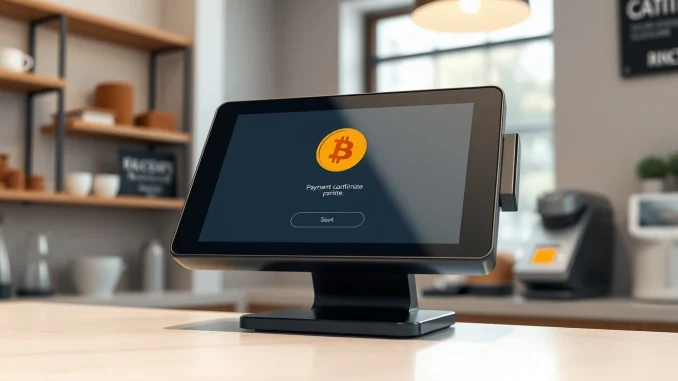
In a significant push for mainstream adoption, Block’s Square began activating Bitcoin payments at its point-of-sale terminals across the United States this week. This move coincides with a sharp reversal in investor sentiment, as digital asset funds bled $414 million last week—the first outflows in over a month. Meanwhile, a sharp-eyed trader on the prediction market Polymarket turned a few hundred dollars into a massive payday by capitalizing on a live broadcast error.
Square’s Bitcoin Rollout Aims for Everyday Use
Block, the fintech company co-founded by Jack Dorsey, started its phased rollout of Bitcoin (BTC) payments for eligible US merchants. According to a post on X by Block’s Bitcoin product lead Miles Suter, the automatic feature went live with a plan to expand over the coming weeks. The company first detailed this initiative in May 2025.
The system is designed to lower barriers for merchants. It removes volatility and custody risk by instantly converting Bitcoin received into local currency. This could make accepting BTC as routine as taking a credit card for millions of small businesses using Square’s ubiquitous hardware.
Block is a major corporate holder of Bitcoin. Data from BitcoinTreasuries.net shows the company holds 8,883 BTC on its balance sheet, acquired at an average cost of $32,939 per coin. This makes it the 14th-largest publicly traded holder of the cryptocurrency. Industry watchers note that integrating Bitcoin into a widely used payment system like Square is a practical test of its utility as a medium of exchange, not just a store of value.
Also read: Spain’s CNMV Chair Rules Out MiCA Deadline Extension for Crypto Firms, Impacting Binance
Investment Products Hit by Macroeconomic Fears
While one arm of the crypto industry pushes for adoption, another faced headwinds from traditional finance. Data from asset manager CoinShares shows digital asset investment products saw $414 million in net outflows for the week ending March 27, 2026. This ended a five-week streak of inflows.
James Butterfill, Head of Research at CoinShares, linked the shift to a changing macro environment. “Total assets under management fell to $129 billion,” Butterfill said. “This returns us to levels last seen in early February and is broadly comparable to April 2025, during the initial phase of Trump’s tariffs.”
The report points to two primary concerns spooking investors:
- Inflation and Rate Fears: Expectations for the June Federal Open Market Committee meeting shifted. Markets now anticipate potential rate hikes instead of cuts, creating a tougher backdrop for speculative assets.
- Geopolitical Tensions: Escalating conflicts in the Middle East drove a flight to safety, away from riskier investments like crypto.
This suggests that despite growing institutional products, cryptocurrency markets remain sensitive to broad macroeconomic sentiment. The outflows were widespread, affecting both Bitcoin and Ethereum-based products.
What the Data Says About Market Maturity
The sudden reversal in fund flows highlights a persistent trait of crypto markets: their correlation to risk appetite. When investors grow fearful of inflation or geopolitical instability, they often pull money from assets perceived as volatile. This week’s data is a clear example. The implication is that for crypto to decouple fully from traditional market cycles, it may need to demonstrate more independent, utility-driven demand.
A Polymarket Trader’s $67,000 Windfall
In a lighter but revealing incident, a trader on the prediction market platform Polymarket profited from a rare live-event mistake. During a UFC heavyweight bout on March 28, announcer Bruce Buffer initially declared Marcin Tybura the winner over Tyrell Fortune.
A trader using the handle LlamaEnjoyer on Polymarket suspected an error. As the mistaken announcement aired, shares for the actual winner, Fortune, plummeted to one cent on the platform. LlamaEnjoyer quickly placed a $676 bet on Fortune. Moments later, Buffer corrected himself and announced Fortune as the true victor.
The bet paid out roughly $67,608—a near 100x return. The trader shared a receipt of the win on X. This incident shows the extreme speed and volatility of prediction markets during live events. Odds can whipsaw based on real-time information, or misinformation, creating opportunities for attentive participants.
The Broader Signal for Prediction Markets
Events like this underscore the unique nature of decentralized prediction markets. They operate continuously, reacting to information faster than traditional betting outlets might settle. This creates a new layer of financial activity around live sports, politics, and current events. However, it also raises questions about the integrity of information and the potential for manipulation based on erroneous reports.
Connecting the Dots in a Volatile Sector
The day’s events paint a picture of a cryptocurrency sector in flux. On one hand, major companies like Block are building infrastructure for everyday Bitcoin use, a long-term bullish signal for adoption. On the other, the investment market remains skittish, quickly shedding capital when macroeconomic clouds appear.
These divergent trends are not necessarily contradictory. They reflect a market maturing on multiple fronts. Building payment rails is a multi-year project, while fund flows react to weekly news and data. The Polymarket story, meanwhile, highlights how crypto-native applications continue to create novel, high-stakes financial interactions.
For investors, the takeaway is nuanced. Adoption drivers are strengthening at the infrastructure level. But price action in the near term may still be dictated by familiar forces: central bank policy and global risk sentiment.
Conclusion
The rollout of Bitcoin payments at Square terminals marks a concrete step toward broader crypto utility in commerce. Yet, this progress met a sobering counterpoint with significant investment outflows driven by inflation and geopolitical fears. Together, these developments illustrate the complex, dual nature of the current crypto environment: steady technological integration paired with persistent financial volatility. The sector continues to advance, but not in a straight line.
FAQs
Q1: How does Square’s Bitcoin payment system work for merchants?
Square’s system automatically converts Bitcoin received from a customer into local currency at the time of sale. This means the merchant never holds volatile BTC and receives a settled fiat amount, similar to a credit card transaction.
Q2: Why did crypto investment funds see $414 million in outflows?
According to CoinShares, the outflows were driven by renewed investor caution. Rising inflation risks, shifting expectations for US interest rate hikes, and escalating tensions in the Middle East prompted a move away from risk assets like cryptocurrencies.
Q3: What is Polymarket and how did a trader profit from a UFC error?
Polymarket is a decentralized prediction market platform where users can trade shares on the outcome of real-world events. When a UFC announcer mistakenly declared the wrong winner, odds on the platform shifted instantly. A trader who bet on the actual winner before the correction saw their position soar in value.
Q4: Is Block a significant holder of Bitcoin?
Yes. Public data shows Block holds 8,883 Bitcoin on its corporate balance sheet, making it one of the largest publicly traded companies by Bitcoin holdings.
Q5: Do these crypto fund outflows indicate a market top or a major downturn?
Not necessarily. While outflows reflect negative short-term sentiment, they are a common feature of volatile asset classes. A single week of outflows after five weeks of inflows may indicate a pause or correction rather than a definitive trend reversal, especially given the specific geopolitical and macro triggers cited.





Be the first to comment