
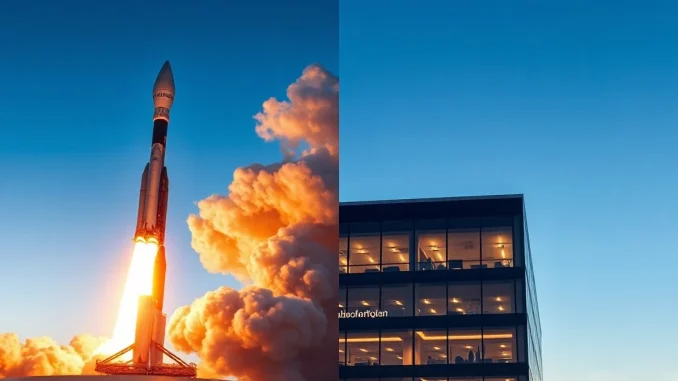
The IPO market is showing signs of a revival, but the companies leading the charge are not the familiar FAANG stocks of the past decade. Instead, a new acronym is gaining traction among investors and analysts: MANGOS. It stands for Meta (or Microsoft, depending on the analyst), Anthropic, Nvidia, Google, OpenAI, and SpaceX. Half of that group — Anthropic, OpenAI, and SpaceX — is reportedly preparing to go public within the same window this summer, creating what market observers describe as a high-stakes test for investor appetite, valuation discipline, and the broader tech IPO pipeline.
The MANGOS Acronym and the Shift in Market Leadership
The MANGOS grouping reflects a fundamental change in which tech companies are driving market narratives. FAANG (Facebook, Apple, Amazon, Netflix, Google) dominated the 2010s, but the current cycle is defined by artificial intelligence, space technology, and large-scale infrastructure. Nvidia and Google are already public, while Meta and Microsoft remain listed. The addition of Anthropic, OpenAI, and SpaceX — three private companies with multibillion-dollar valuations — signals that investors are looking beyond consumer internet and hardware toward AI research and aerospace.
Also read: State attorneys general open investigation into OpenAI, subpoena documents
Anthropic and OpenAI: AI Rivals Head to Public Markets
Anthropic, founded by former OpenAI researchers, has raised over $7 billion in funding and is valued at roughly $18 billion as of early 2025. OpenAI, which launched ChatGPT in late 2022, has seen its valuation climb to $80 billion following secondary market transactions and a $10 billion investment from Microsoft. Both companies are expected to file for IPOs in the second half of 2025, though exact timelines remain unconfirmed. Their public listings would mark the first major AI-focused IPOs since the technology entered mainstream consciousness.
SpaceX: The Largest Private Company in the World Eyes a Listing
SpaceX, valued at approximately $180 billion in its most recent tender offer, is the largest private company in the world. CEO Elon Musk has long resisted taking the company public, citing quarterly earnings pressure as a distraction from long-term goals like Mars colonization. However, recent reports suggest SpaceX may launch an IPO in summer 2025, driven by investor demand and the need to fund its Starship development program and Starlink satellite expansion. A SpaceX IPO would likely be the largest in U.S. history, potentially surpassing the $25 billion raised by Alibaba in 2014.
Also read: Inside Meta’s AI ‘gulag’: Engineers describe forced transfers, soul-crushing work, and a revolt
A Stress Test for Valuations and Investor Patience
The simultaneous IPO window presents unique challenges. Anthropic and OpenAI compete directly in the large language model market, and their public filings will offer rare financial transparency into a sector that has operated largely on private funding and hype. SpaceX, meanwhile, operates in a capital-intensive industry with long development cycles. Analysts at Goldman Sachs and Morgan Stanley have noted that the success of these IPOs could determine whether other AI and space startups follow suit, or whether the market remains cautious after the 2022 tech downturn.
What This Means for Investors
For retail and institutional investors, the MANGOS IPOs represent an opportunity to gain direct exposure to AI and aerospace — sectors that have been dominated by private capital and a handful of large public companies. However, the high valuations and lack of profitability at some of these firms raise questions about near-term returns. OpenAI, for example, has not disclosed consistent profitability, and SpaceX remains heavily reliant on government contracts and Starlink subscription revenue. The coming months will test whether public market investors share the same optimism as venture capital backers.
The summer IPO window is expected to open in June 2025, with filings likely to begin appearing in April. Investors should monitor regulatory filings from the SEC and watch for pricing updates from underwriters, which will provide the clearest signal of market demand.


Be the first to comment