
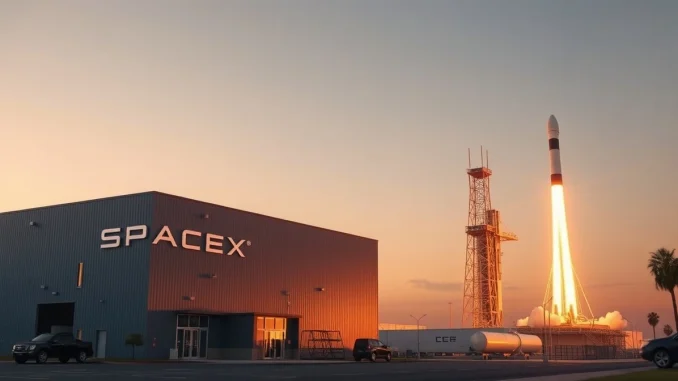
SpaceX has priced its initial public offering at $135 per share, raising $75 billion and making it the largest IPO in history, the company confirmed Thursday. The offering of 555.6 million shares eclipses the $24.9 billion raised by Saudi Aramco during its 2019 public markets debut.
The company, officially Space Exploration Technologies Corp., will begin trading on the Nasdaq exchange Friday under the ticker symbol SPCX. At the offering price, Elon Musk’s stake in the 24-year-old space and AI conglomerate is ready to make him the world’s first trillionaire, pending market performance.
Market expectations and first-day pop
Underwriters have an option to bring an additional 83.3 million shares to market, which would raise another $11 billion at the opening price if demand remains strong. Anecdotal reports suggest both institutional investors and individual buyers are lining up to purchase shares.
Hyperliquid, a crypto betting market offering synthetic exposure to SpaceX stock, currently prices the shares at $167, implying market participants expect a classic 20% first-day IPO pop. However, active trading beginning Friday could send the share price higher or lower depending on real-time demand.
Also read: The most interesting startups right now want to get you off your phone
Valuation questions and engineering ambitions
The record-setting valuation raises open questions about how SpaceX will justify its eye-popping market cap. The company’s outstanding engineering projects include the world’s largest reusable rocket, a new American chip fab, and the Starlink satellite internet constellation, which collectively represent a daunting to-do list.
SpaceX’s IPO comes at a time when private space companies face increasing scrutiny from investors seeking profitability. The company has not yet disclosed its full financial projections in the offering prospectus, though its Starlink division has begun generating meaningful revenue from consumer and enterprise broadband customers.
This story is developing. Tim Fernholz is a journalist who writes about technology, finance and public policy. He has closely covered the rise of the private space industry and is the author of Rocket Billionaires: Elon Musk, Jeff Bezos and the New Space Race.





Be the first to comment