
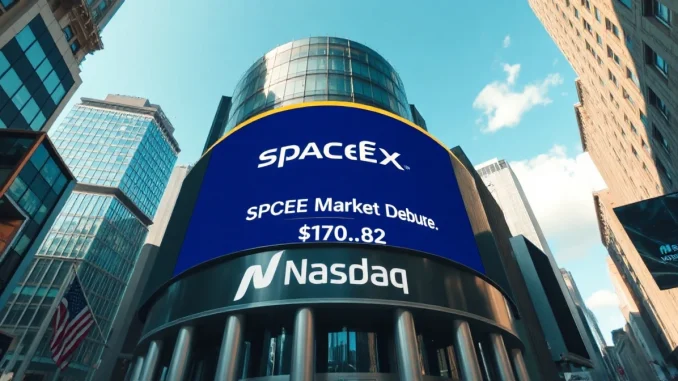
SpaceX began trading on the Nasdaq on June 12, 2026, in the largest initial public offering in history. The company priced 555.6 million shares at $135 each, raising $75 billion. By 1:38 pm ET on opening day, shares had climbed to $170.82, a 26% gain from the IPO price, giving the company a market capitalization well above $200 billion.
The debut made Elon Musk the world’s first trillionaire, at least on paper. Musk holds roughly 85.1% of SpaceX’s voting power, according to the company’s S-1 filing, giving him control over the publicly traded entity that goes beyond what most tech founders enjoy.
Also read: SpaceX prices IPO at $135 per share, raising $75 billion in record-breaking public debut
By the numbers
SpaceX’s S-1 filing revealed a company that remains deeply unprofitable despite massive revenue growth. In 2025, SpaceX lost $4.9 billion on revenues of over $18 billion. Cumulative losses since inception exceed $37 billion. The bulk of revenue now comes from Starlink, the satellite internet division, rather than launch services.
Another striking figure: roughly 4,400 SpaceX employees could become millionaires from the IPO, according to a report by the New York Times.
Who wins and who doesn’t
Musk is the overwhelming winner. His stake in SpaceX, combined with control of the voting power, gives him a monarchical grip over the company. But lower-tier investors who bought into special purpose vehicles (SPVs) before the IPO face hidden fees, lengthy payout delays, and the risk of outright fraud, according to reports. Those SPV investors may not know their true holdings until post-IPO lock-ups lift.
What the S-1 revealed
The S-1 registration document gave the public its first detailed look inside SpaceX. The filing is dominated by Starlink’s financial performance, but also outlines future bets on AI through the company’s xAI division. A separate section details Starship’s path to reusability, which the filing suggests may take longer than some boosters hope.
SpaceX also warned investors of potential future dilution, adding language to the S-1 that fueled merger rumors with Tesla. The company locked in several pre-IPO compute deals to improve its balance sheet, including a $1.25 billion per month contract with Anthropic and a $920 million per month deal with Google.
This article was originally published at 10 am ET on June 12, 2026, and has been updated with the latest share price and related developments.





Be the first to comment