

As of April 2026, the Quant (QNT) token continues to draw significant attention for its unique role in blockchain interoperability. This analysis examines the factors that could influence its price trajectory through the end of the decade, grounded in current network data, adoption metrics, and broader market conditions.
Quant’s Foundational Role and Current Market Position
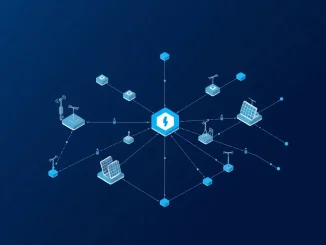
Quant Network operates Overledger, a platform designed to connect different blockchains and legacy networks. The QNT token is required to access and pay for services on this network. According to data from CoinMarketCap, QNT’s market capitalization stood at approximately $1.8 billion in early April 2026, ranking it within the top 50 cryptocurrencies by this measure. Its price has shown volatility, typical of the asset class, but its utility model provides a distinct value proposition.
Also read: Polkadot (DOT) Price Prediction 2026, 2027 – 2030: Can DOT Reach $60?
Network activity offers concrete signals. Transaction volume on the Overledger platform has seen intermittent spikes correlated with enterprise partnership announcements. For instance, the Bank of England’s 2025 exploration of a central bank digital currency (CBDC) prototype using Overledger generated a notable increase in developer activity. This suggests real-world use cases are progressing from theory to testing.
Key Drivers for QNT Price Through 2030
Several interconnected factors will likely determine QNT’s price path. Analysts typically group them into three categories: adoption, competition, and macro conditions.
Also read: Monero (XMR) Price Prediction 2026–2030: Privacy Coins Face Regulatory Crossroads
Adoption and Enterprise Integration
The primary driver for QNT demand is enterprise adoption of Overledger. Quant has established partnerships with major entities like Oracle, SIA, and various government bodies. The critical question is the scale and revenue generation of these integrations. A report from Gartner in late 2025 noted that enterprise blockchain interoperability spending was projected to grow, but competition was intensifying. Each new live enterprise deployment that consumes QNT tokens for API calls or licenses creates sustained buy-side pressure.
Conversely, slow rollout timelines or project cancellations pose a risk. The tokenomics are clear: utility drives demand. If adoption plateaus, price appreciation would rely more on speculative sentiment than fundamental use.
The Competitive and Regulatory Environment
Quant is not alone in seeking to solve interoperability. Projects like Polkadot (DOT), Cosmos (ATOM), and Chainlink (LINK) offer different technical approaches. Quant’s focus on enterprise and legacy system integration is its niche. Regulatory clarity, particularly regarding the classification of utility tokens like QNT, remains a global patchwork. Favorable rulings in key markets like the UK or EU could reduce investor uncertainty. Industry watchers note that the implication of broader CBDC development is positive for interoperability providers, but the timeline for mass implementation extends beyond 2030.
Analytical Price Ranges and Methodologies
Financial analysts avoid providing single price targets, instead modeling scenarios based on different adoption outcomes. These projections are not guarantees but illustrative frameworks.
Model Inputs Typically Include:
- Current Network Revenue: Estimated annual QNT consumption based on public partnership data.
- Adoption Growth Rate: Projected year-over-year increase in enterprise clients and transactions.
- Total Addressable Market (TAM): The value of the global blockchain interoperability market, estimated by firms like MarketsandMarkets to reach into the tens of billions by 2030.
- Macro Crypto Cycle: Historical correlation with broader cryptocurrency market cycles.
Using these inputs, analytical models often produce a range. A conservative scenario might assume moderate adoption growth and stable crypto market conditions. An aggressive scenario would factor in rapid enterprise uptake and a bullish macro environment for digital assets. What this means for investors is a wide potential variance. Price predictions from various analysts in Q1 2026 for the 2027-2030 period reflected this, with ranges spanning from a multiple of current prices to more modest gains, heavily dependent on the success of specific high-profile deployments.
Risks and Challenges to the Forecast
Any long-term forecast must account for significant headwinds. Technological obsolescence is a constant threat in the blockchain sector. A new, superior interoperability standard could emerge. Furthermore, Quant’s success is partially tied to the success of the broader enterprise blockchain sector, which has faced implementation hurdles. Security is another paramount concern. A major security breach on the Overledger network, while not occurred to date, would severely impact trust and token value.
Finally, QNT price action remains susceptible to broader financial market dynamics. Rising interest rates or restrictive global regulations can depress investor appetite for all crypto assets, regardless of individual project fundamentals. Data from 2022-2023 showed that even tokens with strong utility were not immune to market-wide downturns.
Conclusion
The Quant price prediction for the period through 2030 hinges almost entirely on tangible, measurable adoption of its Overledger technology. While the project’s enterprise-focused approach and existing partnerships provide a solid foundation, execution and scaling are key. Analysts emphasize monitoring quarterly network usage metrics and enterprise go-live announcements as more reliable indicators than short-term price movements. The potential for significant QNT price appreciation exists if the network becomes a critical piece of global financial and governmental infrastructure. However, this outcome is contingent on overcoming technical, competitive, and regulatory challenges in the years ahead.
FAQs
Q1: What is the main use case for the QNT token?
The QNT token is primarily used to pay for access and services on the Quant Network’s Overledger platform. Enterprises and developers must purchase and hold QNT to license the software and execute transactions across connected blockchains.
Q2: How does Quant differ from other interoperability projects like Polkadot?
Quant’s Overledger is an operating system that connects existing blockchains without requiring them to modify their code. Polkadot uses a parachain model where projects build directly on its ecosystem. Quant focuses on enterprise integration with legacy systems, while Polkadot is geared towards new blockchain development.
Q3: What are the biggest risks to Quant’s growth?
Key risks include slower-than-expected enterprise adoption, the emergence of stronger competing technologies, potential security vulnerabilities in the Overledger network, and adverse changes in global cryptocurrency regulation.
Q4: Does Quant have a maximum token supply?
Yes. The total maximum supply of QNT is capped at 14,612,493 tokens. This fixed, deflationary supply is a key part of its economic model, as increased demand for network access must be met from this finite pool.
Q5: Where can I find reliable data on Quant Network’s adoption?
Beyond the token price, monitor Quant’s official blog and partnership announcements. While detailed transaction metrics are not always public, updates on enterprise pilots, government contracts, and network upgrades provide insight into adoption progress. Third-party analytics platforms may also track on-chain activity related to the token.




Be the first to comment