
Aluminum prices have climbed roughly 20% in recent weeks, driven by escalating geopolitical tensions in the Gulf region, which accounts for about 10% of global aluminum production. The price surge comes as the U.S. government has already classified aluminum as a critical mineral, highlighting the nation’s heavy reliance on imports and the strategic importance of domestic recycling.
Why Aluminum Prices Are Rising
The conflict in Iran, which began in late February, has disrupted supply chains and sent commodity prices higher. Aluminum is particularly exposed: Gulf nations produce a significant share of the world’s supply, and any disruption ripples through global markets. Even before the conflict, the U.S. flagged aluminum as a critical mineral due to its essential role in construction, transportation, and defense — and the fact that the country imports most of its primary aluminum.
Also read: New York Times and Daily News Accuse OpenAI of Hiding Evidence in Copyright Trial
AI-Powered Sorting: A New Frontier in Recycling
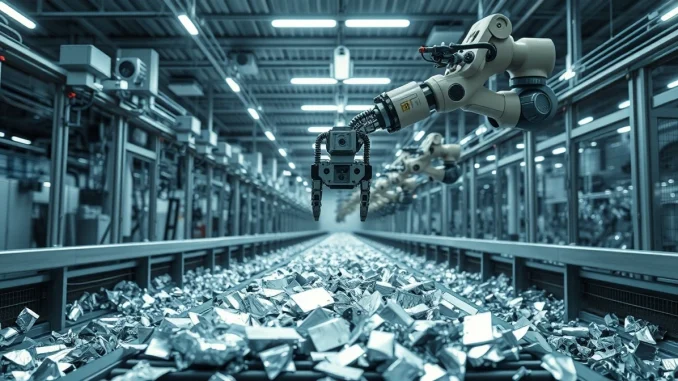
Against this backdrop, recycling startups are betting on artificial intelligence to extract more value from the waste stream. Amp Robotics, a Colorado-based company, uses AI-powered sorting systems that combine visible light and infrared cameras to identify materials on conveyor belts. Robotic arms and air jets then separate aluminum from plastics and other waste with over 90% accuracy.
Matanya Horowitz, CTO of Amp, notes that while aluminum makes up only about 1% of municipal waste, it can trade for over $1,000 per ton. “It actually ends up being one of the most significant individual commodities,” he told TechCrunch. Horowitz added that in many metro areas with successful recycling programs, roughly half of all aluminum still ends up in landfills — bypassing recycling systems entirely.
Also read: Paris-based voice AI startup Gradium raises $100M seed round, backed by Nvidia
Sortera Expands Capacity
Meanwhile, Indiana-based Sortera has opened a second facility in Tennessee, doubling its processing capacity to 240 million pounds annually. The company uses a combination of lasers, cameras, and X-ray fluorescence sensors to feed AI algorithms that classify each piece of scrap by specific aluminum grade. By sorting with higher precision, Sortera can command better prices per pound.
According to the EPA, only about 20% of aluminum in the U.S. waste stream is currently recovered. Sortera’s new facility alone could process a meaningful fraction of the 4.3 million metric tons of aluminum the U.S. consumed last year.
Why This Matters for Supply Chains
For the metals industry, these AI-driven recycling facilities represent one of the largest new sources of domestically produced aluminum coming online in any given year. As geopolitical instability threatens imports, boosting domestic recycling capacity becomes a matter of economic and national security. Startups like Amp and Sortera are not just improving recycling rates — they are helping to build a more resilient supply chain for a critical mineral.
Conclusion
The combination of rising aluminum prices, geopolitical risk, and technological innovation is creating a powerful incentive for recycling startups. AI-powered sorting systems are proving capable of recovering high-value materials with accuracy that was previously impossible. As the U.S. seeks to secure its supply of critical minerals, these technologies are likely to play an increasingly important role.
FAQs
Q1: Why is aluminum considered a critical mineral?
The U.S. government classifies aluminum as critical because it is essential for construction, transportation, defense, and electronics, yet the country relies heavily on imports for its primary supply.
Q2: How does AI improve aluminum recycling?
AI systems use sensors — including cameras, lasers, and X-ray fluorescence — to identify and sort different grades of aluminum scrap with high accuracy, allowing recyclers to sell material at higher prices.
Q3: What percentage of aluminum is currently recycled in the U.S.?
According to the EPA, only about 20% of aluminum in the waste stream is recovered. Startups like Amp and Sortera aim to significantly increase that figure.


Be the first to comment